
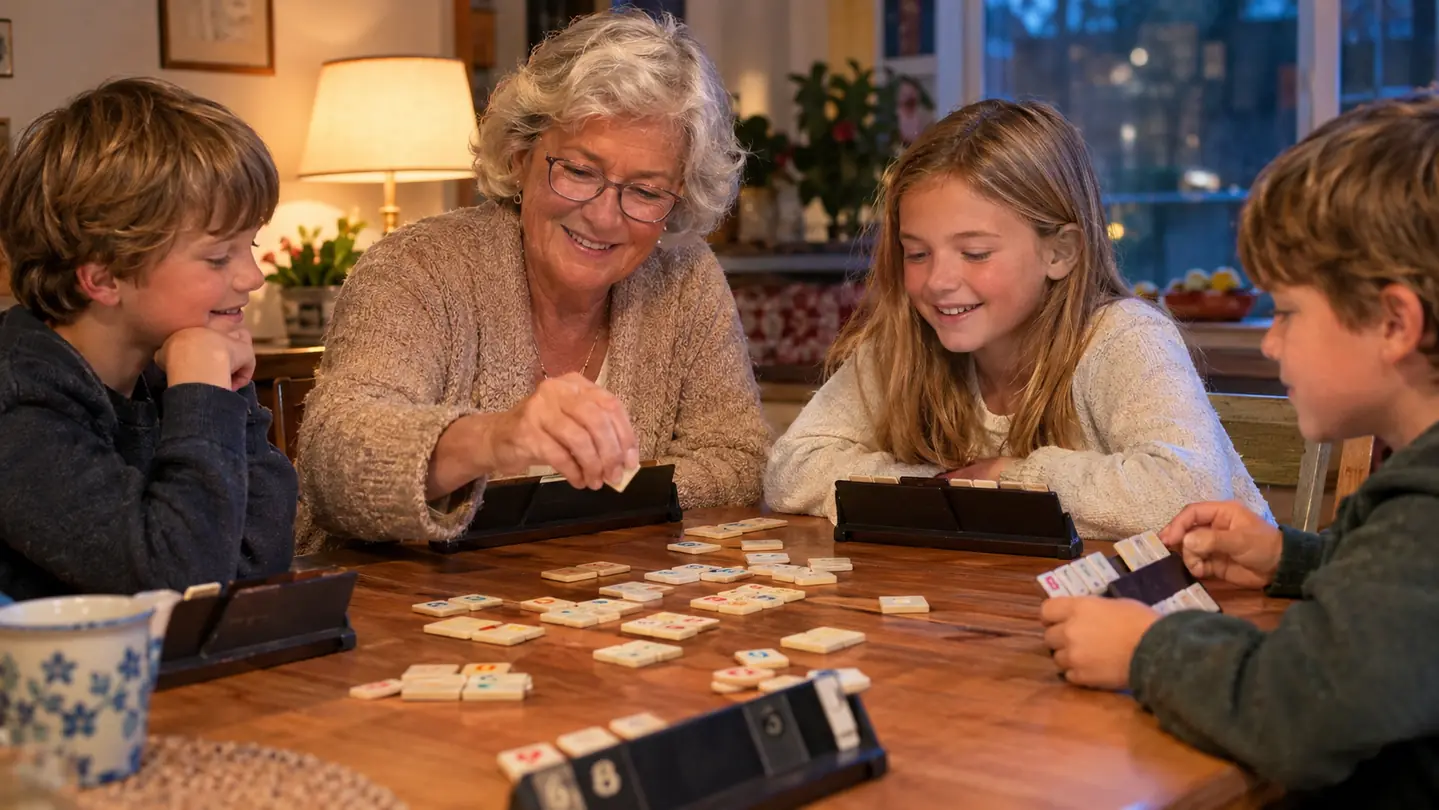
Every Sunday at 5:30, the oak kitchen table in my house becomes a game table. It seats six, which is exactly right for me, my husband Frank, and the three grandchildren who have claimed the chairs on the far side. Maya is twelve, Eli is nine, and Rosie is six. The hardest part of hosting a family game night is not clearing the calendar. It is finding a game that a six-year-old can genuinely play and that a twelve-year-old will not quietly endure like homework. For two years, that search dominated our Sundays.
We tried the usual suspects first. Candy Land was over in four minutes, and Maya spent the whole time looking at the ceiling. Scrabble made Rosie cry on a Tuesday in February when she drew seven letters she could not pronounce. I was ready to give up on the whole idea until a retired teacher friend of mine, who runs a board game club at her church, handed me a box from MindWare and said, just try this one. It was Qwirkle. That was eighteen months ago, and Qwirkle has been at every single game night since. This article is the plan we landed on after all those trial and error Sundays. It is not a review of the game, although I have plenty of opinions about it. It is the practical, step by step routine that got a twelve-year-old, a nine-year-old, and a six-year-old to sit at the same table for an hour every week, happily, without anyone crying, storming off, or announcing that games are boring. I have broken it into five steps, plus a few extras that make the whole night run smoother.
The one game all three grandkids ask for by name
Qwirkle ended our two year search for a mixed-age game. It is simple enough for a six-year-old to win, and it has enough strategy for a twelve-year-old to take it seriously. Check today's price on Amazon.
Amazon Check Today's Price on Amazon →Step 1: Pick a fixed night and guard it.
The first thing I learned is that a game night needs a schedule, not a hope. Ours is Sunday at 5:30, before anyone is too tired and before the little ones get cranky. The kids know it is coming. Maya checks the calendar, Eli asks what we are playing on the way home from school on Friday, and Rosie starts clearing her toys off the table around 5:00 without being asked. That predictability is half the magic.
Keep the session short. We play for about forty-five minutes, sometimes an hour if a game is close. The moment someone starts fidgeting or looking at the clock, that is the signal to wrap up. A short game night that everyone wants to repeat beats a long one that ends in tears. The Sunday after Thanksgiving, we played for almost two hours because the kids kept asking for one more round, and I let it run because it was going so well. Rosie fell asleep on the couch five minutes after we finished, still talking about her last move.
Set a start time and stick to it, even when it is inconvenient. The week before Christmas, I almost canceled because I had not wrapped a single present. Frank talked me into keeping it, and that turned out to be the night Rosie played her first full game without any help. The ritual matters more than the perfect circumstances. If you wait for a night when everyone is free and well rested and in a good mood, you will wait forever.
Step 2: Teach the rules in the right order.
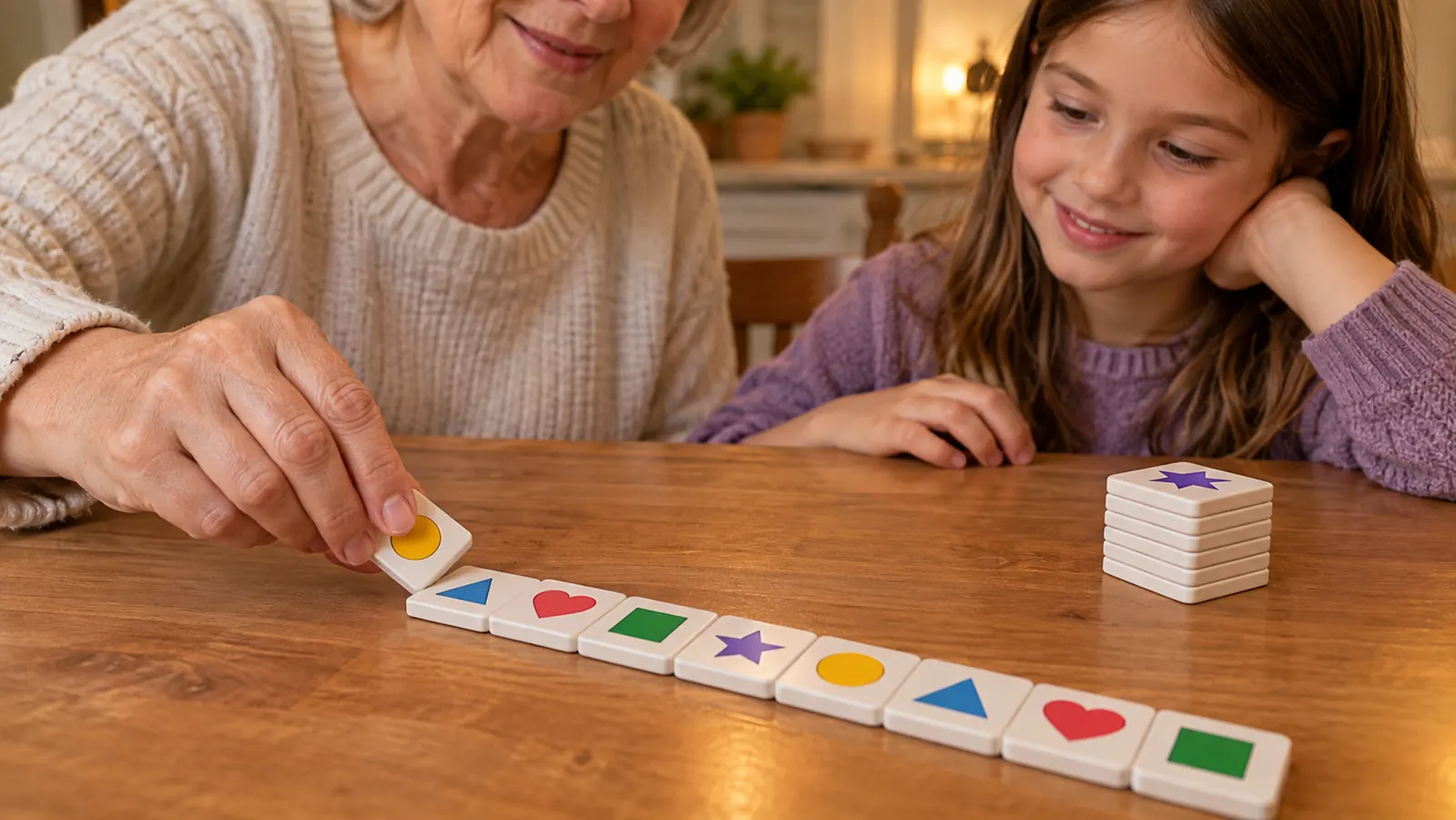
Qwirkle has one of the cleanest rule sets I have ever read, and I have read a lot of rulebooks in my time as a school librarian. The whole game fits in a single sentence: build lines of tiles that all match in color or all match in shape, and score a point for every tile in your line. That is it. You do not need to explain the scoring sheet, the six tile bonus, or the finer points of blocking on the first night. Save those for later.
Here is the order that worked for us. First, show the six shapes and the six colors, and let the kids sort a handful of tiles into little piles. That takes two minutes, and it teaches the entire vocabulary of the game. Second, lay out a demo line of three matching shapes and show how each new tile adds a point. Third, play the first round with everyone's tiles face up so we can all talk through the choices. The bonus scoring can wait until the second or third game night, when the kids are already asking why a line of six is special.
I tried teaching everything at once the first time we played, and it was a mess. Eli kept asking which shapes scored and which colors matched, and Rosie just started stacking tiles into a tower. The next week, I cut the explanation down to ninety seconds and let the game teach itself. That is the version that stuck. MindWare's Qwirkle is forgiving that way. The rules are so visual that the kids absorb them by playing, and nobody has to sit through a lecture before the fun starts.
Step 3: Set the table so the youngest can reach.
A mixed-age game night lives or dies on the physical setup. If the six-year-old cannot reach the middle of the table, the game becomes a spectator sport for her, and a bored six-year-old will wreck a game night faster than any rule dispute. We push the oak table slightly away from the wall so everyone can sit on the open side, and we keep the draw pile in the exact center where the shortest arms can still reach it. It sounds like a small thing. It is not. The week I forgot to do it, Rosie spent the whole game leaning across Eli to grab tiles, and he complained the entire time. Now the setup is part of the routine, the same way setting out plates is part of making dinner.
Everyone keeps their six tiles in front of them, face up. I know some families play with hidden hands, and that is fine for older kids, but face-up tiles mean I can help Rosie see her options without hovering. Frank thought it would ruin the strategy, then lost two games in a row to Maya, who had no problem playing well with open tiles. The game has enough depth that hiding your tiles is not the only way to play smart.
We also learned the hard way to give Rosie a job. The night she knocked over the whole draw pile and scattered tiles across the floor, I realized she needed something to do with her hands between turns. Now she is in charge of the draw pile. She counts out tiles, she keeps them neat, and she takes the job very seriously. A six-year-old with a job is a different creature from a six-year-old with nothing to do, and the difference shows up in how long she stays engaged.
Step 4: Use house rules that keep everyone in the game.
Our first house rule is the do-over. Each player, but especially the youngest, gets one do-over per game. If Rosie places a tile and immediately sees a better spot, she can pick it back up and try again. This sounds like it would break the game, but it does not. It keeps her thinking instead of crying, and the other players are not punished, because a missed move is usually a small miss. The rule has never once been abused by the older kids, which surprised me.
Our second house rule is that the youngest gets to ask for help. Anyone at the table can suggest a move for Rosie, but she makes the final call. Eli loves this rule because he gets to be the expert, and Maya loves it because she gets to be the strategist. Last March, Eli spotted a move that would complete a line of six and score the bonus, and he was so excited that he announced it to the whole table before Rosie even placed her tile. She placed it anyway, on purpose, and the table erupted.
The third house rule is the one that matters most. We do not keep score in a way that embarrasses anyone. We write the numbers on a notepad so everyone can see them, but we never announce the gap between first and last place. Rosie has finished last more times than I can count, and she still asks to play every Sunday. That is the real test of a house rule: whether the youngest player still wants to come back next week.
Step 5: End strong and make it a ritual.
The best advice I can give about running a game night is to end it before anyone wants to. We stop at a set time, even if we are in the middle of a close game. The kids complain for about thirty seconds, and then they spend the whole week looking forward to the next Sunday. Anticipation is a stronger force than any single great session. A game night that leaves everyone wanting more will fill itself next week. I learned this the hard way. One night we pushed on for an extra twenty minutes because the game was close, and Rosie ended up in tears over a move she regretted. It took two weeks to get her back to the table with the same enthusiasm. Now I watch the clock, and I stop while everyone is still smiling.
We keep a little spiral notebook in the den, on the shelf right next to the games. The winner of each night writes their name and their score in the notebook. It sounds old-fashioned, but the kids love it. They flip back through the pages and argue about who won on which date. Maya still brings up the night in March when she scored one hundred and forty-two points, which remains the family record, and Eli is convinced he will beat it before summer. The notebook turned a game into a history.
The other ritual is that the winner picks the next week's game. That rule has backfired in the most wonderful way, because Qwirkle keeps getting picked. I bought two other games hoping to rotate them in, and they sit on the shelf gathering dust while three kids fight over who gets to choose MindWare's Qwirkle again. When a game becomes the default choice of a twelve-year-old, a nine-year-old, and a six-year-old, you have found something worth keeping.
What Else Helps
A few practical things make the night smoother. Snacks matter more than you would think. We serve pretzels and apple slices, nothing greasy, because Qwirkle tiles are matte and they show fingerprints like a crime scene. Drinks go on a tray on the sideboard, not on the table. The night a full glass of lemonade went over, it took me an hour to dry out the tiles, and I have never risked it again.
It also helps to have a second game ready. Some nights the kids want variety, especially if we have played Qwirkle three Sundays in a row, which happens often. Keep the backup game simple and short. Ours is a dice game that takes ten minutes and makes everyone laugh. And after the kids go home, Frank and I sometimes play a two-player round ourselves. Qwirkle works beautifully with two players, which I did not expect. A game that works for six players at 5:30 and two players at 8:00 is a rare thing. The MindWare box has earned its spot on the shelf, right between the dictionary and the old photo albums.
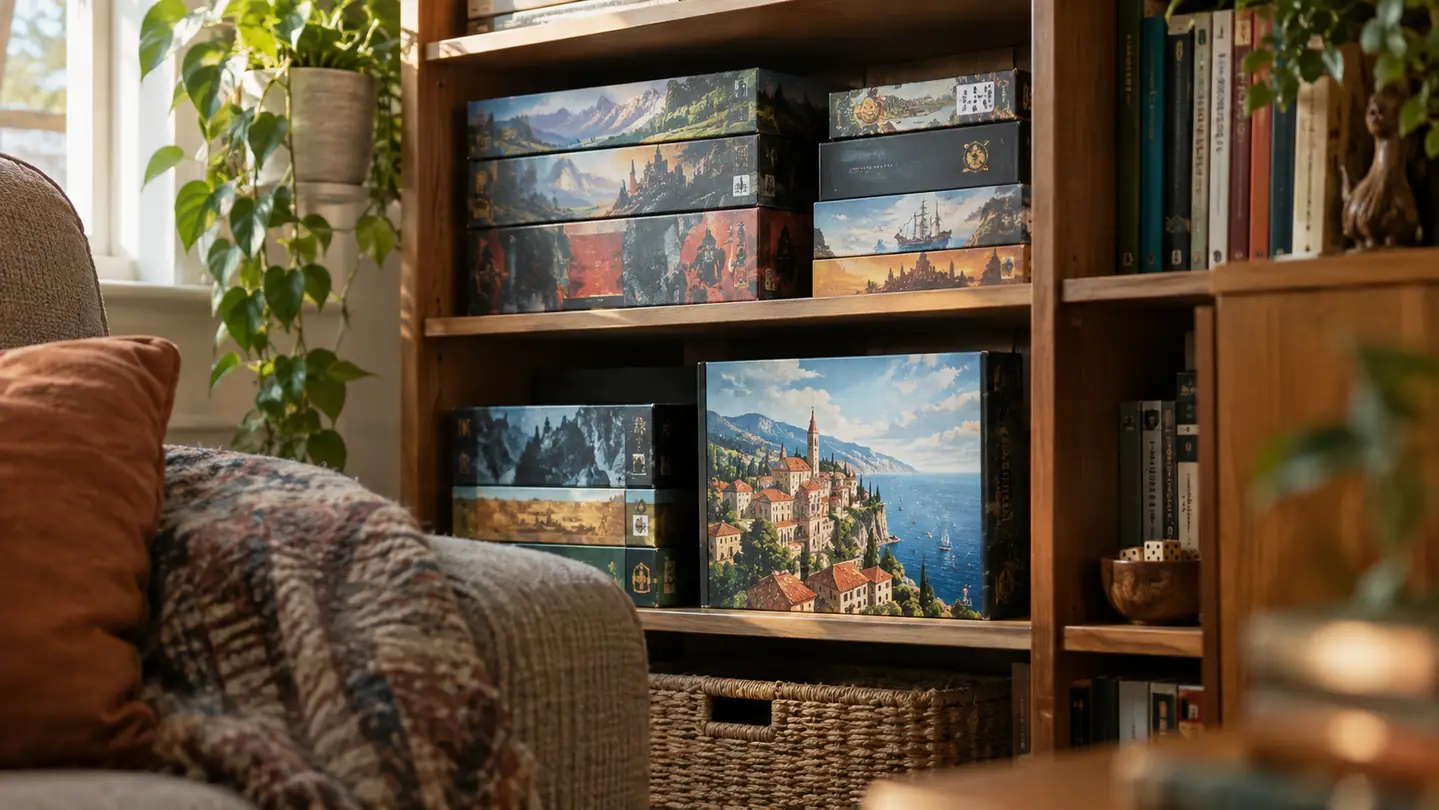
We also keep the games where the kids can see them. Ours live on a low shelf in the den, not buried in a closet, and the Qwirkle box is always turned so the title faces out. When the kids walk past the shelf during the week, they see the game and start talking about Sunday. That little bit of visibility does more to keep the tradition alive than any reminder I could set on my phone.
The Sunday after Thanksgiving, Rosie asked for Qwirkle before she asked for dessert. That is when I knew the game night had become a real tradition.
One box, three ages, every Sunday
Qwirkle has survived eighteen months of weekly play in my house, and it still gets requested by name. If you have mixed ages at one table, it is worth a look. Check today's price on Amazon.
Amazon Check Today's Price on Amazon →