
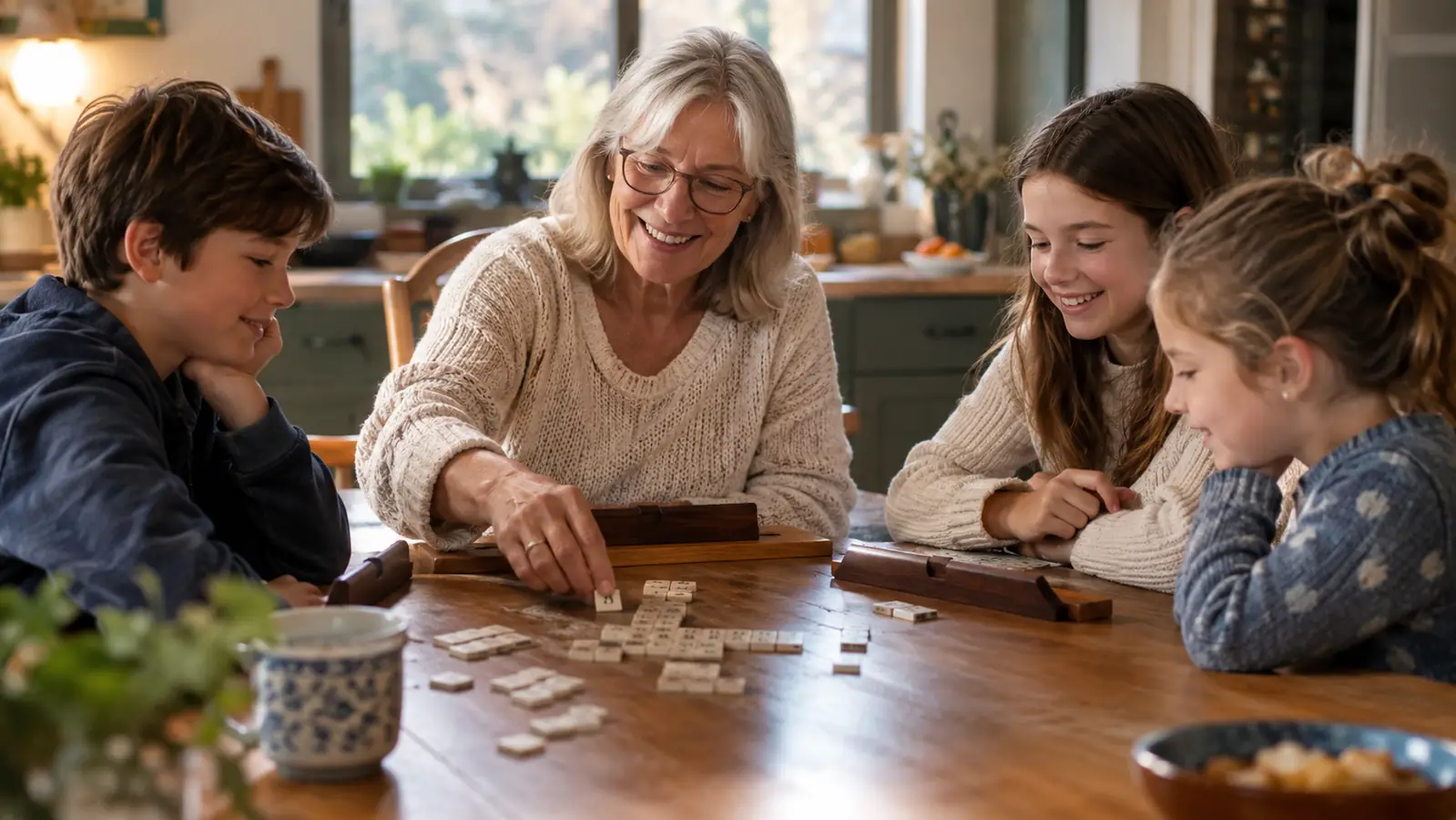
Every Sunday night, the oak table in my Bakersfield kitchen turns into a game table. Maya is twelve, Eli is nine, Rosie is six, and my husband Frank usually needs a little convincing. For years I struggled to find one game that all four of them could play without somebody folding their arms. Word games favored Maya. Candy Land bored Eli. When I picked up MindWare's Qwirkle, I expected another box that would gather dust. Instead, it became the first game to make it through a whole evening without a single argument. Here are the ten reasons I keep coming back to it.
The Tile Game That Finally Works for Ages 6 to 12
MindWare Qwirkle has been our Sunday night staple since Maya was old enough to hold the tiles. It takes minutes to learn, plays in about half an hour, and the same box works for a kindergartner and a preteen. Check today's price on Amazon to see if it fits your game shelf.
Amazon Check Today's Price on Amazon →A 6-Year-Old Can Win on Luck, and a 12-Year-Old Can Win on Strategy
The genius of Qwirkle is that you don't have to choose between a kids' game and a thinking game. Rosie looks for any tile that matches a shape or symbol, scores a few points, and calls it a win. Maya counts tiles, watches the board, and plans a move that scores her a Qwirkle before I get there. Both feel smart when it's over. Most family games tip one way or the other. Here, the draw keeps Rosie in it and the open board keeps Maya engaged. I have seen Rosie beat me three times, and I have seen Maya plan five moves ahead.
The Rules Fit on One Page, So No One Sits Out
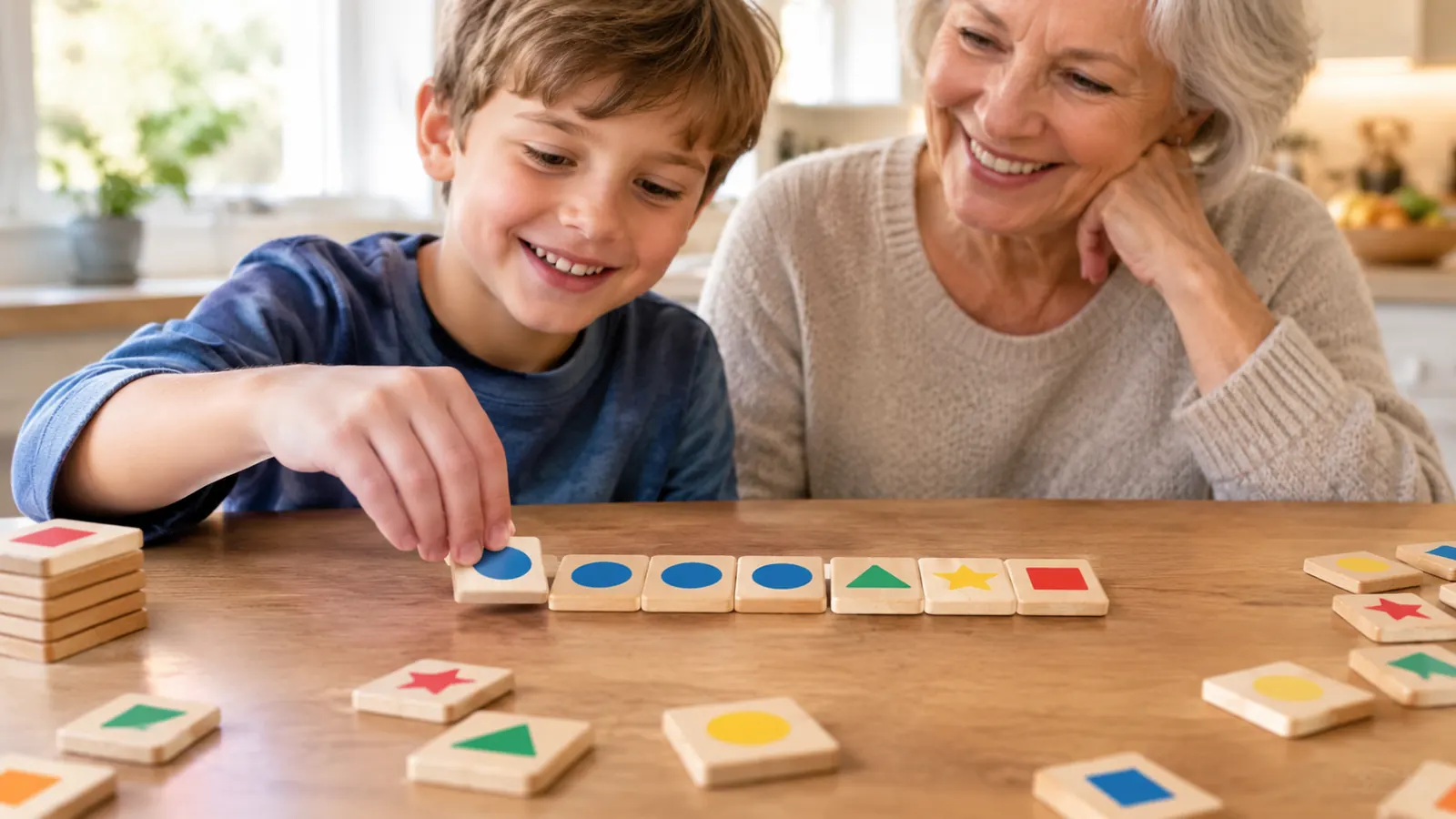
I read every rulebook cover to cover before the kids arrive, and most of them are two pages too long. Qwirkle's rules are simple: play a line of tiles that all share one attribute, score a point per tile, and earn a bonus if you complete a run of six. That is it. Maya explained it to Eli in under a minute, and Frank jumped in mid-game without a briefing. Nobody sits out reading a manual, because there isn't one.
Turns Move Fast Enough to Hold Rosie's Attention
I timed a full game one Sunday night. Four players, no arguments, and we finished in 34 minutes. Rosie's turns are quick because she only sees a few obvious matches. Maya's turns take a little longer, but not so long that Rosie fidgets. The pace matters more than people think. A game that drags past 45 minutes with a six-year-old ends in tears. Qwirkle stays in the sweet spot where there is time for a rematch before bed.
It Scales from 2 Players to 4 Without Changing the Game
Some nights Frank is at the table, some nights he is not. Some nights only Maya and I play while the little ones are in the bath. Qwirkle works as well with two as with four. You draw new tiles at the end of your turn, so the game adjusts to the number of hands. I have played a quiet two-player game on a Tuesday afternoon with Maya, and a loud four-player game on Sunday night. The rules never change and the strategy never gets diluted.
There's Real Strategy Hidden Under the Simple Matching
Don't let the simple matching fool you. Qwirkle rewards the same forward thinking I admired in the video games my kids played in the 90s. Maya has learned to hold onto a tile that could complete a Qwirkle, even if it means scoring fewer points now. I have lost games because I grabbed an easy six points while she set up an eight-point finish. It is a real strategy game wearing a friendly face.
It Teaches Pattern Recognition Without Feeling Like School
Rosie is in kindergarten, and the last thing she wants on a Sunday night is a lesson. But she is learning to group by shape and symbol, to count her score, and to look at the whole board before she places a tile. She calls it "the shape game" and asks for it by name. I have watched her line up three matching tiles and count on her fingers. As a retired school librarian, I notice those moments.
The Tiles Are Easy for Small Hands to Hold and Sort
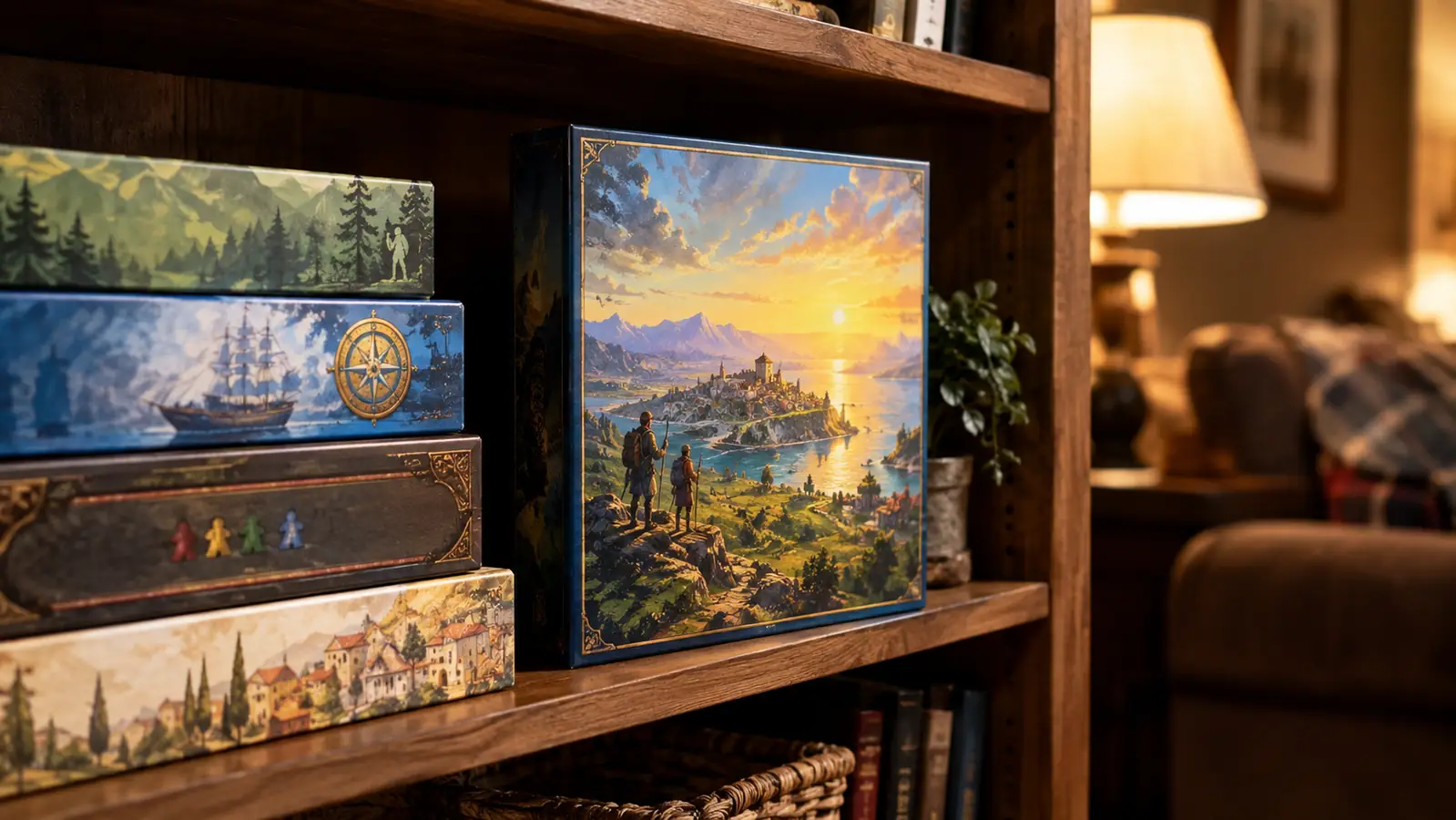
Rosie's fingers are small, and she gets frustrated with fiddly pieces. Qwirkle's tiles are thick, comfortable to grip, and they stay put on the oak table. She sorts her hand into little stacks by shape, her own system, and it works. The tiles have held up after dozens of games. No chips, no faded edges. The box lives on the den bookshelf and has survived being dropped, knocked over, and shoved back in a hurry.
Every Game Ends With Everyone Wanting One More Round
The first time we played, Frank said "just one game," and then we played three. Maya regularly asks for a rematch when she loses, which used to be rare. There is something about the way Qwirkle ends that makes people want to reset and try again. It lasts long enough to feel satisfying, but short enough that a second round never feels like a chore. A game that makes people ask for more is worth the shelf space.
It Survives the Kitchen Table Test
Our game shelf is not a museum. Boxes get knocked over, tiles get dropped, and there is always a water glass near the action. Qwirkle has handled all of it. The tiles are dense and sturdy, the box has a snug lid, and setup takes under a minute. I have dropped a tile on the kitchen floor, wiped it off, and kept playing. The pieces are also easy to sort back into the box, which matters when the kids are already asking for dessert. We have played this game at least fifty times, and it still looks the same as the day it arrived.
It Gives My Grandkids Something to Talk About at Dinner Afterward
The best part of Qwirkle is not the scoring. It is what happens after the game is over. Maya explains a move she made to Eli, Rosie draws a picture of a winning row, and Frank teases me about the Qwirkle he stole. We talk about the game while we clear the table. That is why I host Sunday game night. Three grandchildren and their grandmother, laughing at the same moment, happens more often with Qwirkle than any other box on our shelf.
What I'd Skip
I would not hand Qwirkle to a child under five, because the matching concept is still tricky for preschoolers and the tiles are a choking-size concern for toddlers. I would also skip it if your group is five or more people, since the game is designed for two to four players and there is no official way to stretch it. And if you are looking for a word game or a party game with bluffing and shouting, this is not that. It is a quiet, thinky game. Our family loves it, but it is not the answer to every game night.
I have watched Rosie beat me three games in a row, and I have watched Maya plan a move five turns ahead. Same box, same table, same Sunday night.
Give Your Own Kitchen Table the Same Test
MindWare Qwirkle has earned its place on our den bookshelf, and it has held up through dozens of games with kids from six to twelve. If that sounds like your game night, check today's price on Amazon and see if it belongs on your shelf too.
Amazon Check Today's Price on Amazon →