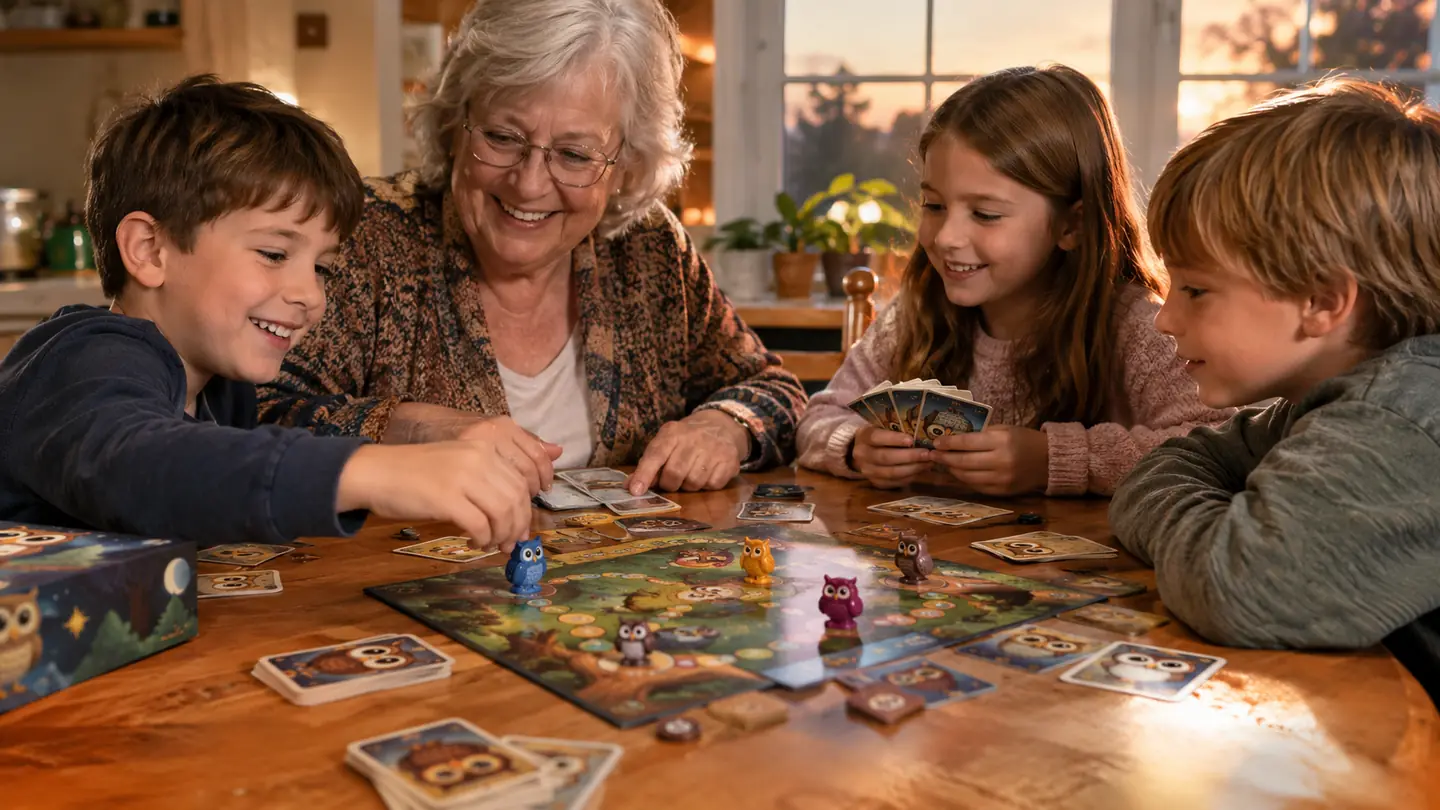
I will tell you the truth about trying to play a board game with a preschooler: it usually ends in tears. Not theirs. Yours. You clear the table, pick a game with 'ages 3 and up' printed on the box, and five minutes later the cards are everywhere, the rulebook is crumpled, and somebody is loudly insisting that the red piece is hers. I have been there. I am June Hollister, I am 61, I am a retired school librarian, and for the last few years my husband Frank and I have hosted Sunday game night for our three grandchildren, Maya who is 12, Eli who is 9, and Rosie who is 6. The six-year-old is the one who taught me everything I know about patience. She is also the reason our family's favorite first board game is Peaceable Kingdom Hoot Owl Hoot, a cooperative color-matching game where nobody gets eliminated and everybody wins or loses together.
Before I walk you through exactly how we play it, let me explain why a cooperative game matters for this age. Preschoolers are not ready to lose. That is not a parenting failure, it is brain development. A four-year-old has almost no ability to separate 'I lost the game' from 'I am bad at things.' Competitive games like Candy Land can turn a nice evening into a meltdown before dessert. A cooperative game changes the whole shape of the evening because the adults and the kids are on the same team. When the owls make it home, everyone cheers. When the sun comes up first, everyone tries again together. There is no winner and no loser, which means there is also no crying, no blaming, and no 'she cheated.'
The First Board Game That Ends in High-Fives, Not Tears
Peaceable Kingdom Hoot Owl Hoot is a cooperative color-matching game built for ages 4 and up, with no reading required and a full game that takes about 15 minutes. It has been our Sunday night starter for three years.
Amazon Check Today's Price on Amazon →What You Actually Get in the Box
Before you teach the game, know the pieces. The box holds a deck of cards, a set of colored circle tokens, three owl tokens, a sun token, a nest board, and a short rulebook that you will read once and then never need again. The whole thing is sturdy enough to survive a preschooler's enthusiastic handling. After three years of Sunday nights, our copy has been dropped, thrown across the kitchen table at least once, and used as a stool by Rosie when she wanted a better view. Every piece still works.
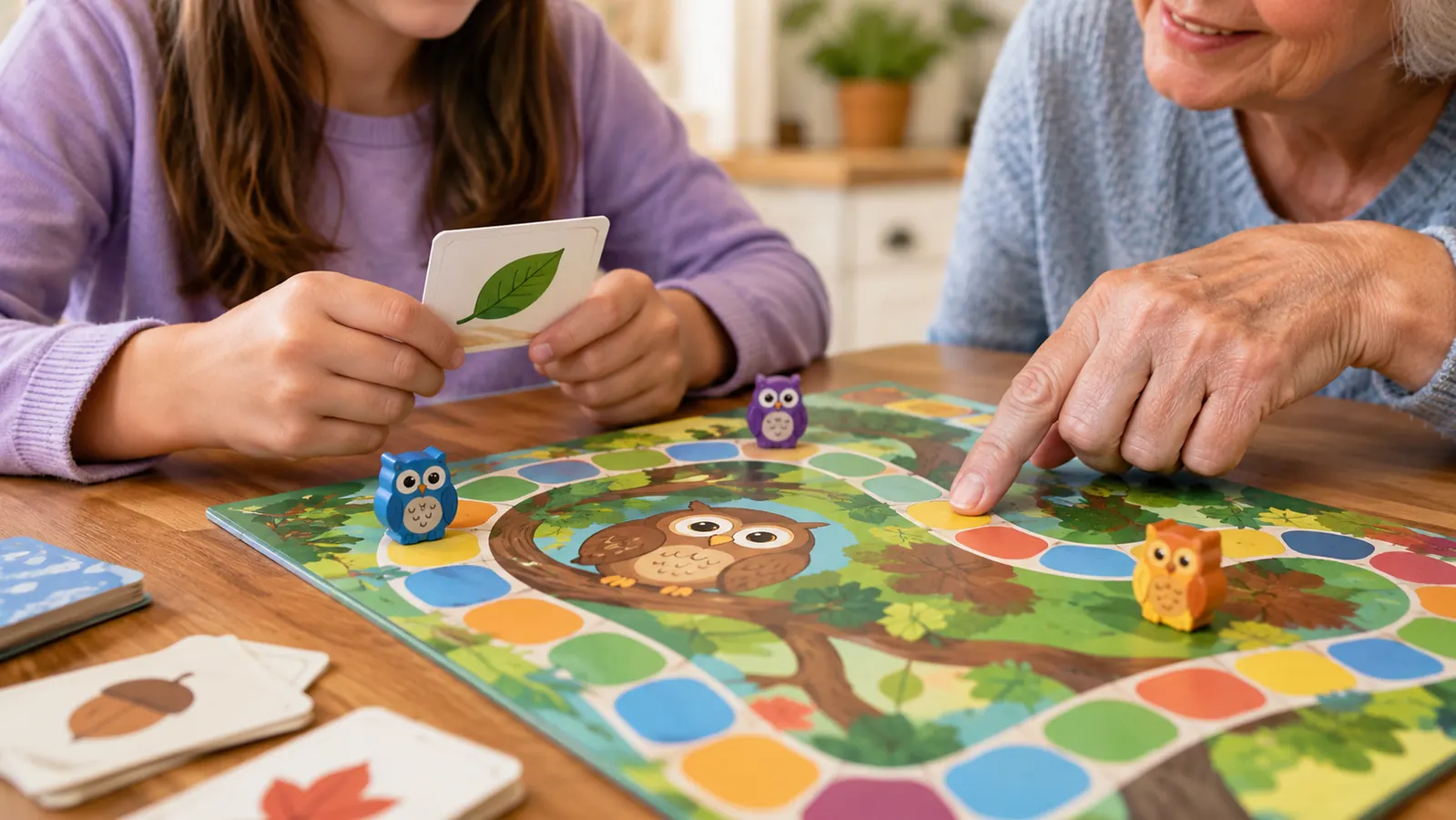
The clever part is the path. You lay the colored circles in a line from the start to the nest, and the length of that line is the difficulty dial. Six circles for a first game, ten for a challenge. The sun card is the timer. Every time someone draws a sun, the sun token moves closer to rising. There is no countdown, no stopwatch, just a simple visual that even a four-year-old understands instantly: the sun is waking up, the owls need to hurry.
Step 1: Pick the Right Moment and the Right Table
Sunday game night at our house starts at 5:30, right after we eat, before anybody is tired and hungry. For a preschooler, timing is the whole game. Do not try to introduce a new board game at the end of a long day, after a birthday party, or during the witching hour before bed. You are not teaching patience, you are fighting a meltdown you could have avoided by playing an hour earlier.
We play at the oak kitchen table, which seats six and has been the site of more spilled milk and close games than I can count. Any table works, as long as the child can reach the middle of the board. If she has to stretch, she will knock over the tokens and the game is over. Clear the table first. Push the salt and pepper out of reach. Sit the preschooler next to a grown-up, not next to her older siblings, at least for the first few games. She will want help reaching, and she will want to see what you are doing before she trusts the game.
Step 2: Set Up the Short Version, and Let Her Help
Here is the thing nobody tells you about Hoot Owl Hoot: you do not have to play the full game. The box comes with a set of colored circles that you lay out in a path, a nest at the end, three little owl tokens, a sun token, and a deck of cards. For a first game with a four-year-old, use only a few of the colored circles so the path is short and the game is over in five minutes. Rosie's first game used maybe six circles. We told her the owls were sleepy and had to get home before the sun woke up. That story did more than any rulebook.
Let the child set up with you. Hand her the owls and let her put them at the start. Let her put the sun on its track. This sounds like a small thing, but a preschooler who helps build the game feels ownership of it. She is no longer being handed a rulebook by an adult, she is taking part in something she helped make. I have watched Rosie turn this simple act into a ritual: she lays out the circles, counts them out loud, and announces the owls are ready.
Step 3: Hand Her the Cards and Let Her Run the Turn
The core rule is simple. On your turn, flip a card from the deck. If it shows a color, move any owl to the next circle of that color. If it shows a sun, move the sun one step along its track. If the sun reaches the end before all three owls reach the nest, everyone loses. If the owls all get home first, everyone wins. That is the entire game. No reading, no counting, no whose-turn-is-it arguments, because the whole table is taking turns together.
Give the preschooler the deck. Let her flip every card, even when it is technically your turn. Let her decide which owl to move. You will be tempted to correct her. Do not. If she moves the red owl when moving the blue owl would have been smarter, that is fine. The game is cooperative, so there is no wrong move, only a shared attempt. If she needs a hint, ask a question instead of giving an answer. 'Which owl is closest to a red circle?' works much better than 'Move that one.'
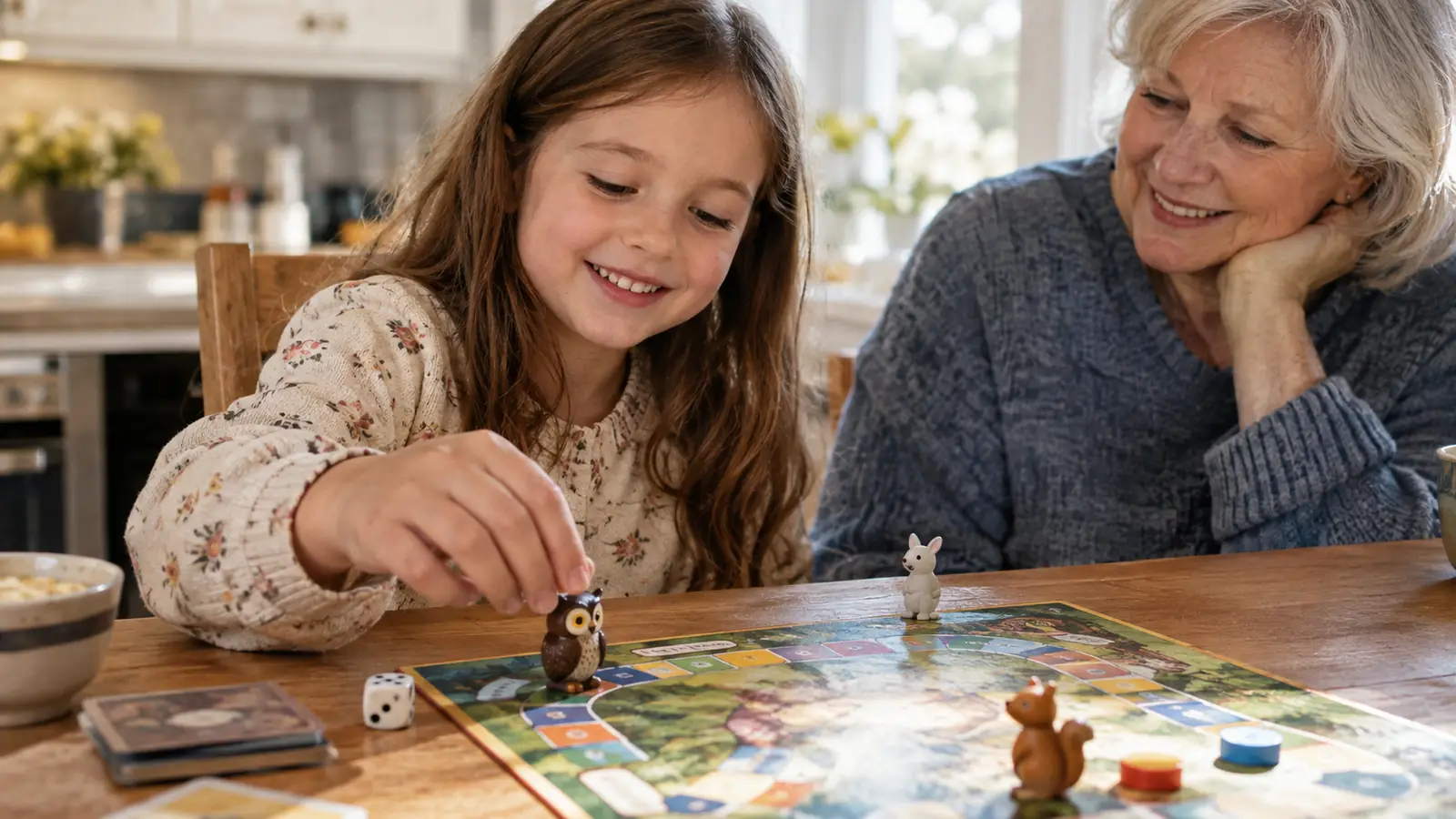
The first time we played, Rosie flipped a sun card and watched the sun token slide forward. Her face fell. I said, 'Oh no, the sun is getting closer. What should we do?' She studied the board for a long four-year-old moment, then pointed at the yellow owl and said, 'He can go there.' That was the whole game working. She was thinking, planning, and caring about the outcome, all at once, because the outcome belonged to all of us.
Step 4: Play Until the Owls Get Home, Then Stop
End the game while it is still fun. With a short path, a full game takes about ten minutes, and that is exactly the right length for a preschooler's attention span. When the last owl lands in the nest, make a small ceremony out of it. High fives all around. Rosie likes to pick up the owls and fly them to the nest herself. Let her. The win is hers, not yours.
Here is the part I had to learn the hard way: stop after one game. Preschoolers do not have the stamina for best two out of three. The moment you sense the second game dragging, put the box away and move on to something else. You want the last memory of the game to be joy, not boredom. We keep Hoot Owl Hoot on the den bookshelf, on the bottom shelf, in reach. Rosie can grab it herself on Sunday afternoons, and she does, constantly. That is the sign of a game that works.
Step 5: Talk About the Game Afterward
When the game is over, spend two minutes talking about it. Ask the preschooler which owl was her favorite, or which card she was hoping to draw. This does two things. It teaches her that a game is something you reflect on, not just something you rush through. And it gives you, the grown-up, a window into how her mind works. I have learned more about Rosie during two minutes of post-game chat than during an hour of her talking about her day.
The bigger gift is that the conversation becomes a ritual. On the drive home, Maya will sometimes ask Rosie what happened in the game, and Rosie will retell the whole story, complete with dramatic sound effects for the sun card. A cooperative game gives a preschooler a story she is proud of, because in the story she is the hero who saved the owls. That is not a small thing. That is a child building confidence in her own decisions.
Mistakes I Made So You Do Not Have To
My first mistake was explaining too much. I sat down with the rulebook and gave Rosie a full lecture before we touched a single owl. Her eyes glazed over and she asked for a snack. The fix is to explain as you go. Say one sentence about flipping cards, play two turns, and let the game teach itself. A preschooler learns by doing, not by listening to a retired librarian read rules aloud.
My second mistake was caring about the strategy. In the first few games, I would nudge Rosie toward what I thought was the optimal move. It made her frustrated and me impatient. The moment I stopped trying to win, even cooperatively, the game got better. Hand her the deck, sit on your hands if you have to, and let her decide. The owls will still make it home, and if they do not, you try again. That is the whole point.
What Else Helps
A few small things make any board game better with a preschooler. Keep a snack on the table, something quiet like crackers or apple slices, because a hungry four-year-old is a different species. Announce the game before you bring it out, so the child knows what is coming. And never, ever play when you are tired. Preschoolers can smell impatience, and they will hand it right back to you.
If you have older kids in the house, give them a job. Maya is 12 and she is wonderful at playing sun tracker, announcing when the sun is getting close. Eli, who is 9, likes to be the owl mover for Rosie. When every person at the table has a role, the preschooler is not the only one playing, the whole family is. That is how a game becomes a tradition, and traditions are the reason we do this at all.
The first time Rosie flipped the final card and all three owls made it home, she stood up on her chair and cheered. That is the moment this game earns its place on the shelf.
The Bottom Line
If you have been avoiding board games with a preschooler because the last attempt ended in tears, I understand. Try this one. Peaceable Kingdom Hoot Owl Hoot is short, cooperative, and forgiving. It teaches color matching, turn taking, and sportsmanship without ever asking a four-year-old to lose gracefully, because there is no loser. Rosie is six now and she still asks for it. Maya, at twelve, still plays without rolling her eyes. That is the rarest thing a family game can do: hold the attention of every age at the same table.
Give Your Preschooler a First Game That Actually Ends Well
Peaceable Kingdom Hoot Owl Hoot has been our Sunday night starter for three years, and it has survived dozens of plays with a 6-year-old at the table. Cooperative, color-matching, and ready in minutes.
Amazon Check Today's Price on Amazon →