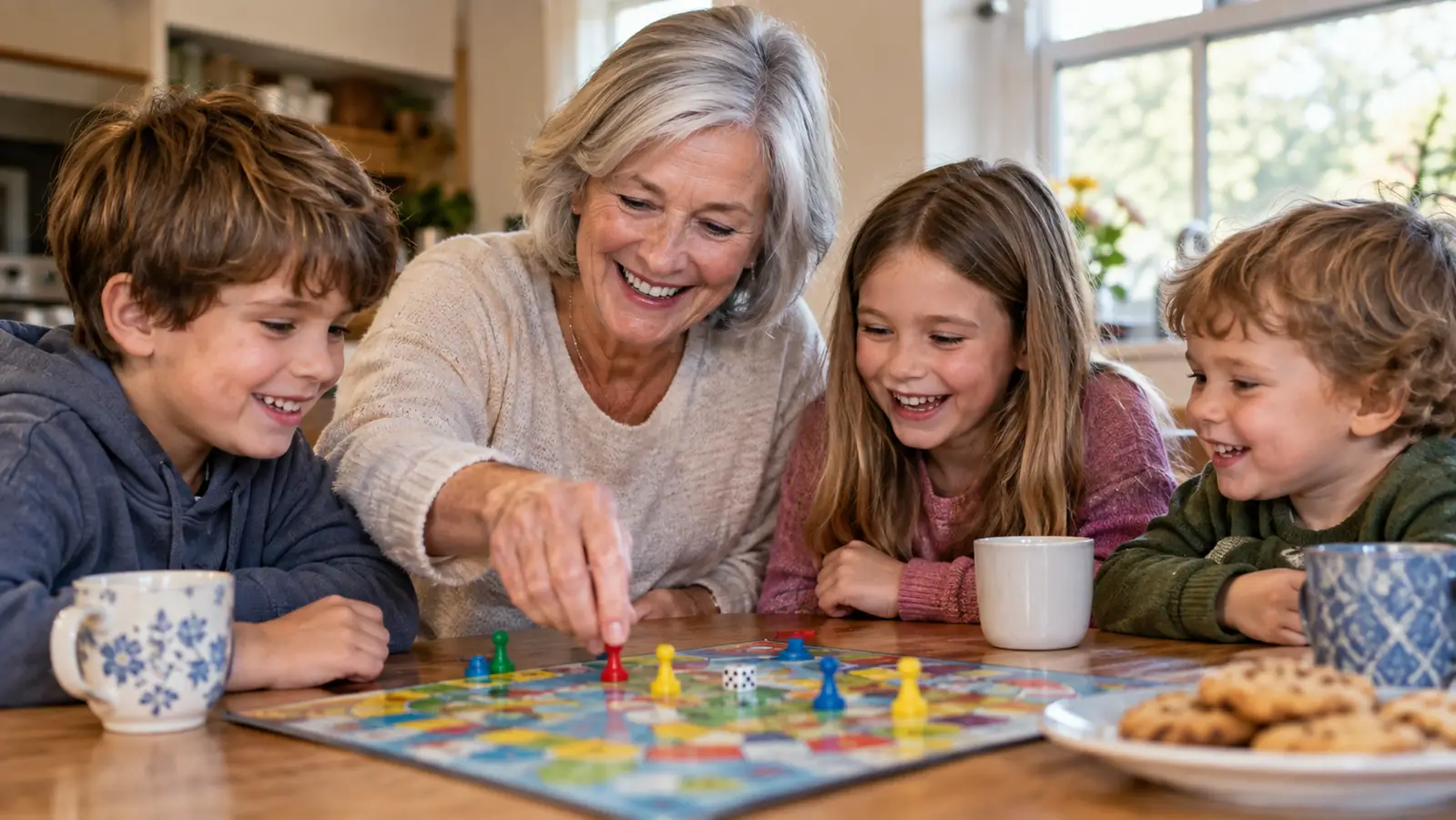
Every Sunday the three grandkids land at my oak kitchen table, and every Sunday somebody asks the same question: 'Which game are we playing?' When Rosie was four, the answer was usually Candy Land. It was the game everyone already owned, the one that never needed explaining, the one my own kids had worn out in the nineties. Then a friend handed me Peaceable Kingdom's Hoot Owl Hoot, and the Sunday rotation changed. This is the comparison I wish I'd had back then: how these two color-matching games actually differ when you sit a six-year-old who wants to win next to a nine-year-old who wants a challenge and a twelve-year-old who has already spotted every flaw on the board.
The short answer is this. If your youngest is barely three and you want a first-ever board game, Candy Land still earns its spot on the shelf. If you want one game a whole family can play together, without anybody crying when it ends, Hoot Owl Hoot wins, and it wins by a wider margin than the boxes suggest. Both are color matching at heart. That is where the similarity stops.
How I've Used Them at My Kitchen Table
I am the grandmother who reads the rulebook cover to cover before the kids arrive. Frank thinks this is hilarious. So when I say I have played Hoot Owl Hoot dozens of times, I mean I have played it the way it is written, then played it the way a six-year-old insists on playing it, then played it the way a twelve-year-old quietly optimizes it. Candy Land I have played roughly a thousand times across two generations, because every parent ends up playing Candy Land a thousand times. Both games live on the bookshelf in the den, and both have survived spills, dog-eared cards, and the occasional dramatic toss.
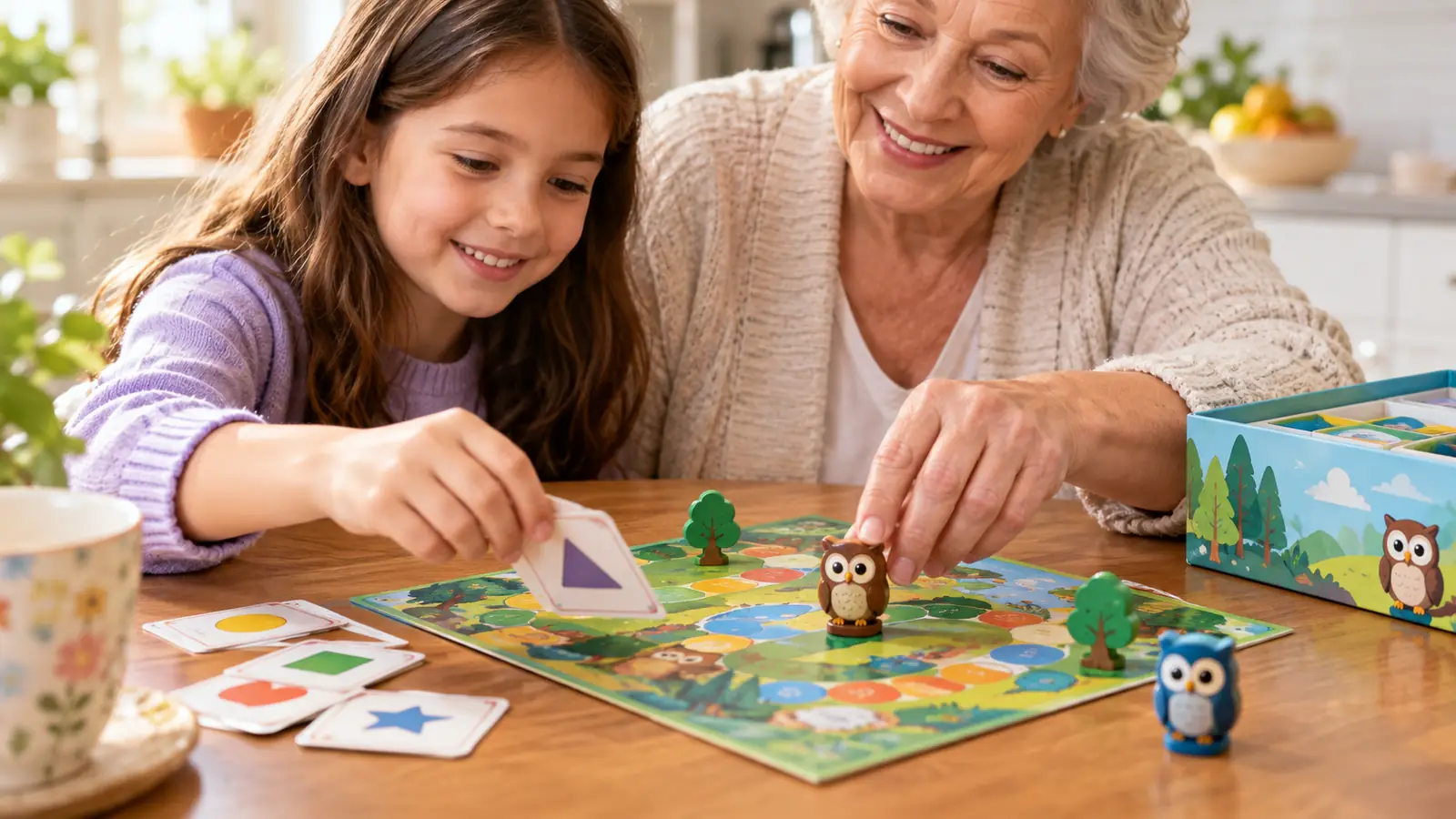
The setup for both is under a minute, which matters when three kids are vibrating with anticipation. Candy Land is a board, a stack of cards, and four little gingerbread pieces. Hoot Owl Hoot is a board, a deck of color cards, a sun card, and six owl tokens that sit in a starting nest. In both cases, a child can have the game ready before I have poured the lemonade.
The Real Difference: Cooperation vs Competition
Here is what nobody tells you about Candy Land: it is a game with no decisions, and it is a game where someone loses. For a four-year-old, losing is not abstract. Rosie once flipped the board when she hit the licorice space and slid backward for the third time. She was not being dramatic. She was four, she had no idea why she was losing, and the game gave her nothing to do about it. Candy Land does not teach resilience. It teaches that the cards decide your fate, and the cards are not kind.
Hoot Owl Hoot works the opposite way. Everyone moves the owls together, from the nest to the woods to the home tree, and everyone wins if the owls get home before the sun comes up. When the sun card appears too early and the game ends in a loss, the kids lose together, which somehow makes it fine. Eli will say 'we almost had it' and immediately ask to reset. There is no winner to envy, no loser to console, just a table of people trying to beat the sun as a team.
| Hoot Owl Hoot | Candy Land | |
|---|---|---|
| Core idea | Cooperative. Players move the owls to the nest before sunrise, together. | Competitive. Race your piece along the path to the castle. |
| Ages | Listed for ages 4 and up. | Listed for ages 3 and up, the youngest possible. |
| Decisions | A gentle choice: which owl to move and when to play the sun card. | None. The card decides everything. |
| How it ends | Everyone wins together or everyone loses together. | One winner. Everyone else watches that player finish. |
| Replay value | Adjustable difficulty, more owls for older kids, different feel every round. | The identical path every single play. |
| Setup time | Under a minute. | Under a minute. |
| Best for | Siblings who need to practice cheering for each other. | A brand-new three-year-old meeting her first board game. |
Where Hoot Owl Hoot Wins
The cooperation is the headline, but the real win is the decision that hides inside the simplicity. On your turn you draw a color card, and then you choose: which owl moves? That one choice turns the game from a lottery into a puzzle. Maya, at twelve, can think three moves ahead and plan which owls need to reach the tree first. Eli, at nine, has figured out that you should move the owl that is farthest back when you can. Rosie, at six, just likes picking her favorite owl, and that is fine too, because the game is forgiving enough to absorb all three approaches at the same table.
It also holds up after fifty plays, and I do not say that lightly. Candy Land is the identical path every single time. Hoot Owl Hoot lets you add owls for more challenge, which changes the math of every turn, and the order of the color cards is different every shuffle. The kids have played it enough that they have started making up house rules, which is the surest sign a game has earned its place. When a six-year-old and a twelve-year-old both request the same game, you have found something rare.
Where Candy Land Wins
Let me be fair, because Candy Land has a job and it does it well. That job is being the very first board game a child ever plays. A three-year-old who can match colors can play Candy Land with zero frustration, because there is nothing to get wrong. No choices, no strategy, no way to make a mistake. It teaches the mechanical basics of board games, take a card, move a piece, wait your turn, without asking anything else of a brain that is still learning to share.
Candy Land is also the game every adult already knows, which matters more than serious gamers like to admit. Grandma can play it half asleep. A babysitter can play it without reading anything. And there is real value in a game that a brand-new three-year-old can play with an older sibling without the older sibling dominating. If your child has not turned four yet, Candy Land is the gentler door into game night. I would never tell a young family to skip it. I would just tell them not to stop there.
Candy Land has its moment. Hoot Owl Hoot has a whole childhood.
If your youngest is under four, Candy Land is a fine first step. If you want the game that still gets requested at age seven, it is Peaceable Kingdom Hoot Owl Hoot. Cooperative, quick to set up, and kind to every player at the table.
Amazon Check Today's Price on Amazon →Component Quality and the Box
Peaceable Kingdom makes games for kids, and it shows in the details. The Hoot Owl Hoot board is sturdy, the color cards are thick enough to survive small hands, and the owl tokens are chunky little pieces that are easy for Rosie to pick up. Nothing about the box feels like it will fall apart by Thanksgiving. The art is cheerful without being busy, which matters more than you would think when you are staring at a board for the tenth round in a row.
Candy Land's current edition is perfectly serviceable, and Hasbro has been making this game long enough that the components are proven. But the pieces are smaller, the board is a long winding path that can slide around on a wooden table, and the cards are flimsier than Hoot Owl Hoot's. For a game that mostly lives on the floor or the table in front of a preschooler, I have had to replace rubber bands and re-flatten cards more than once. Neither game is an heirloom, but one of them has held up better in my den.
What Nobody Tells You About Hoot Owl Hoot
Time for the honest part, because every review has cons and this one does too. The sun card can feel brutal. Draw it twice in a row and the game can end faster than the kids expect, and a four-year-old who was one move from the nest does not understand why the sun is allowed to be so rude. The fix is easy, you can just take a sun card out of the deck for the youngest players, and the rulebook basically winks at you doing that, but the box does not tell you this up front.
The other thing is that the strategy is gentle. If you are coming from video games, as I did with my own kids in the nineties, you will not find deep tactics here. That is not a flaw in a game aimed at four-year-olds, but it is worth knowing that Hoot Owl Hoot is a stepping stone, not a destination. The same table that loves Hoot Owl Hoot will eventually want something with more moving parts. The good news is that the cooperation it teaches carries over to every game they play next.
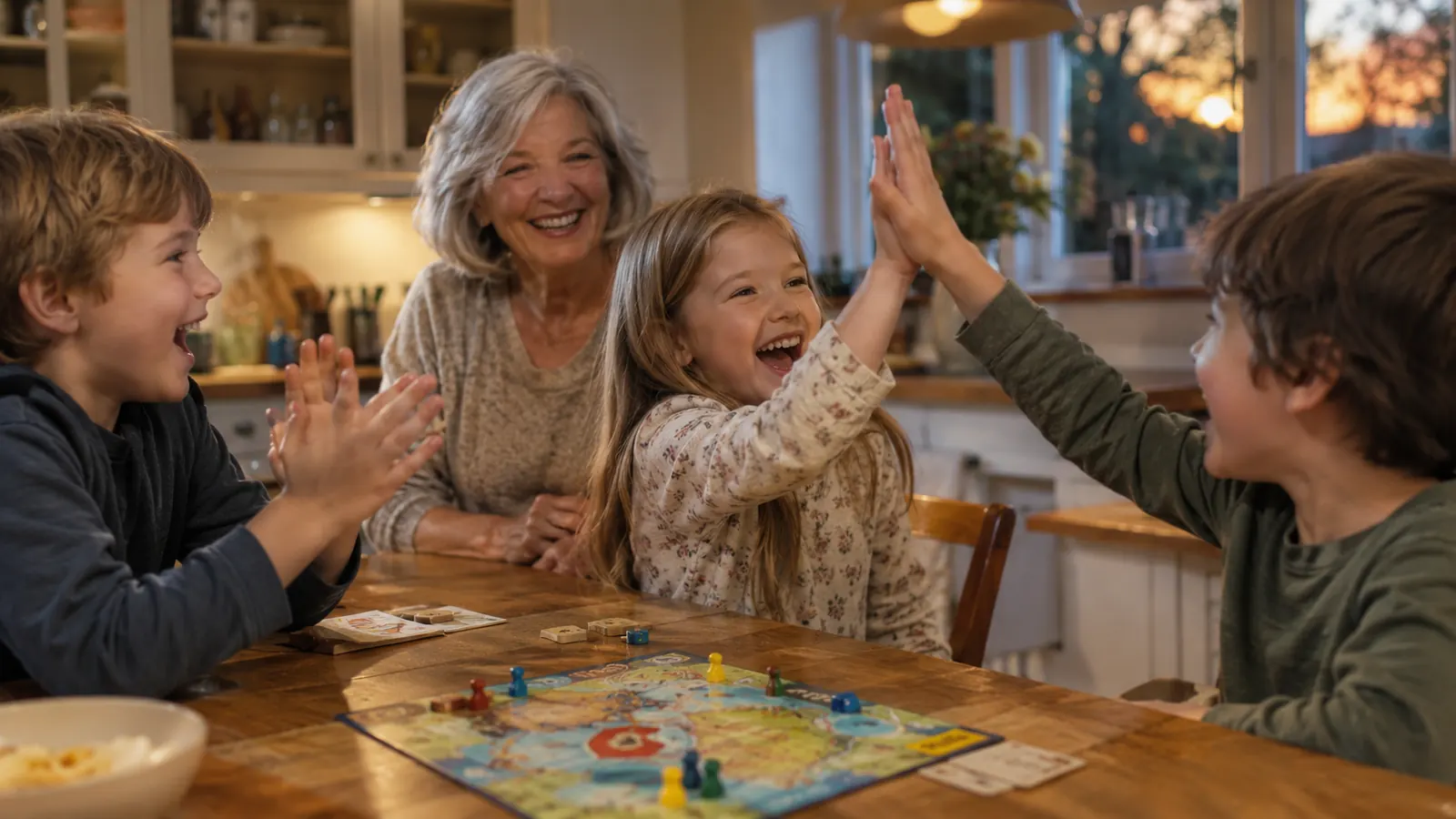
Rosie flipped the board once playing Candy Land. In fifty plays of Hoot Owl Hoot, nobody has ever flipped the board.
How It Plays at Each Age
Rosie, six, plays Hoot Owl Hoot with total confidence. She can read the colors, she understands the shared goal, and she has started gently correcting Frank when he moves the wrong owl. Eli, nine, plays to win the game for the team and has figured out the far-back-owl strategy on his own. Maya, twelve, is old enough that she would never pick it for her own friends, but she plays it with the little ones without checking out, which is the highest compliment a kid can pay a family game.
For contrast, Candy Land at our table now only comes out when Rosie specifically asks for it, which happens maybe twice a year. The older two find it boring, and honestly, so do I. That is not a criticism of the game. It is just the truth about a game with no decisions: it does not grow with anybody. Hoot Owl Hoot grows because you can add owls, which makes the planning harder and the wins sweeter.
What About the Adults?
Frank is the toughest audience in our house. He has to be talked into every game, and he is not quiet about it. Hoot Owl Hoot is one of the few kids' games he will play twice in a row, because there is a real puzzle hiding under the friendly art. The planning question, which owl to move and when to spend the sun card, gives him something to do while the kids giggle.
For me, the adult appeal is simpler. I get to watch the kids work together, and I get to lose with them when the sun wins. There is something quietly wonderful about a game where my job is not to let Rosie win, because we are all on the same side. That is the part no spec sheet will tell you.
The Bottom Line
If I had to pick one box for a young family, it is Peaceable Kingdom Hoot Owl Hoot, and the reason is simple. A game that makes siblings cheer for each other is worth more than a game that makes one of them cry. Candy Land taught my kids to take turns, and I am grateful for it. Hoot Owl Hoot taught my grandkids that a game can be something you win together, and that lesson has lasted past the game itself.
Who Should Buy Which
Buy Candy Land if your child just turned three and has never touched a board game. It is the right first step. Buy Hoot Owl Hoot if you want one game that works for a four-year-old today and still works when she is seven. And if you are a grandparent hosting a mixed-age table like mine, Hoot Owl Hoot is the one that keeps everybody sitting. Candy Land is a nice memory. Hoot Owl Hoot is a game night.
Make room on the shelf for the game they will ask for again
Hoot Owl Hoot is the cooperative color-matching game that has held up through fifty plays at my kitchen table. It works for ages 4 and up, it takes under a minute to set up, and it teaches kids to win together. If you are choosing between the two, this is the box I would put in the cart.
Amazon Check Today's Price on Amazon →