
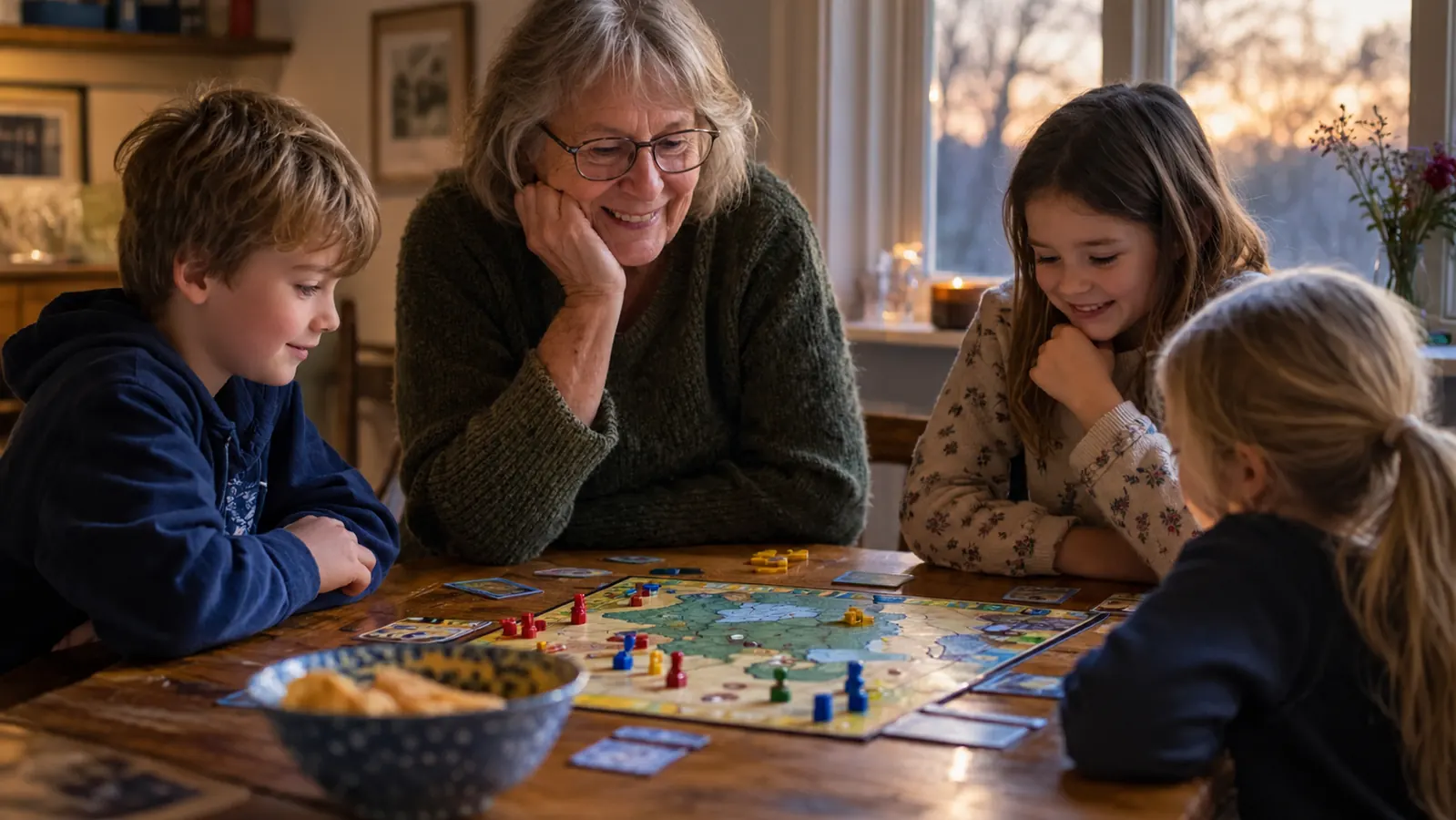
I have one rule at our Sunday game night that took me years to say out loud: nobody leaves the table mad. That rule is harder than it sounds when the youngest player is six and the oldest is twelve. Rosie is six, Maya is twelve, and they share the same oak table, which means most kids' games fail one of them. Competitive games end with one happy child and one sulking child. Elimination games leave the youngest sitting out while the rest keep playing. I spent the nineties playing video games with my own kids, so I am not precious about classics, but I could not find a box that worked for both ages. Then Hoot Owl Hoot by Peaceable Kingdom showed up at our house one Sunday, and game night changed.
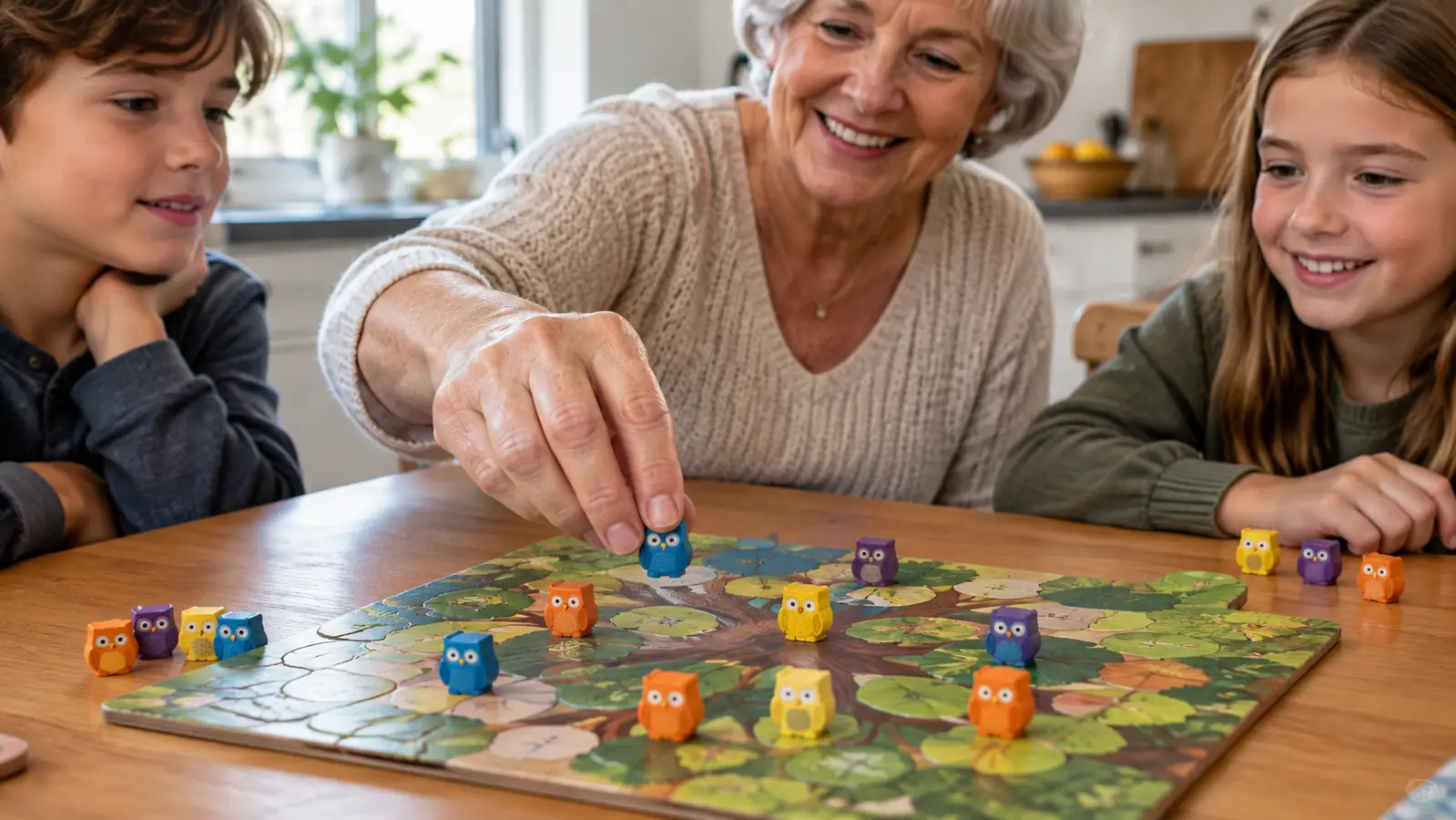
Hoot Owl Hoot is a cooperative matching game. The owls move along a path toward their nest, and the players move them together, trying to get every owl home before the sun card turns up. Everyone wins, or everyone loses together. In the months since, it has become the box that comes off the shelf first on Sunday. Here are ten reasons cooperative games belong in a house with young kids, every one of them learned the slow way, at our table.
One box. Three ages. Zero tears.
If you have kids of different ages at the same table, Hoot Owl Hoot is the most reliable game night pick I own. It takes two minutes to set up and ten to play, and nobody goes to bed mad.
Amazon Check Today's Price on Amazon →Nobody gets sent to the bench
Most young kids' games are elimination games. Draw the wrong card, land on the wrong space, and you are out, watching everyone else have fun. A six-year-old hears that as 'you did something wrong.' In Hoot Owl Hoot, there is no benching. Every owl that reaches the nest got there because every player kept playing, and the kids who finish their turn early stay invested because the outcome still depends on them. Rosie has never once asked to quit mid-round, which I cannot say for any competitive game we own.
Losing together beats losing alone
The sun card is the timer, and when it comes up before all the owls are home, the table loses together. That sounds like a small difference, but watch what it does to a child. Instead of one kid feeling singled out, all three start talking about what they would do differently. Maya, at twelve, starts talking through her moves. Eli, at nine, counts the moves. Rosie, at six, just wants to shuffle and go again. The loss becomes a puzzle instead of a punishment.
It scales to the kid in front of you
The rules let you choose how many color cards to deal, which changes how hard the game is. With Rosie we use fewer cards, so the owls get home with room to spare. With Maya we add more, and suddenly the table has to think. One box, two difficulty levels, and nobody feels talked down to. Peaceable Kingdom put that dial in the rulebook on purpose, and it is the reason the same game works for a kindergartner and a middle schooler.
A six-year-old can genuinely play with a twelve-year-old
No reading is required, and every choice is visible on the board, so Rosie makes real decisions instead of just rolling a die and watching Maya play. At the same time, the game is not so simple that Maya is bored. Cooperative games quietly remove the gap that usually splits a table by age. The youngest player is not a passenger. Her turn matters as much as anyone's, and she knows it.
Turn-taking without the sting
Every kids' game teaches turn-taking, but competitive games make waiting feel like a punishment. In a cooperative game, waiting is part of the plan, because every turn moves the whole team closer to the nest. Rosie has learned to watch the board while she waits instead of fidgeting. That skill, paying attention when it is not your turn, is the same skill she will need in a classroom. It just shows up here disguised as owls.
It ends on a cheer, not a sigh
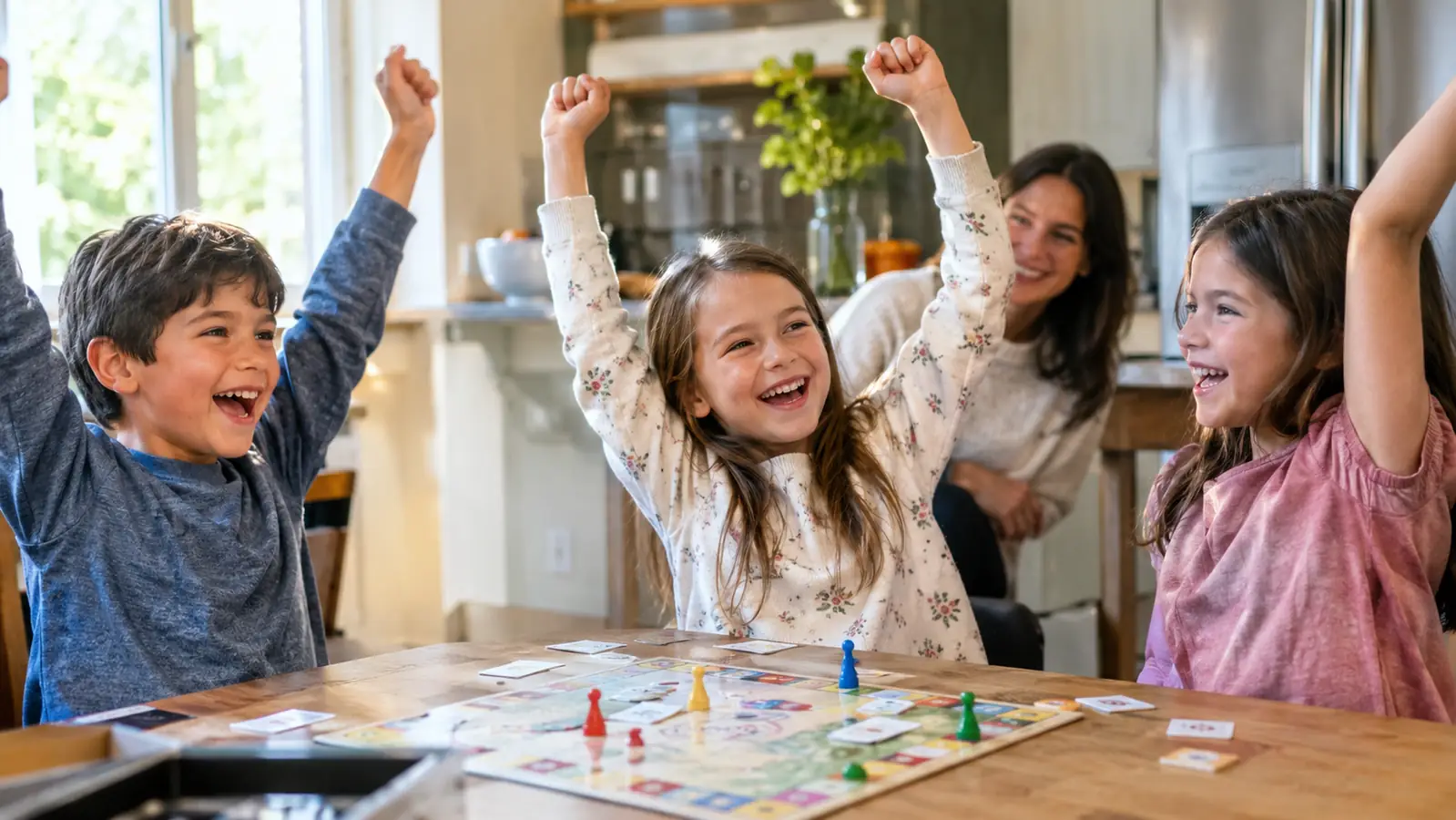
The first time all three owls made it home, the noise brought Frank in from the other room. That sound is the whole argument for cooperative games. A winner-takes-all game ends with one child celebrating and the others practicing fake smiles. Hoot Owl Hoot ends with the whole table happy, including the adults. Frank, who has to be talked into game night every single Sunday, was the one suggesting 'one more round.'
It teaches planning without a lecture
There is real strategy hiding in the simple rules. You learn to move the owl that is furthest from the nest first, and to match the cards that are hardest to pair up. Kids figure this out by playing, not by being told. By the third round, Eli was narrating his reasoning out loud: 'If I play this card, that owl gets closer, and then we can match the other color next.' That is sequencing, and it came from a cardboard game.
Setbacks are practice for real life
The sun card turns up when you least want it, and the table has to regroup and try again. That is a safe place to learn that losing a round is not the end of the world. The kids are disappointed together, then they reset the board and go again. Peaceable Kingdom's design turns a bad draw into a conversation about what to do differently, which is a better lesson than any game that just hands one child a win.
Twenty minutes fits real attention spans
Setup is under two minutes, the rules fit on one card, and a full game runs about ten to fifteen minutes. Short games mean you can play twice, and the second round is where kids actually start thinking. I would rather play two rounds of Hoot Owl Hoot than one long game where Rosie checks out halfway. It also means game night can survive a school night, which is when it usually has to.
Game night becomes something everyone asks for
The real test of any game on my shelf is whether it gets asked for by name. Rosie now says 'can we play the owl game?' on a Tuesday, not just a Sunday. Maya brings it to the table when friends come over. That is the thing cooperative games do that competitive games rarely manage: they make the table feel like a team. When the box has earned that, it stays on the shelf nearest the table.
What I'd Skip
Cooperative games are not the answer to every game night. If your kids are old enough to enjoy real strategy, Hoot Owl Hoot will not hold them for long on its own. Rosie has not outgrown it yet, but I can see the day coming when Maya will want more to chew on, and that is fine. I also would not hand the cardboard tokens to a toddler, because they will not survive a mouth. And if you have a house full of fiercely competitive kids who love a winner, a cooperative-only shelf will miss what they are asking for. Balance is the point. For the youngest players at the table, though, cooperative games are the difference between game night they dread and game night they plan around.
One Sunday, the game ended and nobody moved. Maya said 'let's play it again with more cards,' and that is when I knew the box had earned its spot.
Put a cooperative game on your shelf
Hoot Owl Hoot is the box that fixed Sunday game night at our house, and it is the one I recommend first to any family with mixed ages at the table.
Amazon Check Today's Price on Amazon →