
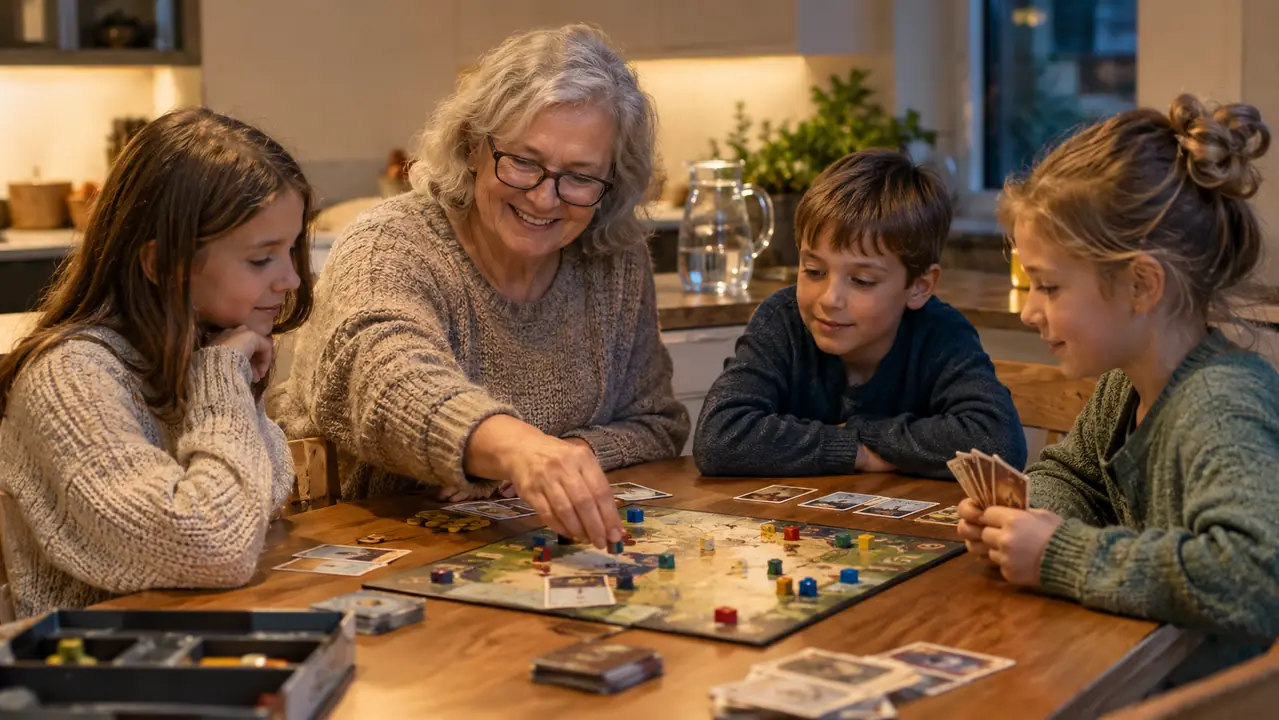
Every Sunday night, the same six chairs come out around our oak kitchen table in Bakersfield. Maya is twelve, Eli is nine, Rosie is six, and Frank only joins when I promise the game will end before his show starts. For years, game night with those three ages meant one of three things: Rosie lost interest, Eli got competitive, or Maya felt like she was babysitting. Then I learned that the problem was not the kids. It was the type of game. A competitive game has one winner and three disappointed people. A cooperative game makes everyone play on the same side, and the Gamewright board game Forbidden Desert has become the anchor of our Sunday night ritual.
This guide is not a review, though I have plenty of opinions after dozens of plays. This is the exact way I set up and run a cooperative game night with Forbidden Desert, so the rules get learned fast, nobody feels left out, and the game actually ends with high fives instead of hurt feelings. Whether you are hosting grandparents or a pack of kids, the same steps will save you the confusion I went through on our first try.
One Box, One Table, Three Happy Kids
Forbidden Desert gives every player a reason to care about the whole table. Hand each person a job, read the cards out loud, and let the storm do the talking. That is how a game night turns into a tradition.
Amazon Check Today's Price on Amazon →Why Forbidden Desert Earned a Spot on Our Shelf
I grew up playing video games with my own kids in the nineties, so I judge tabletop games the same way I judged a cartridge back then: does it make people want to play again immediately after losing? Forbidden Desert passes that test better than any game we own. The board changes every time you play because the tiles shift, the storm moves, and the objectives are different depending on how many players sit down. That replay value matters when you host the same group every single week.
The other reason it works for our family is that it does not punish the youngest player. Rosie can read the simple icons on the cards, and when she cannot, Eli helps without being asked because helping is the whole point. In a competitive game, helping your little sister usually means losing. In Forbidden Desert, helping your little sister is the only way to win. That flipped a switch for my grandchildren, and it will for yours too.
Step 1: Pick Your Table and Set Up Before the Kids Arrive
I know this sounds too basic to say out loud, but the single biggest mistake I made on our first cooperative game night was trying to read the instructions while three kids waited with their hands on the box. Do not do that. Set up the game by yourself, or with one patient adult, about fifteen minutes before anyone else sits down.
For us, that means clearing the oak kitchen table down to the wood, pushing the salt and pepper to the counter, and making sure every seat has enough room for a player board, a drink, and an elbow. Forbidden Desert does not need a huge footprint, but it does need a flat, stable surface where the tiles will not slide when someone leans in to look.
I also put the box on the den bookshelf where the games live, so it is easy to reach but not in the middle of the table where it blocks sightlines. The pieces go where the instructions say, the deck gets shuffled, and by the time Maya asks what we are playing, the answer is already on the table.
Step 2: Read the Rulebook Cover to Cover, Then Teach It in One Minute
Before the kids arrive, I read the Gamewright rulebook the way I used to read a new textbook before teaching it. Forbidden Desert has a reputation for being easy to learn, and that reputation is earned, but only if someone at the table understands the flow. The goal is to find the flying machine parts, escape the desert, and keep the water level from hitting zero. Everything else is details.
When I teach it, I do not lecture. I say three sentences. We are all on the same team. We are trying to find four machine parts and get out before the storm buries us. On your turn you can do a few actions, and we will figure out the choices together. Then we start playing and the rules reveal themselves one at a time. That is faster and less boring than a ten minute explanation.
The trick is to let the game teach itself. The first turn will be clumsy. Someone will move the wrong number of spaces. A tile will get flipped and everyone will gasp. That is good. That is how a six year old learns a rule she will remember forever, because she learned it by watching the storm do something dramatic, not by listening to an adult recite a paragraph.
Step 3: Give Every Player a Job Before the First Turn
Forbidden Desert is cooperative, but that does not mean everyone should do a little bit of everything. In my experience, a game night goes sideways when one person, usually the oldest or the most confident, starts telling everyone what to do. The fix is to give each player a job that matters and let them own it.
Maya is twelve and loves a challenge, so I make her the navigator. She tracks where the machine parts are, which tunnels are safe, and which direction the storm is pushing us. Eli is nine and full of energy, so he is our water carrier. He watches the water level, moves the tokens, and announces when we need to change plans. Rosie is six, and her job is to flip tiles and read the symbols out loud, because she can do that even when she cannot read the words yet.
Giving Rosie a real job instead of a pretend job made the biggest difference. She is not just along for the ride. When she flips a tile and reads the symbol, she is doing work the whole team needs. Frank, when I can talk him into playing, gets the job of reminding us to breathe when the storm turns. You would be surprised how often that is the most important role at the table.
Step 4: Think Out Loud and Keep the Quarterback Quiet
The biggest problem in a cooperative game is the player who takes over. It is usually not a mean kid. It is usually an excited kid, or an adult like me, who sees a good move and cannot stop themselves from ordering everyone around. The rule at our table is simple: you can suggest, but the player whose turn it is makes the final call.
I also think out loud on purpose. When it is my turn, I say things like I am worried about the water, so I am going to use my turn to move toward the well instead of digging for a part. That gives the kids a model for how to make decisions without turning the game into a lecture. They hear the reasoning, they copy the reasoning, and within a few turns they are narrating their own moves.
If someone makes a bad move, let it happen. I know it is painful. I know you can see the perfect play three turns from now. But the game is more fun when the mistakes are visible and the team recovers together. The only time I step in is when Rosie is about to do something that will end the game instantly, and even then I ask her if she wants to hear an idea before she locks in her choice.
Step 5: Make Losing Part of the Ritual
Here is what nobody tells you about cooperative games: you will lose. Forbidden Desert is not a game you win every time, and that is exactly why it keeps working for us. If the game always ended in victory, the victories would stop meaning anything. The storm is supposed to win sometimes.
When we lose, I do not rush to put the game away. We leave the board out for a few minutes and talk about the moment things went wrong. Eli usually knows exactly which turn cost us. Maya will point out a move she wishes she had made. Rosie just wants to know if we can play again. The answer is always yes, and that is the part that turns a loss into a memory instead of a disappointment.
I have also learned to schedule a rematch in the same night when the first game ends badly. The second game is always better because everyone already understands the rhythm. By the third Sunday, you will not need to ask who wants to play. The kids will be at the table before you finish clearing it.
The storm is supposed to win sometimes. When it does, leaving the board out for five minutes and talking about the turn that broke us is what turns a loss into a memory.
What Else Helps
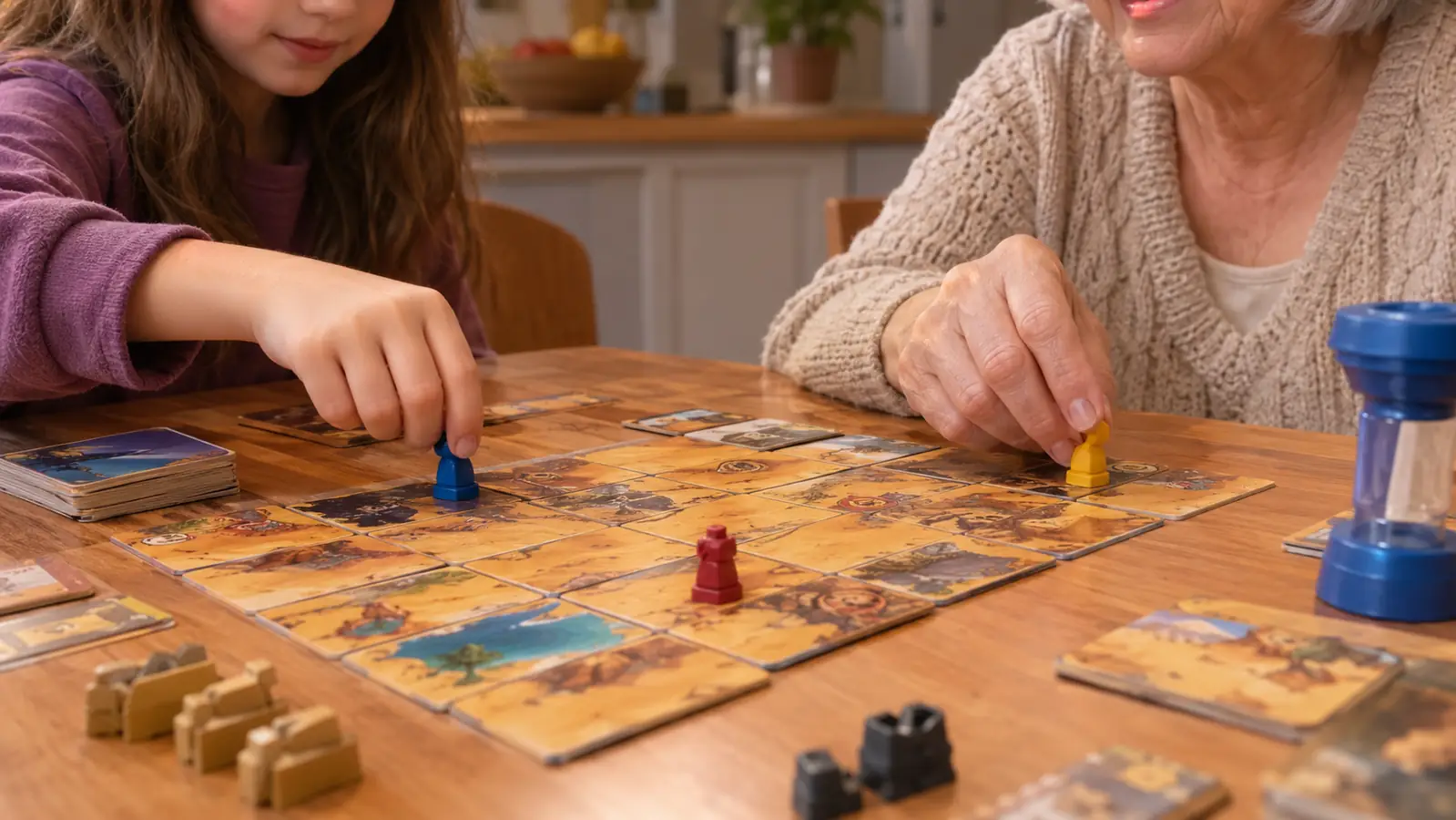
A few small extras make the whole night smoother. I keep a stack of paper cups and a big pitcher of water on the counter, because the game makes everyone thirsty and refills cut into play time. I put the phone on silent and ask the kids to do the same, not because I am strict, but because one notification can break the spell of a good cooperative moment. And I always thank the person who lost the game for us, usually me, because modeling a good loser is the quietest lesson game night teaches. The Gamewright rulebook also has a handy reference on the back, and I leave it face up on the table so nobody has to ask what a symbol means.

Why You Should Try It This Sunday
If you have been putting off game night because your kids are at very different ages, or because you are tired of refereeing arguments, this is the Sunday to try something different. Cooperative games do not eliminate every argument, but they change the reason people argue. Instead of fighting over who won, your family will argue over which tunnel to dig first. That is a much better problem to have.
My favorite part of Forbidden Desert is watching the kids forget that they are learning. Maya is practicing planning and resource management. Eli is practicing reading the group and responding to pressure. Rosie is practicing patience and turn taking. They think they are just playing a game about a desert and a storm. They are also practicing the skills that make a family work well together, one Sunday at a time.
And if you only have one evening a week, do not worry about getting every rule perfect. The box will be waiting on the den bookshelf for next Sunday. The first game is about learning to lose together. The second game is where the teamwork shows up. By the third, the kids will be setting it up before I even pour the tea.
Host Your Own Cooperative Game Night This Sunday
Forbidden Desert has earned its place on our shelf because it keeps working week after week. Set the table, hand out the jobs, and let the storm do its worst. Your family will thank you.
Amazon Check Today's Price on Amazon →