
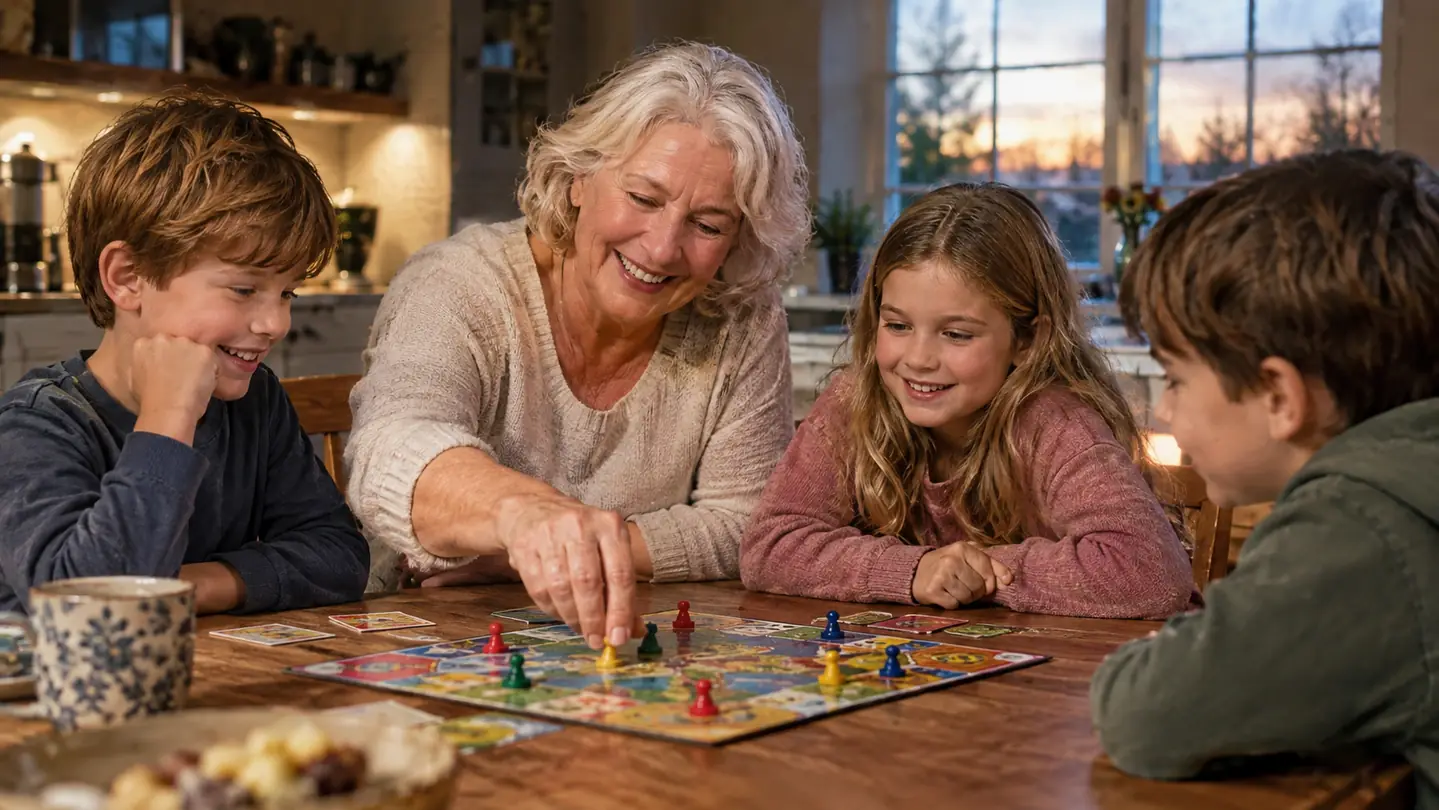
Every Sunday night, the oak kitchen table in Bakersfield fills up with three grandchildren, one reluctant husband, and whatever game I have decided we are learning next. Maya is twelve and reads the rules like a lawyer. Eli is nine and wants to win so badly he vibrates. Rosie is six and mostly wants to be the one who handles the pieces. For a long time, finding a game that all three of them could enjoy without somebody crying was a real puzzle. Then, last December, Gamewright's Forbidden Desert showed up under the tree, and it quietly changed how I think about family game night.
Forbidden Desert is a cooperative survival game. Nobody wins alone and nobody loses alone. Either the whole table escapes the desert together, or the whole table goes down with the sand. It comes from Gamewright, and it was designed by Matt Leacock, the same mind behind Pandemic, which is a name that should tell you a lot about what to expect. Six months and somewhere past forty games later, I can tell you exactly why it works for our table, and also exactly where it gets frustrating.
The Quick Verdict
A cooperative game that actually gets everyone talking, planning, and occasionally shouting over each other in a good way. Six months in, it is still the game my grandkids ask for by name.
Amazon Check Today's Price →The cooperative game that survived six months of Sunday nights
Gamewright's Forbidden Desert keeps a twelve-year-old, a nine-year-old, and a six-year-old at the same table for a full hour. Check today's price on Amazon and see if it earns a spot on your shelf.
Amazon Check Today's Price on Amazon →How I've Used It
I have played Forbidden Desert at least twice a month since last December, which puts us somewhere past forty games. We play at the oak table with all six chairs, though Frank usually parks himself at the end with his coffee and claims he is just watching. He always ends up moving somebody's piece by the third turn. The box lives on the middle shelf of the den bookshelf, where the kids can reach it, and more often than not it is the first game they pull down.
A full game takes about forty-five minutes once everyone knows the rules, and about an hour when Rosie insists on doing every dig herself. The box says two to five players, ages eight and up. Rosie is six and she plays fine with a little coaching, which I think is the highest compliment I can give a rulebook. Eli plays to win, Maya plays to plan, and somehow the game gives all three of them a job that matters.
I also tested it the way I test every game, which is to say I read the rulebook cover to cover before the kids arrive, then set it up alone on a Tuesday afternoon and played every role at once to see where the traps are. That is not normal behavior, but it is how I judge a game, and it is how I know this one is fair.
What the Desert Actually Does
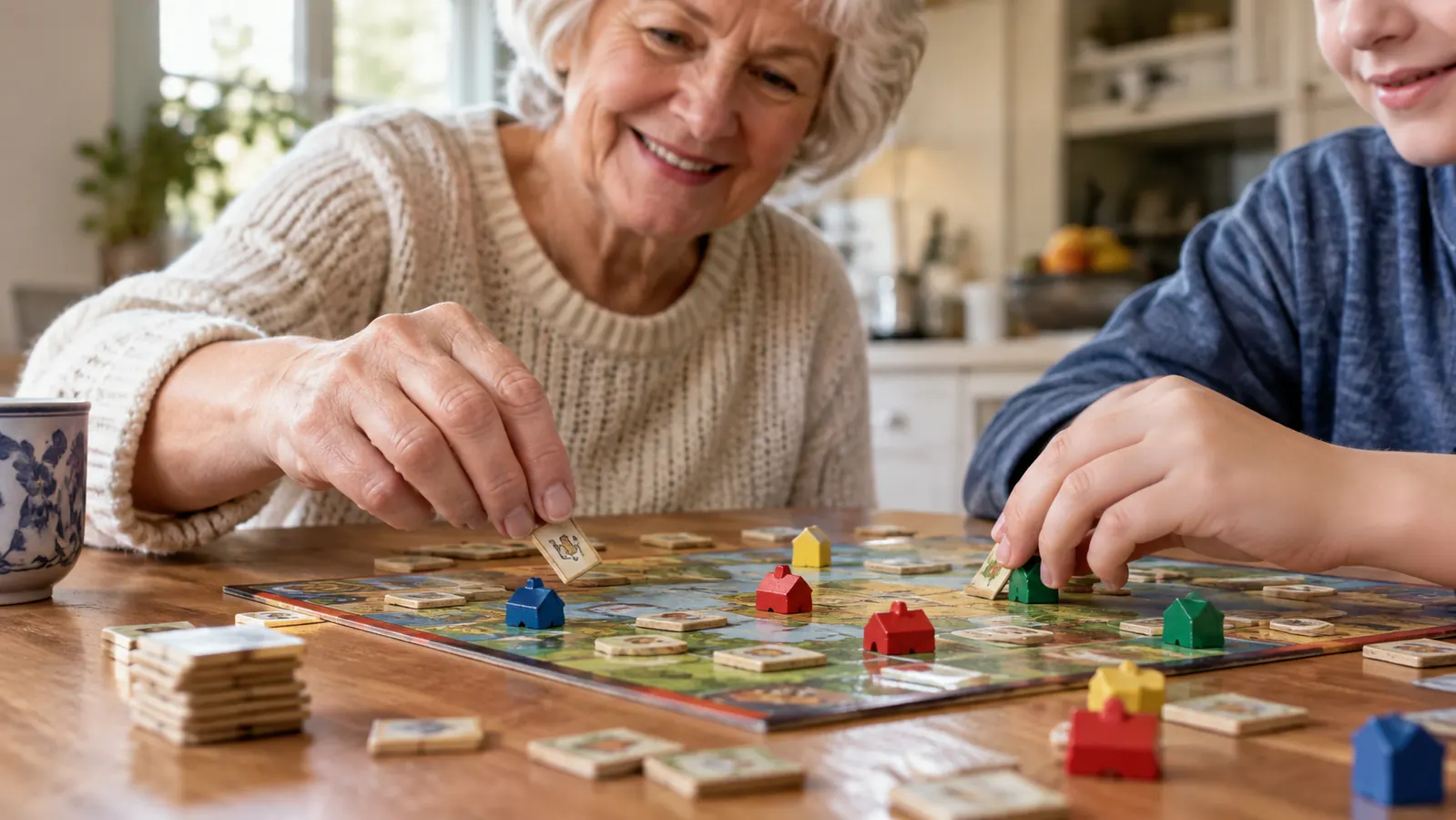
The setup is simple. You lay out a grid of tiles, and each tile hides either a piece of a flying machine, a gear token, or nothing at all. The players are a team of adventurers who crashed in the desert and need to find four machine parts, assemble them, and get everyone to the launch pad before the storm buries them.
The twist is the storm. Every turn, the storm marker moves across the board and dumps sand onto tiles, and the sun beats down and drains your water. If a tile gets buried twice, it blows away entirely and the desert gets smaller. The board literally shifts under you, which sounds like a gimmick and turns out to be the whole game. You are not solving a static puzzle. You are trying to plan around a board that keeps changing, and that is where the real fun lives.
The roles keep it interesting. The Water Carrier can hold more water, the Meteorologist can push the storm around, and the Archeologist digs faster. With three players we each take one role and talk constantly. That conversation is the real game, honestly. You win by making a plan together and then watching the plan fall apart in a way that is exciting instead of mean.
The gear tokens add the last layer. A solar shield blocks the sun for a turn, a jet pack lets you fly across the board, and a few other gadgets give you just enough advantage to feel clever. Choosing when to use them is the whole skill of the game. Use them too early and the desert eats you. Save them too long and you never get the chance.
After Forty Plays, What Holds Up
The box has been opened, slammed, stacked under two other games, and carried to the table maybe fifty times. The tiles still fit together snugly. The cards show almost no wear. The little plastic pawns have survived being used as spaceships and hockey players while the adults were not looking. Component quality is genuinely good, which matters when a six-year-old is involved.
Replay value was my biggest worry, because a cooperative game can turn into the same puzzle every time. Forbidden Desert avoids that with the shifting board and the random tile layout. No two games start the same, and the storm meter makes the difficulty climb at its own pace. We have won and we have lost, and the losses are the games the kids talk about more.
The rulebook is the quiet hero. It is short, well organized, and written in plain English. I have taught this game to a six-year-old, a nine-year-old, a twelve-year-old, and a husband who claims he does not do rules. All four were playing a real game by the end of the first round. That is rare. Most family games take a full playthrough before anyone stops asking questions.
We have also played with the difficulty dial, which the rules call the storm level, and I recommend starting on the normal setting. My favorite house rule is simple: everyone gets one mulligan per game, one chance to undo a move that buried the last machine part. The kids love it, it keeps the mood light, and it does not make the game any easier to win.
Where It Gets Frustrating
I will be honest about the rough edges, because a review that only praises is not a review. The first edge is the luck factor. You can play a smart game and still lose because the storm went the wrong way and the last machine part is buried under three sand piles. For adults who like to feel in control, that can sting. For kids it is actually fine, because the loss is shared.
The second edge is the player count. At two players the game is good but not great. The conversation that makes it special gets thin with just two roles on the board. I would rather play at three or four players every time. The box says two to five, and that is true, but the sweet spot is definitely the middle.
The third edge is the quarterback problem, which is the polite name for one player telling everyone else what to do. With three kids at one table, the oldest sometimes takes over. I have learned to let it happen for a turn or two and then step in. That is a parenting note, not a game note, but it is worth knowing before you buy.
Setup and cleanup are quick, which I appreciate more than I expected. The tiles go back in the box in one layer, and everything fits with room to spare. The game does take up the whole table, though. On a six-seat oak table we have to push the salt and pepper to the counter, and if we ever host more than four players, I am not sure where the extra chairs would go.
How It Compares to the Other Games on Our Shelf
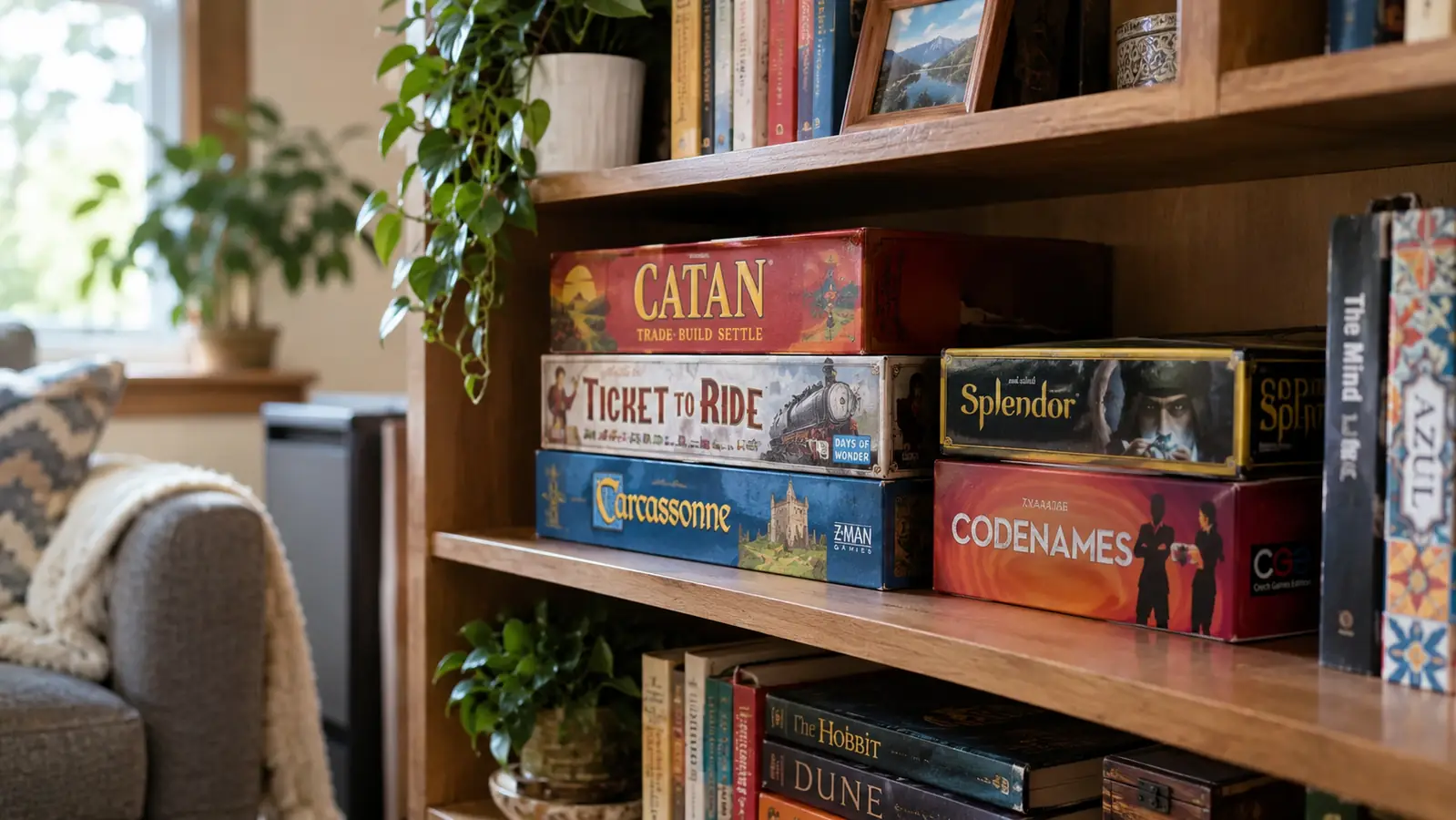
We also own Forbidden Island, the older sibling in this family, and Pandemic, which comes from the same designer. Forbidden Island is faster and simpler, and it is still the better choice if your youngest player is five. Forbidden Desert takes the same idea and adds the storm and the shifting board, which gives it more depth without making it homework.
Pandemic is the game I play with adults who want a challenge. It is brilliant, but it is tense in a way that does not always work at a table with a six-year-old. Forbidden Desert sits in the middle. It has real decisions, real tension, and a real chance of losing, but the theme is lighter and the playtime is shorter. For our Sunday nights, that middle ground is exactly right.
The other thing I will say is that this Gamewright game has quietly changed what my grandkids ask to play. It is not the game they pick when they want to show off. It is the game they pick when they want to actually play together. That is a different category entirely, and it is the one I care about.
What I Would Tell Another Grandparent
If you are thinking about buying this for your own grandkids, here is what I would tell you over the phone. The first game will be slow. Read the rulebook before they arrive, set the tiles up in advance, and do not let the oldest child run the table. The second game is where the magic shows up, once everyone understands that losing together is not the same as losing.
Expect the kids to argue about strategy, and expect that argument to be the highlight of the night. In a competitive game, an argument ends with somebody feeling bad. In this one, the argument ends with the group trying the plan, watching it fail, and laughing about it. That is a genuinely different experience, and it is the reason I keep setting up the tiles.
And plan for it to become a habit. Our Sunday nights used to bounce from game to game. Forbidden Desert is the first one that stays in the rotation month after month. If you want a box that will still be on the table next spring, this is a strong bet.
What I Liked
- True cooperation: everyone wins or loses together, which is magic with kids
- The shifting board keeps every game different, even after forty plays
- A short rulebook that actually teaches well
- Sturdy components that survive real family use
- Plays in about 45 minutes, the right length for a school night
Where It Falls Short
- Luck can sink a good plan, and that frustrates adults more than kids
- Two-player games feel thin compared to three or four
- Older kids may try to quarterback the whole table
- The 8+ age rating is honest; a younger player needs coaching
Six months in, Forbidden Desert is still the first game the kids pull off the den shelf, and that is not true of anything else we own.
Who This Is For
Buy this for a family with kids in the eight-to-twelve range who are ready to work together instead of against each other. It is especially good if you have a mix of ages, because the older kids can take the harder roles while the younger ones dig and move without feeling left out. It also works for adults who want a real challenge without a two-hour rulebook.
If you host game night the way I do, with one eye on the clock and one ear on the argument brewing at the end of the table, this is a game that mostly keeps the peace while still giving everybody something to think about. That is a hard combination to find.
I will also say it works for a grown-ups-only table. Frank and I have played it just the two of us on a quiet Friday, and while I said two-player is not the sweet spot, it still beats most of the two-player games on our shelf. The cooperation changes the mood even between two adults.
Who Should Skip It
Skip it if your group hates losing to the game itself. Forbidden Desert will beat you, and it will not care how clever you were. Players who want a pure strategy contest with no luck should look elsewhere. Skip it too if you only ever play with two people, because this game is noticeably better with three or four.
And if you have a very young player who cannot yet lose a shared game without tears, start with something simpler. Rosie needed a few games before she could lose gracefully, and we had one rough night early on. The game is not mean, but it is not easy either. That is exactly what some families want and exactly what others do not.
One more honest note: if your family prefers games where everyone keeps their own score and the winner gets bragging rights, this will feel strange. There is no winner. There is only the table versus the desert. Some families find that liberating. Others find it unsatisfying. You know yours better than I do.
Give your family the game they will actually ask for
Gamewright's Forbidden Desert has earned a permanent spot on our shelf. If it sounds like the right fit for your table, check today's price on Amazon before your next game night.
Amazon Check Today's Price on Amazon →