
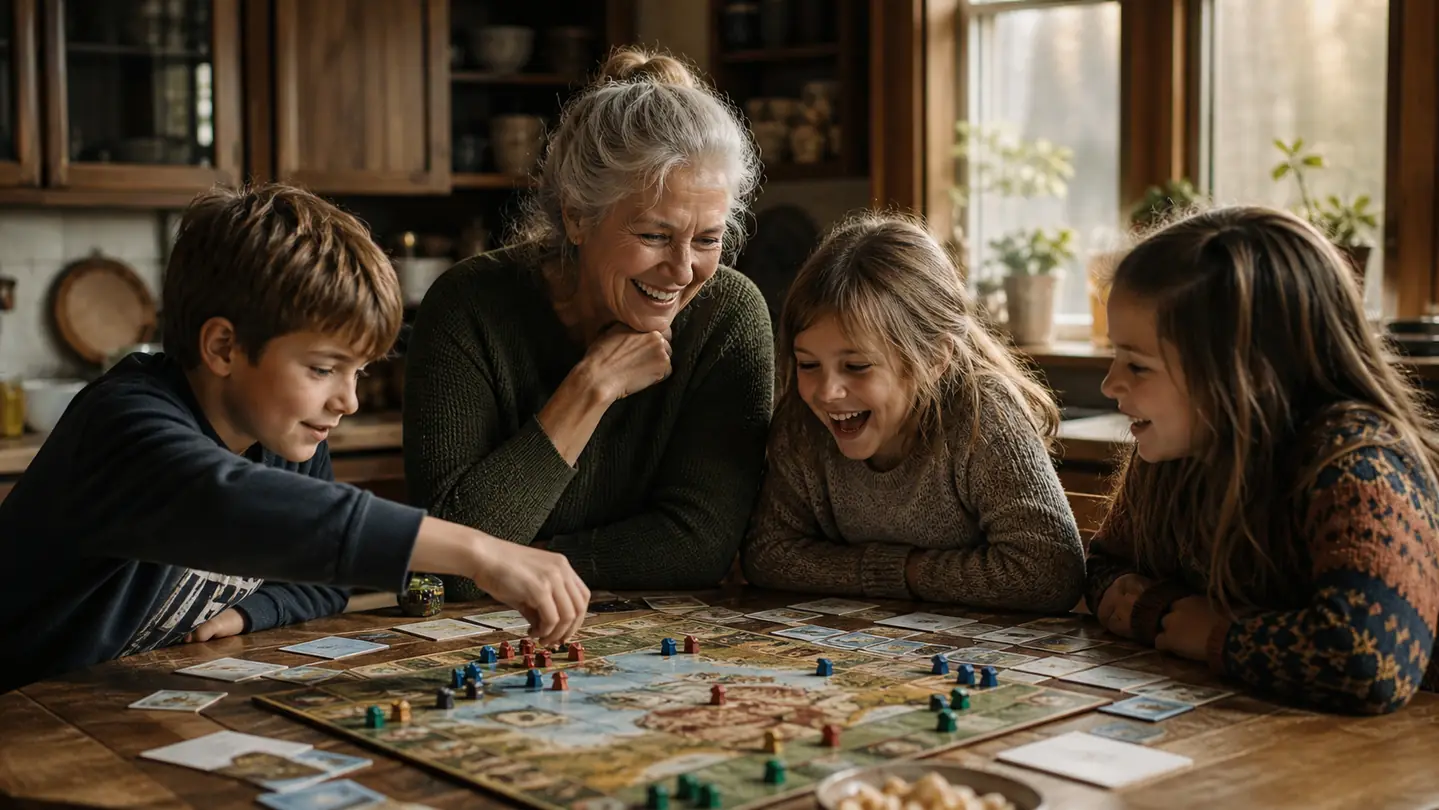
Every Sunday at six, the grandkids know the drill. Maya, Eli and Rosie slide into their spots at our oak kitchen table, and before I can pour the lemonade, somebody asks the same question: 'Grandma, are we playing against each other tonight?' That question matters more than they let on. When it is every kid for themselves, somebody walks away mad. When we pull out a cooperative game like Gamewright's Forbidden Desert, we are all on the same side, and the only thing we are trying to beat is the game itself.
I ran game nights for my own kids back in the nineties, and I still do it now for the grandkids. A lot of boxes have cycled through the den shelf in that time. Forbidden Desert is the one the children ask for by name, and it is the first one I recommend when a parent tells me their family night ends in sulking. Here are ten reasons cooperative games win, with the desert as the proof.
The Sunday-night fix for the every-kid-for-themselves problem
Gamewright's Forbidden Desert puts the whole table on one team, and it is the game my grandkids request by name. If your family night has a sore loser problem, this is the box that fixes it.
Amazon Check Today's Price on Amazon →Everybody wins, including the six-year-old
The whole point of a cooperative game is that the table works together against the desert, not against each other. When we win, we all win. When we lose, we lose together, which somehow never feels as bad. Rosie, at six, gets the same high five as Maya, at twelve. Nobody sits at the end of the table trying to hide tears over a board game, and that alone has made Sunday nights calmer in our house.
A six-year-old and a twelve-year-old can share the same table
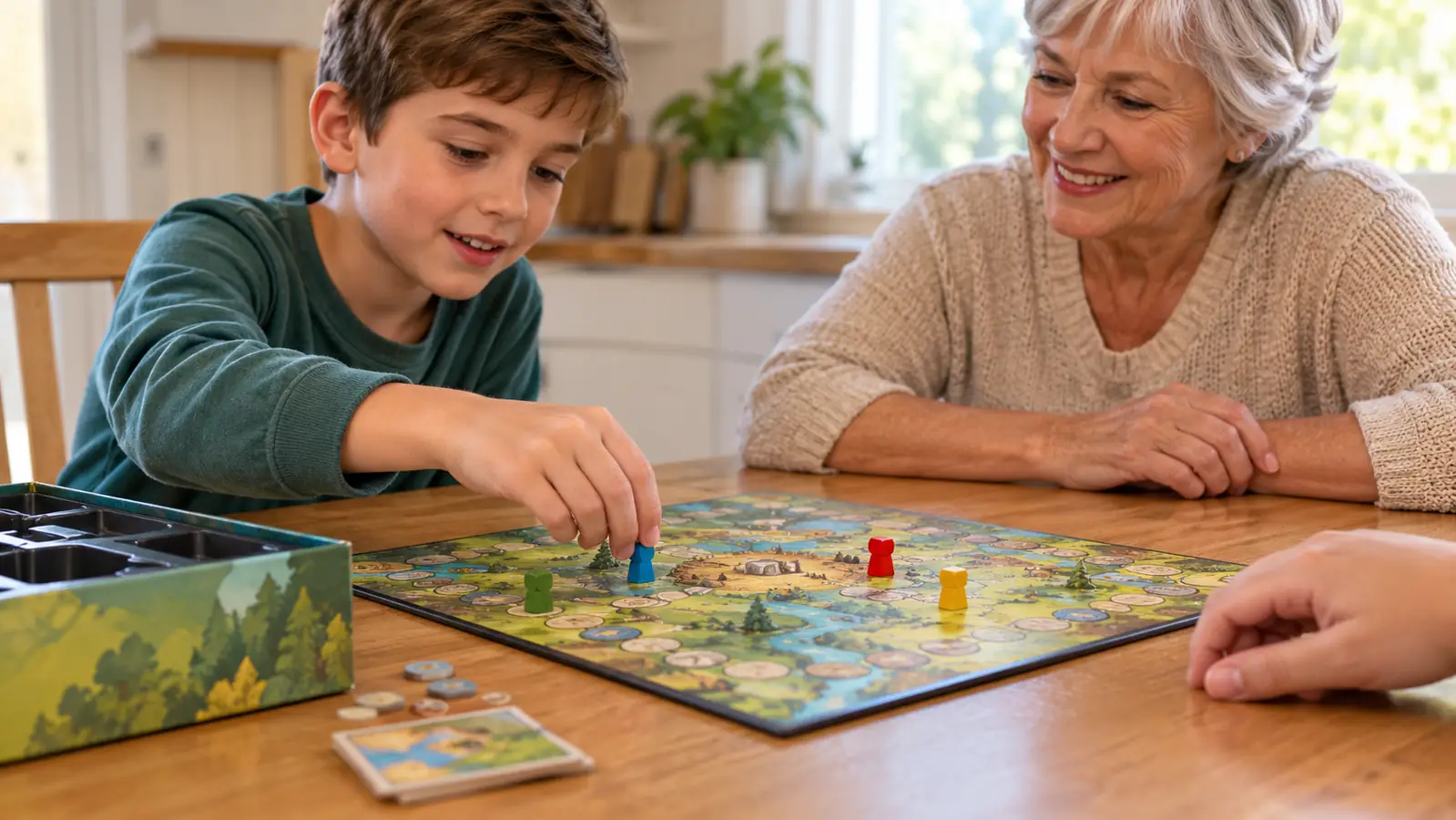
The box says ages 10 and up, and I will be honest: that rating is fair for playing the full rules on your own. Rosie is not there yet, so she plays on my team. She draws the gear cards, she places the pieces, and she announces what we found. Maya plays her own role with the full rules. One game, two difficulty levels, zero arguments about who gets to do what. That is the rare trick not many boxes in our den can pull off.
It makes the quiet kid talk
Eli is the quiet one at our table. In competitive games he can sit through the whole round without saying much. Forbidden Desert changes that. You cannot win by keeping your plan to yourself, because the team needs to know what you found and where the storm is pushing. By the second game, Eli was the one doing the talking, telling us which tiles to dig and where to move. I did not expect a board game to do that, and it has been the biggest win of all.
The storm meter creates excitement, not anxiety
Forbidden Desert gives you a countdown: the storm meter climbs, the water tokens run low, and the tiles shift under your feet. That pressure sounds stressful, but in practice it is what keeps the kids leaning forward. They are not worried about being eliminated, because nobody gets eliminated. They are just trying to beat the clock together. There is a difference between a timer that makes you panic and a shared deadline that makes you cheer, and this game understands it.
No two games play the same
The desert tiles move every turn, which means the board is never the same twice. The machine parts hide in different places, the storm pushes in different directions, and the roles we draw change our strategy completely. We have played this Gamewright box well over fifty times and I still cannot predict how a round will go. For a family that replays games until the cardboard wears thin, that replay value is the whole ballgame.
It fits into a school night
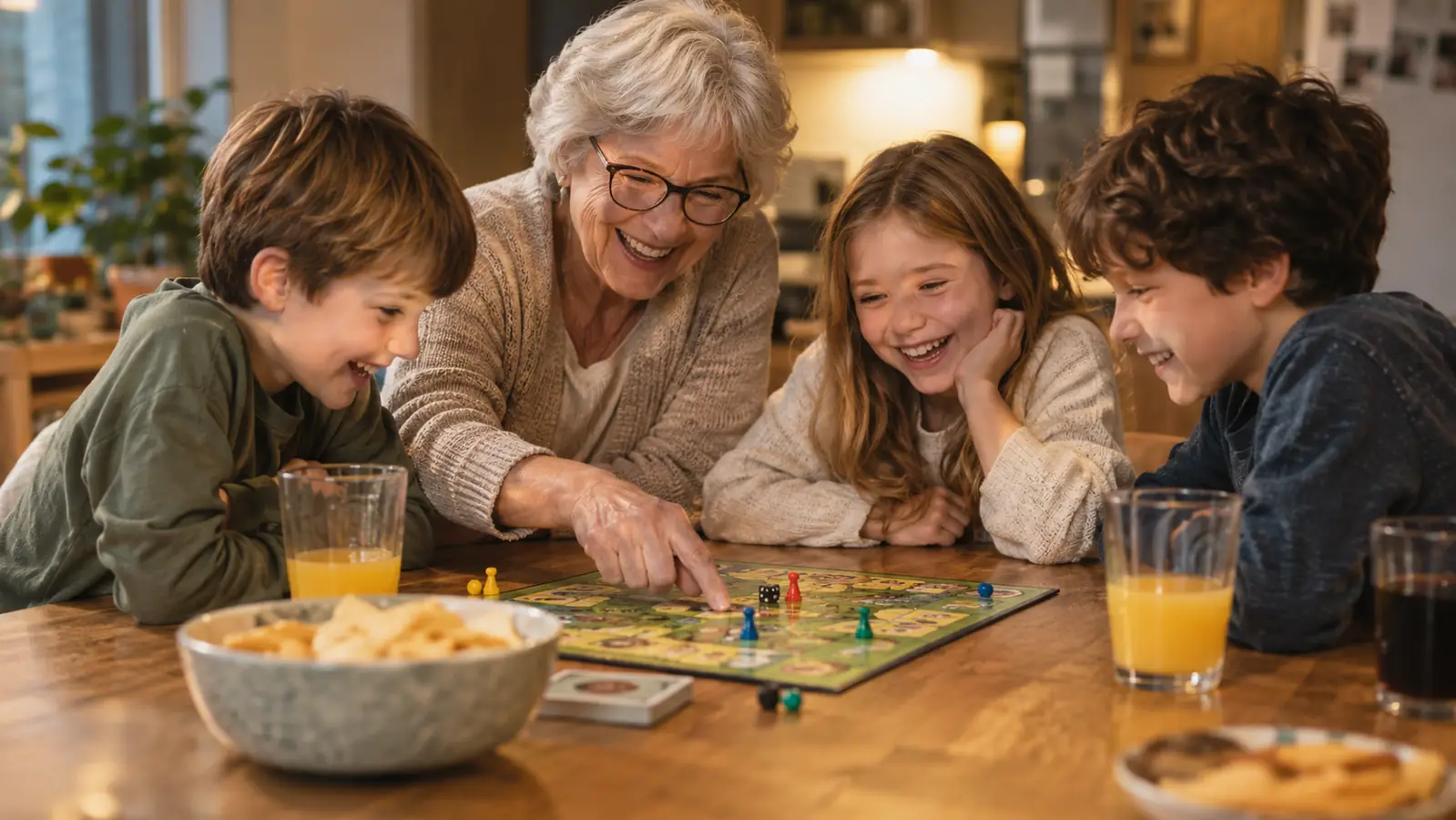
A full game runs about 45 minutes once everybody knows the rules, and our first few games were closer to an hour because we were learning together. That is long enough to feel like a real adventure and short enough that nobody is dragging themselves to bed. We have started rounds after dinner on a school night and still had the table cleared by eight. Not every game on our shelf can say that.
One read of the rulebook is enough
I read every rulebook cover to cover before the kids arrive, so I have a low tolerance for badly written instructions. Forbidden Desert is one of the cleanest rulebooks I have opened in years. Each player has a simple special ability, the turn order is easy to follow, and the board tells you what to do at every step. After one explanation, the kids were teaching each other the rules, which is the highest compliment I can pay a game.
It wins over the adult who needs to be talked into playing
Frank does not ask to play games. I usually have to bribe him with the promise of a short round and a quiet evening. Forbidden Desert is the exception. He sat down to humor me, and two rounds later he was the one suggesting we play again next Sunday. I think it is the shared problem solving that does it. Adults get to think and plan, the kids get to act, and nobody feels like they are playing down or playing up.
It teaches losing as a team
The desert wins sometimes. The water runs out, or the storm buries the last machine part, and we all watch it happen together. What surprises me is how well the kids handle it. Because the loss belongs to everybody, nobody feels singled out, and the conversation turns to what we will try next time instead of whose fault it was. That is a lesson I am glad they are learning at the kitchen table instead of from a screen.
It keeps the table together after dinner
The real reason we play is the part after the game, when nobody rushes off. The kids stay at the table, we talk about the close calls, we argue over which role we want next week, and the lemonade glasses sit out a little longer. A cooperative game does not just fill an evening. It gives a family a reason to linger, and at my house, that is worth more than any score.
What I'd Skip
Forbidden Desert is not for every family, and I would rather say that plainly than oversell it. If your youngest is under seven and you do not want to pair them with an adult, the reading and planning load will frustrate them. If your family prefers loud party games with lots of jokes and no thinking, this one will feel too quiet. And if you already own Forbidden Island, the two games share a designer and a similar feel, so the desert may not add enough new to justify another box. But if you want a game where the whole table cheers the same win, Gamewright's desert is hard to beat.
The first time we won, Eli stood up and hugged his sister. In three years of Sunday game nights, I had never once seen that happen after a competitive game.
I keep this Gamewright box on the middle shelf of the den, easy for the kids to reach, and it has earned that spot. If your family night has turned into a debate about who cheated at Monopoly, or if your youngest never gets a turn at the good games, I would give this box a shot. You might find, like we did, that the best part of the evening is not the winning. It is that everybody is still at the table when the game ends.
Put it on your own kitchen table this Sunday
If your family night could use a little more together and a little less against each other, Forbidden Desert is a strong place to start. My grandkids will tell you the same.
Amazon Check Today's Price on Amazon →