
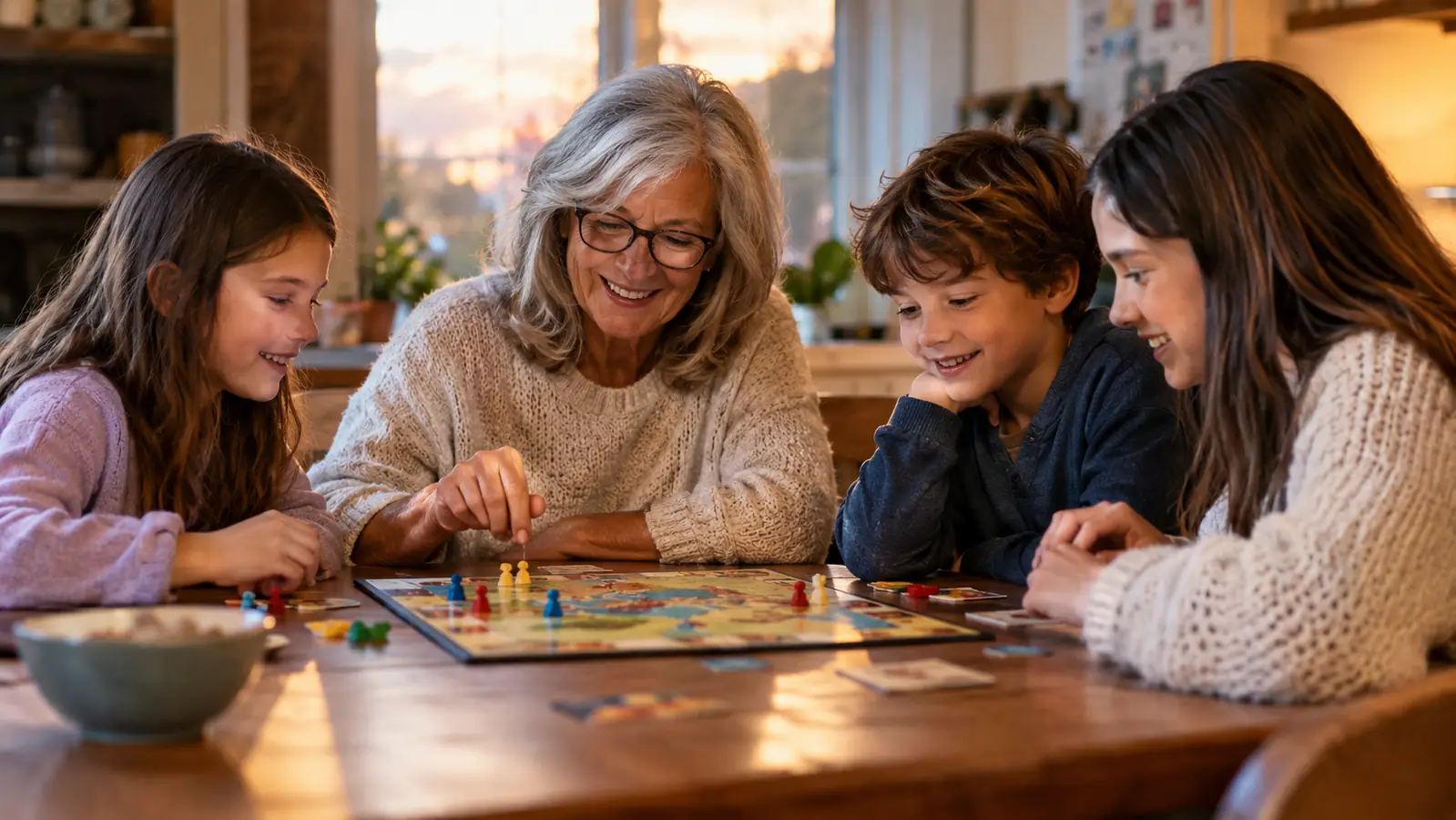
Sunday game night at my house comes with one unspoken rule: whatever hits the oak table has to work for a six-year-old and a twelve-year-old at the same time. That rule has killed more games than I can count. Maya wants strategy and a real winner. Rosie wants to take a turn without losing. Eli wants everyone to stop arguing. So when I brought home Peaceable Kingdom's Hoot Owl Hoot, I expected a pretty box that would hold Rosie's attention for one round and then live on the den shelf. I did not expect a game my youngest grandchild asks for by name, fifty-plus Sunday game nights later. I also did not expect to have honest mixed feelings about it by the time Maya turned twelve. This is that review, including the parts the cheerful box copy leaves out.
If you are trying to decide whether this box belongs on your shelf, here is the short version: it is the best cooperative game I have found for the under-six crowd, and it is not the game for a table full of older kids. The rest of this review is the long version, with the details that matter after the box has been opened fifty times.
The Quick Verdict
A genuinely wonderful first cooperative game for ages 3 to 6, with one honest caveat: the older kids end up shepherding, not strategizing, and that is fine if you know it going in.
Amazon Check Today's Price →The cooperative game that stopped the tears at my table
If your game nights end with someone crying over losing, this is the game that taught my grandkids to win together. Check today's price and current buyer ratings on Amazon to see if it fits your table.
Amazon Check Today's Price on Amazon →How I've Used It
I have owned this box for about fourteen months, and it has been played well over fifty times. Some Sunday afternoons Rosie asks for it twice in a row, which for a six-year-old is practically a standing ovation. We play at the oak kitchen table, the one that seats six, and the game lives on the bottom shelf of the den bookcase where the grandkids can reach it. That shelf placement was a mistake at first, because Rosie started dragging the box out on weekday afternoons too. I have stopped counting how many times I have shuffled these cards.
Setup is the part I appreciate most as the person who hosts. You shuffle the deck, lay out the row of colored spaces, and place the three owls on their starting spots. Frank, who needs to be talked into most games, will sit down for a round of this one because it takes less time than waiting for the kettle. A full game with two adults and three kids runs about fifteen minutes when everyone is paying attention, and closer to twenty when Rosie is telling a story about her day between turns. That is a feature, not a bug, in my book.
The difficulty dial is real, and it is the reason this game grew with my grandkids instead of dying after a month. You decide how many sun cards go into the deck. Fewer suns means more time to get the owls home, which is how I introduced it to Rosie at four. As she learned to actually cooperate with Eli instead of just grabbing the nearest owl, I added sun cards back in. That dial is the difference between a game that bores your six-year-old and one that keeps her leaning over the table. No other game on my shelf does this.
What Nobody Tells You Before You Buy It
Here is the honest part. This is a simple game. The strategies are thin, and once a kid turns seven or eight, they can solve it completely in a round or two. Maya played it twice when she was eleven and then announced she would rather be the "official sun card manager". That was her polite way of saying the actual game was too easy for her. She still sits with us every Sunday, so it is not a rejection of the game so much as a promotion out of it. I tell you this because the reviews that rave about the game rarely mention that the older kids check out.
The age range on the box says 4 and up, and that is accurate for understanding the rules. But the honest sweet spot for real engagement is 3 to 6. A three-year-old can learn that a color card means move any owl to that color, and a six-year-old can grasp the bigger idea: everyone wins together or nobody does. The cooperative structure does the heavy lifting, because there is no elimination and no individual loser. That is the whole reason the tears stopped at my table.
What nobody tells you is that the cooperation can backfire into quarterbacking. Because the group decides which owl to move, a confident older kid can run the whole table. I have watched Eli, who is nine and genuinely trying to be helpful, plan three moves ahead and gently steer Rosie's hand toward the better choice. Half the time she is happy to be steered. But my job as the adult is to remind him to ask her what she wants to do, and to let her make the mistake. The game does not do that for you, and if you are not paying attention, the little one becomes a spectator in her own game.
The other thing nobody tells you: some kids miss winning. My Maya was never a sore loser, but she liked the moment of being the one who finished first. In a cooperative game, that moment does not exist. Everyone crosses the finish line together or nobody does. For most families that is a relief. For a kid who thrives on competition, it can feel flat. If your child is that kid, this game will not scratch the itch, and pretending otherwise sets everyone up for disappointment on a Sunday afternoon.
One more honest note about how the game ends. When the sun does win, the game asks the whole table to lose together, and that can be harder for some kids than losing alone. Rosie's first reaction to a group loss was to look for someone to blame, because that is what the race games had taught her. It took a few rounds for her to understand that the sun is the only enemy, and that nobody at the table did anything wrong. That is a conversation worth having, and this game gives you a natural reason to have it.
The only game on my shelf where a bad draw makes the whole table laugh instead of starting the blame conversation.
How the Cooperative Mechanic Actually Works
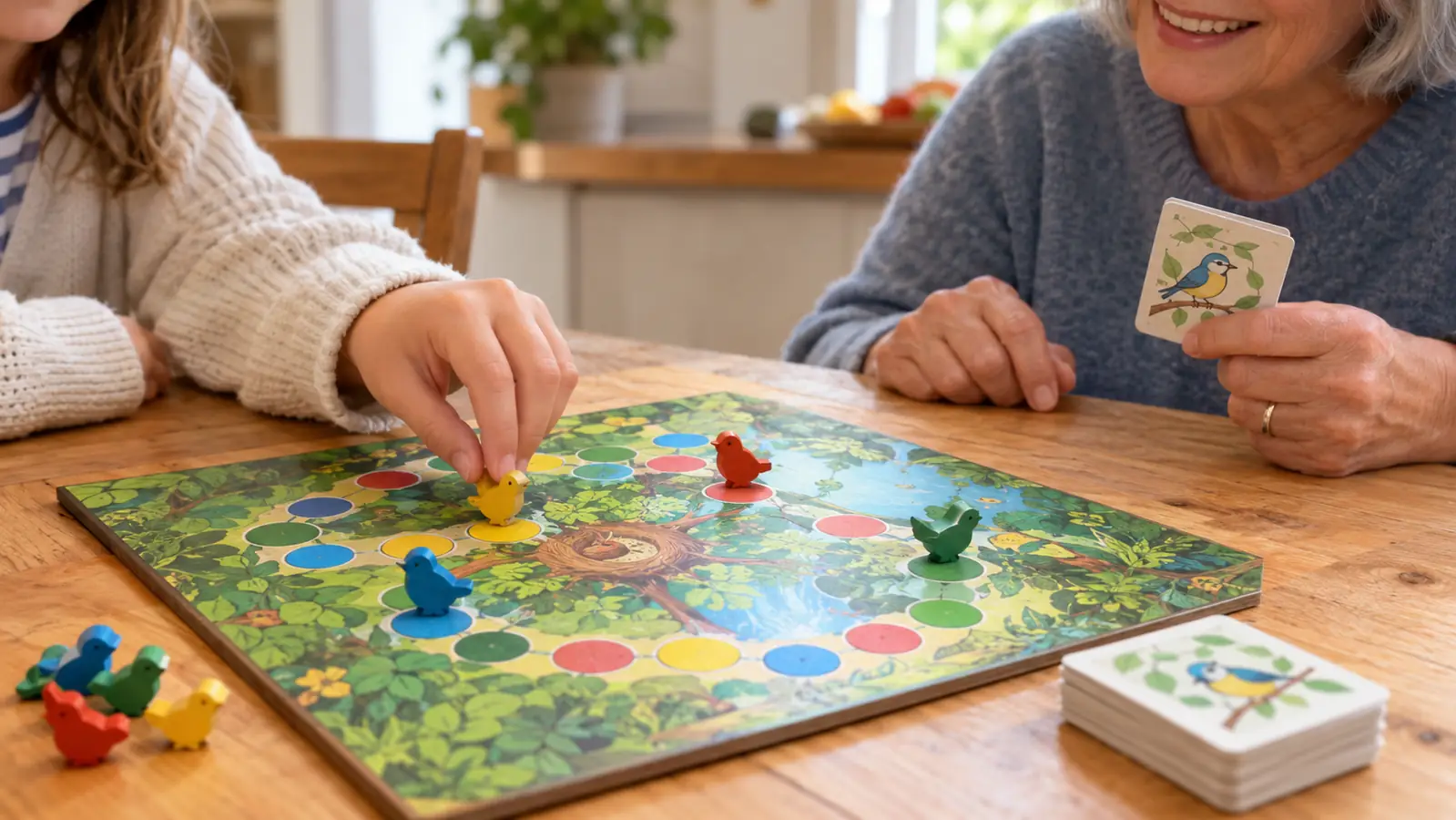
The board shows a winding path of colored spaces leading from the nest to the owls' home. On your turn you flip a card. A color card lets the group move any one owl forward to the next space of that color. A sun card moves the sun one step closer to rising. Everyone wins if all three owls reach home before the sun climbs over the horizon. Everyone loses together if the sun gets there first. That is the entire rulebook, and it is exactly as simple as it sounds. I read it once, cover to cover, in about ninety seconds.
The clever part is what that single rule does to a room full of kids. There is no reason to root against another player, because their owl moving forward helps your owl too. Rosie learned at five that helping Eli's owl was not a sacrifice, it was just playing well. I watched her stop grabbing the nearest owl and start thinking about which owl needed the help most. That is a real thinking skill, and it showed up in a game she thinks of as pure fun. The lesson lands without anyone delivering a lecture about sharing, which is worth a lot at a table with a six-year-old.
For Maya, the game was a chance to practice patience with her little sister. For Frank, it was the rare game he could play while half-watching a football game on the tablet. For me, it is the only game on my shelf where a bad draw makes the whole table laugh instead of starting the blame conversation. That is not a small thing. That is the reason the box has earned its spot on the bottom shelf, even with the parts of it that frustrate me.
Why the Sun Cards Are the Real Difficulty Dial
The box tells you the game is for ages 4 and up. It does not tell you that the real difficulty control is in your hands at setup. The deck is a mix of color cards and sun cards, and you choose how many suns to include. With fewer suns, the game is almost guaranteed to end happily, which is perfect for a first play with a three-year-old. With more suns, the table has to actually plan, because every sun card is a step toward losing together. That range is why this game survived my house instead of getting shelved after a month.
The other rule worth knowing: when the color row runs out of a color, the group still has to move an owl, and if no owl can move to that color, you draw again. It sounds small, but it creates the only real decisions in the game. Do you move the owl closest to home, or the one that is stranded far back? Watching a six-year-old talk through that choice out loud is the best part of the whole box. It is not chess, but it is real thinking.
Component Quality and the Fifty-Play Test
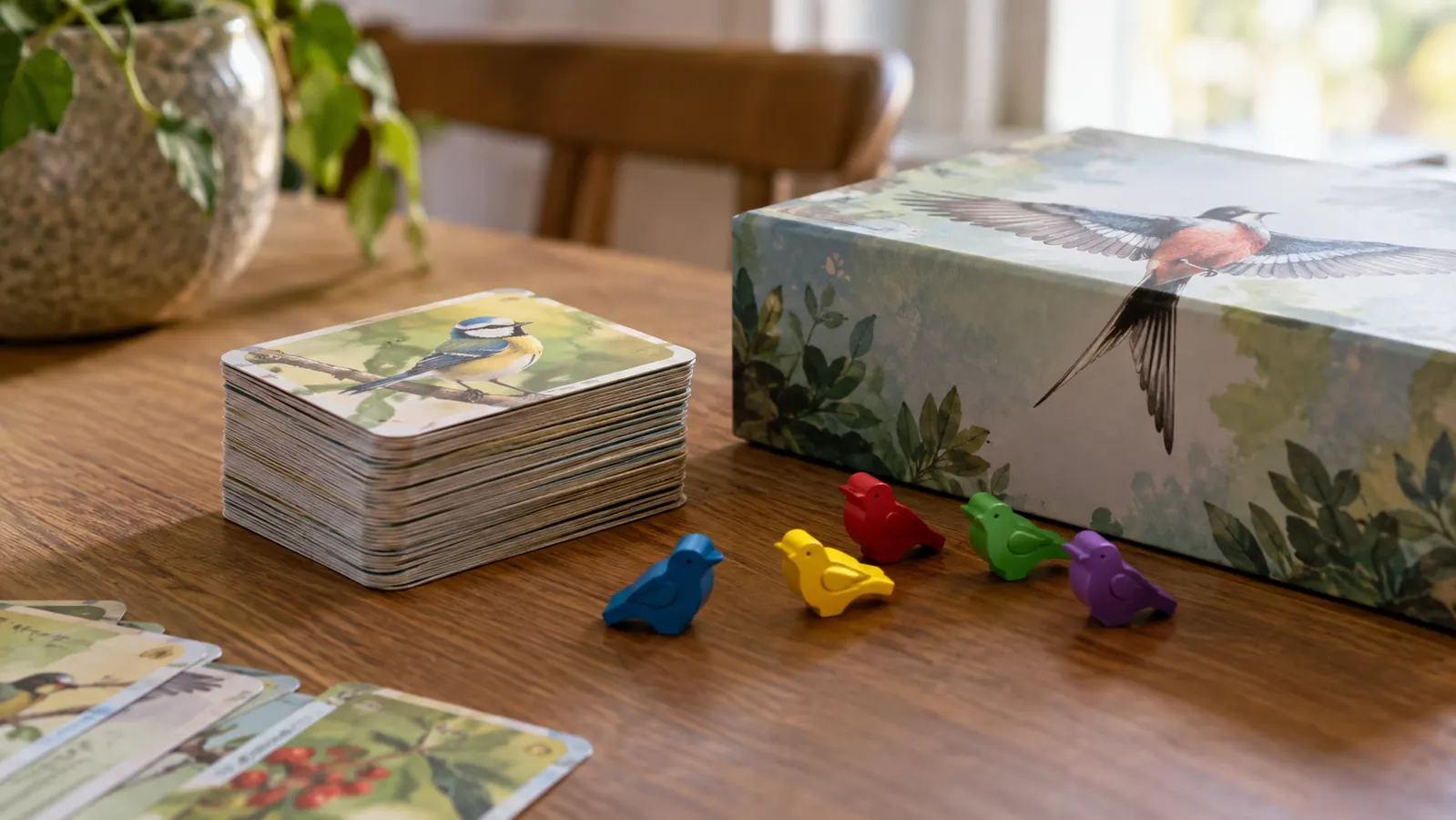
I am the person who reads rulebooks cover to cover and inspects corners, so component quality matters to me. After fifty-plus plays, the board still lies flat, the cards still shuffle cleanly, and none of the owl tokens have chipped. The pieces are chunky, which is not a style choice: small hands need something they can pick up and set down without a fine motor meltdown. Rosie could handle the tokens comfortably at four, and that is the real test for a preschool game.
The cards have survived sticky fingers, a spilled juice cup, and at least one dramatic toddler sweep of the table. I cannot say the same for every game on my shelf. The one genuine gripe I have is storage. The box closes with a simple tuck flap, and if you store it standing up, the cards and tokens shift around and the deck comes out mixed. Store it flat and it is fine. That is a small thing, but it is exactly the kind of detail the cheerful reviews leave out.
The box is also honest about its own size: this is a compact game, not a sprawling board that takes over the table. That works in its favor for us, because we can play it while dinner is still being cleared. For a family that wants a big, dramatic board, this will feel modest. For a grandmother hosting game night with a six-year-old and a nine-year-old, modest is a feature.
I will also say that the look of the box matters more than adults like to admit. Rosie chose this game off the shelf before she understood the rules, because the art on the front made her want to open it. That is not a small thing for a preschooler. A game can have the best mechanics in the world, but if the box does not call to a six-year-old, it will sit unopened on the shelf.
How It Stacks Up Against the Race Games I Grew Up With
I grew up with games where the goal was to be first. Candy Land, Chutes and Ladders, the whole generation of roll-and-move boxes. They taught turn-taking, and they also taught that someone has to lose. With three grandkids of very different ages, that meant the same child cried most Sundays. Hoot Owl Hoot replaces the finish line with a shared goal, and that one change is bigger than it sounds. My own kids played video games in the nineties, so I respect replay value and real decisions. This game has just enough of both for the age it targets.
The comparison is not about which game is better. It is about what each one teaches. The race games teach resilience in losing, which is a real skill. The cooperative game teaches something the race games never do: that helping someone else can be the winning move. My Rosie needs the second lesson right now, at six, more than she needs another lesson in losing gracefully. That is the honest reason this box gets played and the older race games collect dust on the shelf.
At the end of the day, I do not need every game on my shelf to challenge every grandkid at the same level. I need some games that let Rosie feel like a real player, and this is the one that does it best. Maya gets her strategy games later in the evening, after Rosie has gone to bed. Hoot Owl Hoot is the game that starts the night, and for that job, nothing else on my shelf comes close.
What I Liked
- Teaches cooperation without a single lecture about sharing
- Setup and cleanup take under two minutes
- A 3-year-old can genuinely play, not just watch
- No one gets eliminated and no one loses alone
- The sun card count lets you tune the difficulty
- Chunky pieces survive toddler handling
Where It Falls Short
- Too simple for kids 7 and up to stay engaged on their own
- Older kids can quarterback every move if adults do not step in
- No individual winner, which some kids genuinely miss
- Tuck-flap box lets cards slide around when stored upright
Who This Is For
This is for the family with a child between 3 and 6 who is ready for a first real board game, the kind that is not just a race to a finish line. It is for grandparents hosting mixed-age game nights where the little ones need to actually play, not watch. It is for preschool teachers, for parents who are tired of refereeing meltdowns over losing, and for anyone who wants to introduce the idea that a game can be won together. If that sounds like your table, this is one of the best first cooperative games you can buy, and Peaceable Kingdom has made a box that holds up to real use.
Who Should Skip It
Skip it if your table is all kids seven and up, because they will solve it in one sitting and then want something with real decisions. Skip it if your child lives for the moment of being the winner, because this game deliberately takes that moment away. And skip it if you need a game that can occupy kids without an adult in the room, because the whole point is the cooperation, and somebody has to gently steer the quarterbacking. This is not a flaw in the game. It is just the truth about what it is, and knowing that before you buy saves everyone a boring Sunday. Peaceable Kingdom makes plenty of other boxes for those tables.
Still the first cooperative game I hand to a new parent
Fourteen months and fifty-plus plays later, this is the box I reach for when a younger grandkid needs to feel like a real player. Check today's price and current ratings on Amazon to see if it belongs on your shelf too.
Amazon Check Today's Price on Amazon →