
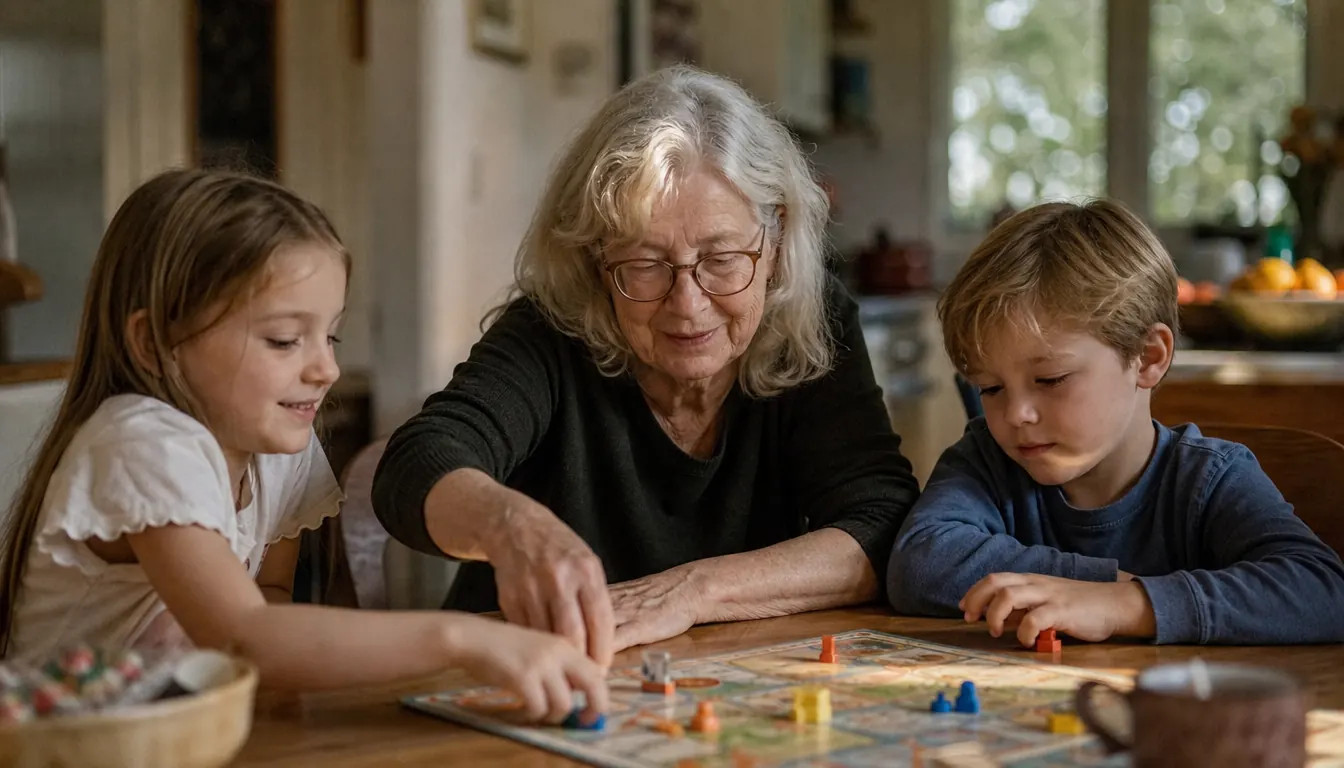
Forbidden Desert by Gamewright has lived on our den bookshelf since last October, and I have lost count of how many Sunday nights it has ended up on the oak kitchen table. I am June, and our Sunday game night has been a fixture since my daughter's kids were old enough to hold cards. Maya is twelve, Eli is nine, and Rosie is six, and they do not agree about much when it comes to games. Maya likes a plan, Eli likes chaos, and Rosie mostly likes winning. So when a game keeps all three of them quiet and leaning forward at the same time, I pay attention. The first time I saw the box, I thought it looked like another forgettable desert theme, but the kids were already asking to play before I finished reading the back. This is the honest version of that experience, the parts that made us cheer and the parts that made me want to flip the table.
I am not someone who gives a game a free pass just because the kids like it. I read every rulebook cover to cover before the first play, and I have been known to write house rules in the margins. I keep a small notebook in the kitchen drawer for exactly that purpose. I grew up on video games in the nineties, so I have a low tolerance for games that pretend to be deep and are really just random. Forbidden Desert is not that. It is a real strategy game with real tension, and it has held up through more than forty plays. But it is also a game that can turn on you, and I want you to know exactly what you are getting into before you buy a copy for your own table.
The Quick Verdict
Forbidden Desert is a tense, clever, cooperative race against the sun that rewards calm teamwork, but only if your table can handle losing to a board game.
Amazon Check Today's Price →The Cooperative Game My Grandkids Ask For by Name
Forbidden Desert has earned a permanent spot on our shelf. If you want a game night where the whole family argues with the same storm instead of each other, this is the one to try. Check today's price on Amazon and see if your table can beat the sun.
Amazon Check Today's Price on Amazon →How I've Used It
I bought Forbidden Desert for a long weekend in October when Maya was visiting and Eli was recovering from a cold. My plan was to have a backup in case the kids got bored with the usual suspects. The first game took us about an hour, including rule reading, and we lost. The second game took forty-five minutes, and we lost again. By the third game, Rosie was helping me move the storm pieces and Maya was quietly directing everyone, and we won with two turns to spare. Since then, we have played it at least forty times. It has survived spills, a dog tail, and Frank being talked into a four-player game on Thanksgiving. We started after lunch that day and finished before supper, which is exactly the kind of afternoon I hoped for when we started hosting game night.
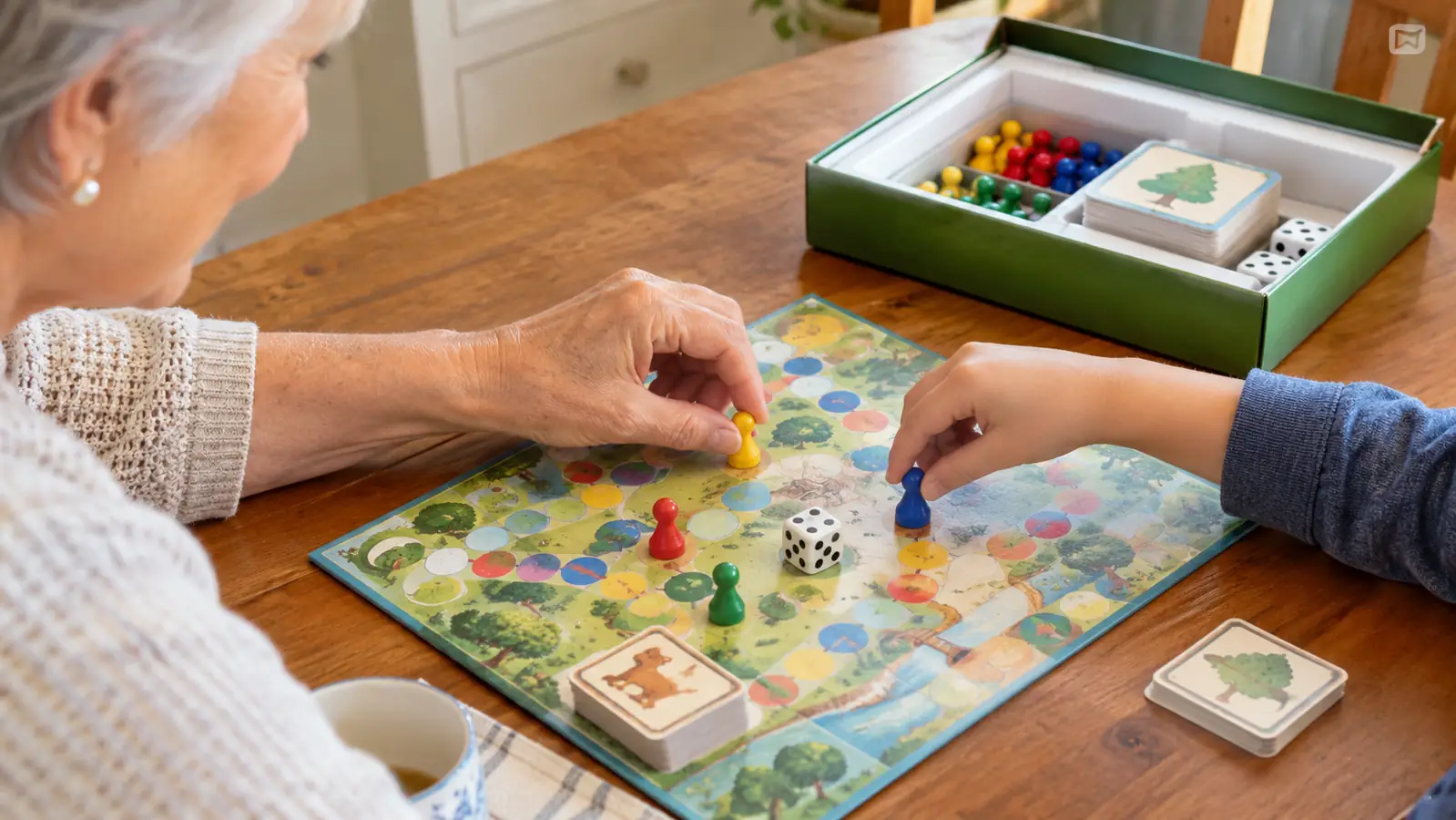
The rules are simple enough that I read them once and did not need the book again. You are explorers stranded in the desert, and the board is a grid of tiles that flip over as a storm moves around it. Everyone has a role with a special power, and the goal is to collect four parts of a flying machine and escape before the sun gets you. What makes it interesting is that the storm moves every single turn, and it can bury tiles, remove them from play, or push you into a sandstorm. You are not competing against each other. You are all trying to beat the same weather system. Maya's favorite role was the water carrier, and Eli insisted on being the explorer so he could move the most spaces.
The first time we played, Rosie did not understand why the storm kept burying the same tile. Maya explained it to her in a way I could not have, and that moment is when I knew the game was special. It does not talk down to kids. It gives everyone a real job, and it expects them to think. Over the next few weeks, I watched Eli learn to count the spaces between storm markers, and I watched Maya learn to ask instead of command. That is the kind of thing that does not show up in a product description. By the end of November, Rosie was reminding us when someone forgot to move the storm, which meant she was following the rules better than I was.
Why It Works at Our Table
The biggest surprise is how well it handles a six-year-old and a twelve-year-old at the same table. Maya reads the board and plans two moves ahead. Eli wants to grab tiles and see what happens. Rosie is happiest when she gets to move the storm and flip tiles. Because the game is cooperative, their different styles do not fight each other. Maya can suggest, Eli can test, and Rosie can still feel important. I have watched all three of them work out a plan without me saying a word, and that does not happen with most games. The game gives each of them something they are good at, and that is a rare thing at our table.
The difficulty is the real star. The game is hard, and it does not apologize. There were games where we lost three times in a row and the kids asked to play again immediately. There were games where we won and everyone stood up and cheered. The tension comes from the storm tracker, a row of markers that moves closer to a sun icon with every turn. When the sun hits the top, everyone dies. That deadline does real work. It makes every decision matter, and it makes the wins feel earned. I have played a lot of cooperative games, and most of them are too easy once you figure out the pattern. This one keeps finding new ways to surprise us. One game lasted almost an hour because the storm kept circling the same corner, and nobody could agree on the best path. That is the kind of argument I do not mind refereeing.
Another reason it works is that the roles give everyone something to do. The water carrier keeps the team alive, the explorer moves around the board faster, the meteorologist can see the storm coming, and the climber can move through sandstorms. On our best night, each kid had a role and Frank was the navigator, and they all had to talk to each other to win. For a family that spends too much time staring at screens, watching them actually negotiate a plan out loud was worth it by itself. Frank is not a game person, but even he admitted that the roles made him feel useful.
Where It Gets Frustrating
I will not pretend the frustration is not real. The biggest complaint in our house is the luck factor. You draw tiles from a shuffled stack, and sometimes the parts you need are buried under three layers of storm cards. You can do everything right and still lose because the storm went the wrong way. My honest review would not be honest if I did not say that some losses feel unfair. On one Sunday night, we found three of the four machine parts in the first ten minutes, then spent the next thirty minutes watching the storm bury them again. Rosie cried. Frank said he was done. We played again the next week, which is the real measure. The storm cards are shuffled fresh every game, so there is no way to plan around the bad luck.
Another thing nobody tells you is how much table space the game eats. The board starts with a full grid of tiles, and as the storm moves, you add storm pieces on top. With four players and cups of markers, we barely fit on our six-seat oak table. We have learned to keep drinks on the counter. I now use a small tray for the pieces we are not using, because otherwise they end up on the floor. The box insert is also not great for cleanup. Pieces have to be sorted back into baggies, and the board tiles all look similar when you are in a hurry. It takes me about ten minutes to pack up, which is longer than most games on our shelf. That does not sound like much, but when the kids are tired and the kitchen needs wiping down, ten minutes feels like an hour.
The age rating of ten is also worth talking about. Rosie was six when we started, and she needed help with the strategy parts. She could move the storm and flip tiles, but she could not always see why a certain move mattered. If you have a younger child who gets upset when things go wrong, this game will test you. I do not think the rating is wrong, exactly, but I do think it assumes a certain amount of patience that a six-year-old does not always have. We had a few rough Sundays before we learned to pair Rosie with an adult who could guide her without taking over.
What I Liked
- Plays well with mixed ages, six to twelve at the same table
- Cooperative play means nobody gets eliminated or sits out
- High replay value, no two games feel the same
- Rules are simple to teach but hard to master
- Components have held up through forty plays
Where It Falls Short
- Luck can make some losses feel unfair
- Takes up a lot of table space
- Pack up is fiddly and takes about ten minutes
- Small pieces can be lost easily
- The ten and up age rating is optimistic for sensitive kids
What I've Learned After Forty Plays
After forty plays, the game still feels fresh because the board changes every time. The tiles are shuffled and placed in a pattern, and the storm moves in a direction that depends on where players stand. No two games have played the same at our house. That is the thing I care about most, because I grew up playing video games in the nineties and I know replay value when I see it. Forbidden Desert has more of it than most games on our shelf, and that is saying something for a box we have owned for less than a year.
Component quality is good but not perfect. The tiles are thick and have survived forty plays and a toddler's teeth. The playing pieces are small and easy to lose, and the sun marker has a tendency to slide if the table gets bumped. We lost one storm piece under the fridge in February, and I found it during spring cleaning. Gamewright's production is solid, but you will want to keep the baggies close. I have also learned to check the pieces before we put the box away, because a missing tile can end a game before it starts. Frank superglued one of the small pieces back together in March, and it has held up fine since then.
The most surprising lesson is that losing together has made the kids better losers in general. They still groan when the sun catches them, but they have started saying we should try again instead of blaming each other. That is not something I can measure with a score, but it is the reason this game will stay on our shelf even after the novelty wears off. I have watched Maya remind Eli that they lost as a team, and I have watched Eli remind Rosie that they can always try again. That alone is worth the shelf space.
Forty plays in, the kids still ask for it by name, and that is the only review that matters.
The Bottom Line
If you are looking for a game that will make your family talk to each other, plan together, and occasionally yell at the same storm, Forbidden Desert is the best option we have found. It is not perfect. The luck can be brutal, the setup and cleanup take real time, and the age rating is not kidding. But the good nights are so good that the bad nights do not matter as much. I have played dozens of games with my grandkids over the years, and very few of them get asked for again and again.
My honest bottom line is that this is a four-and-a-half-star game with a few three-star moments. We have had Sundays where it was the highlight of the whole week, and we have had Sundays where we put it away early. I would still buy it again. In fact, I have already bought a second copy as a birthday gift for Maya's best friend, because that is how much I believe in what this game does for a table full of people who love each other and want to win together. If you are on the fence, I would say try it on a night when everyone is well rested and ready to think.
Who This Is For
Buy this if your table likes a challenge and can handle losing with grace. It is perfect for families with kids aged eight and up, and for younger kids who have a patient older sibling or adult to play with. It is also great for adults who want a game that takes under an hour and feels like a real adventure. Cooperative play means nobody gets eliminated and nobody sits out. For a Sunday night with grandparents and grandkids, that is a gift. I would also say it is a good choice for a classroom or a scout group, because it teaches planning and communication without feeling like a lesson.
I would also recommend it to people who already own Forbidden Island and want something with more tension. The two games share a designer and a similar feel, but Forbidden Desert is harder and more interesting. If your group has played Pandemic and wants a shorter, more portable version of that stress, this is a strong choice. Just know that the stress is real, and the game does not care if you have had a long week. That is part of the appeal, but it is also part of the warning.
Who Should Skip It
Skip it if your group gets frustrated easily or if you have a player who cannot handle the luck factor. It is not a quiet, relaxing game. It is loud, tense, and sometimes mean. If you want a calm cooperative game for young children, look elsewhere. And if you are the kind of player who needs to win to have fun, this game will test your patience. Rosie cried once, Frank has walked away twice, and I have had to remind myself that losing together is still time together. The game will not change your family, but it will reveal how you handle a shared bad break.
It is also not the best choice for two players. We have played it with just the two of us a few times, and the game works, but it loses some of the energy that makes it special. With two, there is less arguing, but there is also less celebrating. If your game nights are usually just you and a partner, I would point you toward a two-player cooperative game instead. For a full table of mixed ages, though, this is still the box I reach for most Sundays.
Ready to Test Your Family's Teamwork?
Forbidden Desert by Gamewright has earned its place on our shelf. Check today's price on Amazon and see if your table can beat the storm.
Amazon Check Today's Price on Amazon →