

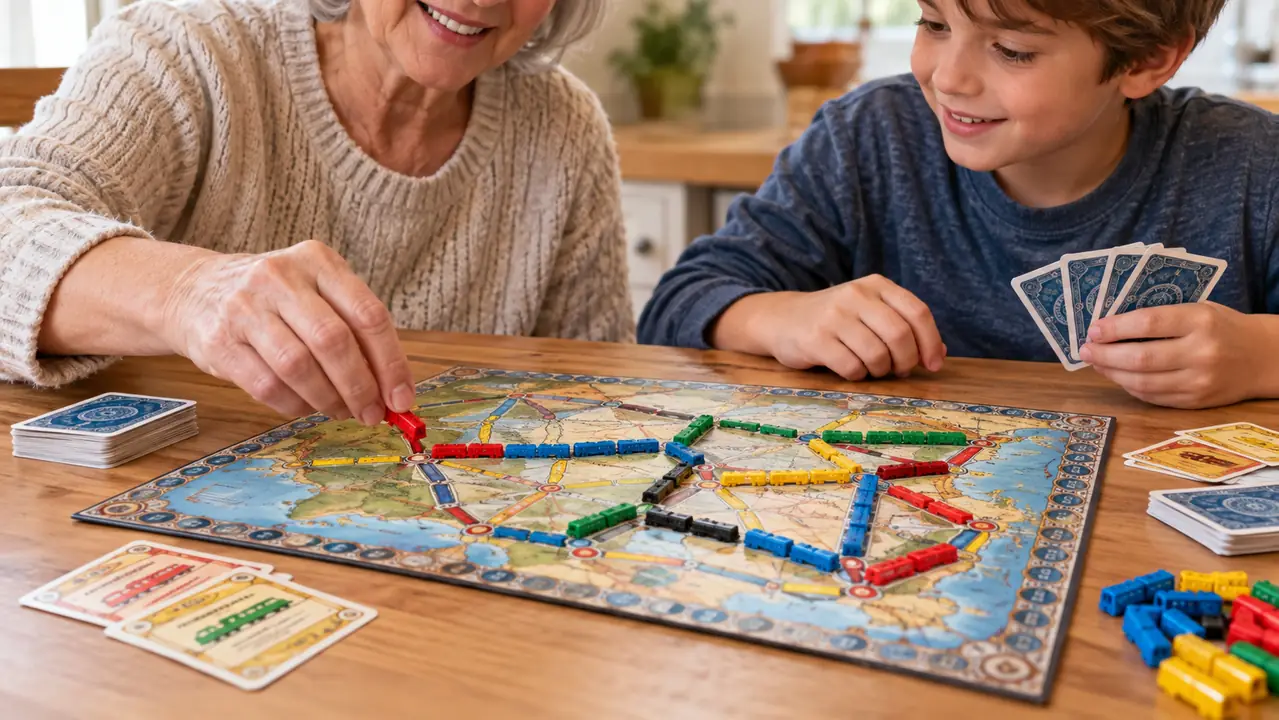
Every Sunday night, the oak kitchen table in my house in Bakersfield gets crowded. Maya, who is twelve, sits at the end, ready to win. Eli, who is nine, hovers until the cards are dealt. Rosie, who is six, climbs onto my lap before anyone can stop her. This fall, the game they all fought over was Ticket to Ride from Days of Wonder, and after a season of Sunday game nights, I have opinions that go beyond the box blurb. This is the honest review I wish someone had given me before I bought it.
Here is the short version, because I know you are shopping from your phone while the kids argue in the next room. Ticket to Ride is a real game with real decisions, not a roll-and-move luckfest. It is also not the twenty-minute family game the box suggests. The first time we played, with five of us at the table, the game ran almost ninety minutes, and Rosie needed me to read her routes and point at the board. Both of those things are fine. You just need to know them going in.
Before I go further, a word about who is writing this. I am June, a retired school librarian in Bakersfield, and I have spent more hours than I can count watching kids learn to love games. I raised my own kids on video games in the nineties, so I do not have a lot of patience for a board game that is all luck and no thought. Days of Wonder made a game that respects the player's brain. That is the highest praise I know how to give.
The Quick Verdict
A genuinely good strategy game that rewards planning and punishes it in equal measure. Buy it for the nine-and-up crowd, and plan to help the youngest players for the first several games.
Amazon Check Today's Price →The Game My Grandkids Actually Argue Over
If you want a strategy game that eight-year-olds can learn and adults will not yawn through, this is the one on our shelf. Check today's price and see if it fits your game night.
Amazon Check Today's Price on Amazon →How I've Used It
I read the rulebook cover to cover before the kids arrived, because that is what I do. It is a short rulebook, maybe ten pages, and it is written in plain English rather than legalese. That matters more than you think. Days of Wonder has a reputation for clear rules, and this is the edition that earned it. The 2025 refresh is the box I bought, so I can only vouch for the pieces in front of me, but after a season of weekly play the board lies flat, the cards still shuffle cleanly, and every one of the little plastic trains is still accounted for.
We have played at least once a week since the first Sunday after school started. Five players at the oak table, which is the maximum the game allows, and sometimes just me and Maya when the others lose interest. That is the part I did not expect. The game scales down to two players without losing its teeth. Maya and I have played the two-player version more than any other, and she has beaten me enough times that I have stopped going easy on her.
How I test a game is simple: I watch whether the kids ask to play it again. Not whether they win, not whether they understand the rules, but whether they ask for another round after the box is put away. Ticket to Ride is the first game this season that got asked for three Sundays in a row. Eli asked for it on a Tuesday afternoon, which is the highest compliment a board game can get from a nine-year-old.
The first teach took the longest, and I want to be honest about that. I read the destination tickets out loud for everyone, explained that long routes score more but take longer to build, and warned them that a ticket you do not finish costs you points. Eli understood it right away. Maya asked two questions and then beat me. Rosie sat on my lap and pointed at pretty cities. By the second game, nobody needed the rulebook, which is the fastest a new game has ever earned its place at our table.
Frank does not need to be talked into it anymore, which is the most surprising review I can give. He remembers the video game years with our kids and swore board games were for people who could not handle a controller. The first night he sat out and watched. The second night he asked to deal. By the third Sunday he was blocking Maya's routes and grinning about it. If a reluctant spouse is part of your game night math, that is worth knowing.
What Nobody Tells You Before the First Game
The box says the game takes thirty to sixty minutes. That is true for people who have played before. For a first game with a mix of ages, budget closer to ninety minutes, and do not schedule anything right after. The teach takes twenty minutes even with a good rulebook, because the destination tickets force everyone to make real choices, and real choices take time.
The train cards are smaller than you expect, and you will shuffle them constantly. That is not a complaint. It just means someone has to own the deck between turns, and that someone is usually me. Keep the discard pile tidy or you will spend ten minutes hunting for a card that slid under the board.
Here is the thing nobody tells you: you can get blocked. You can plan a glorious route from Los Angeles to Miami, and then Frank, who claimed he was not interested, will plop three trains down in the middle of it and smile. The first time it happened to Maya she went quiet for a full minute. The second time she did it back to him. That is when I knew the game had her.
The hidden scoring is the other thing. Destination tickets stay face down all game, so nobody knows who is winning until the final count. For some players that is delicious suspense. For a six-year-old, it is confusing, because she cannot see why anyone won. Rosie still asks to see the tickets after every game so she can verify the math herself.
The Rules Are Simple. The Strategy Sneaks Up on You.
The basic turn is one of three things: draw two train cards, claim a route, or draw three destination tickets and keep at least one. A six-year-old can learn that in one sitting. What takes longer is the strategy underneath, and this is where my old video game habits kicked in. I played the original Nintendo with my kids and still play a handheld in the car, so I judge every game by whether it makes you think two moves ahead. Ticket to Ride does. You are not just collecting cards. You are watching what routes the other players are reaching for, guessing their tickets, and deciding whether to race them or cut them off.
That depth is why it has stayed on our den bookshelf instead of going to a garage sale. The board does not change, but every game does, because the destination tickets shuffle and the players change. Maya has started keeping notes, the way I used to write down level codes for video games. Eli plays for the long routes because they score big. Frank plays to block everyone, because he is Frank.
There is one honest warning buried in that praise. The same planning that makes the game satisfying can freeze a table. Adults are the worst offenders, because adults want to calculate the perfect move. We have had a Sunday game night stall for five minutes while Frank weighed two routes that would both score about the same. You can play Ticket to Ride tactically, one turn at a time, and have a wonderful time. Nobody at our table plays that way, but you are allowed to.
The end of the game is where the math happens, and it is the part I read twice before the kids arrived. When any player is down to two trains or fewer, everyone gets one final turn, and then the scoring begins. You add the points for the routes you claimed, add the points on the destination tickets you completed, and subtract the points on any ticket you did not finish. The subtraction is what catches new players. A beautiful board with three unfinished tickets will lose to a modest board that actually got where it was going.
What I Liked
- Teachable in one sitting, even to a nine-year-old
- Real decisions every turn, no roll-and-move filler
- Plays well at every player count from two to five
- Destination tickets make every game different
- Rulebook is short and clearly written
- Sturdy components after a full season of weekly play
Where It Falls Short
- First game runs long, closer to ninety minutes
- Hidden scoring confuses younger kids
- Players can be blocked, which stings
- Adults prone to analysis paralysis
- A six-year-old needs a partner for the first several games
After a season of Sunday game nights, the kids asked for Ticket to Ride three weeks in a row, and Eli asked for it on a Tuesday. That has never happened with any other game on our shelf.
How It Holds Up After a Season of Game Nights
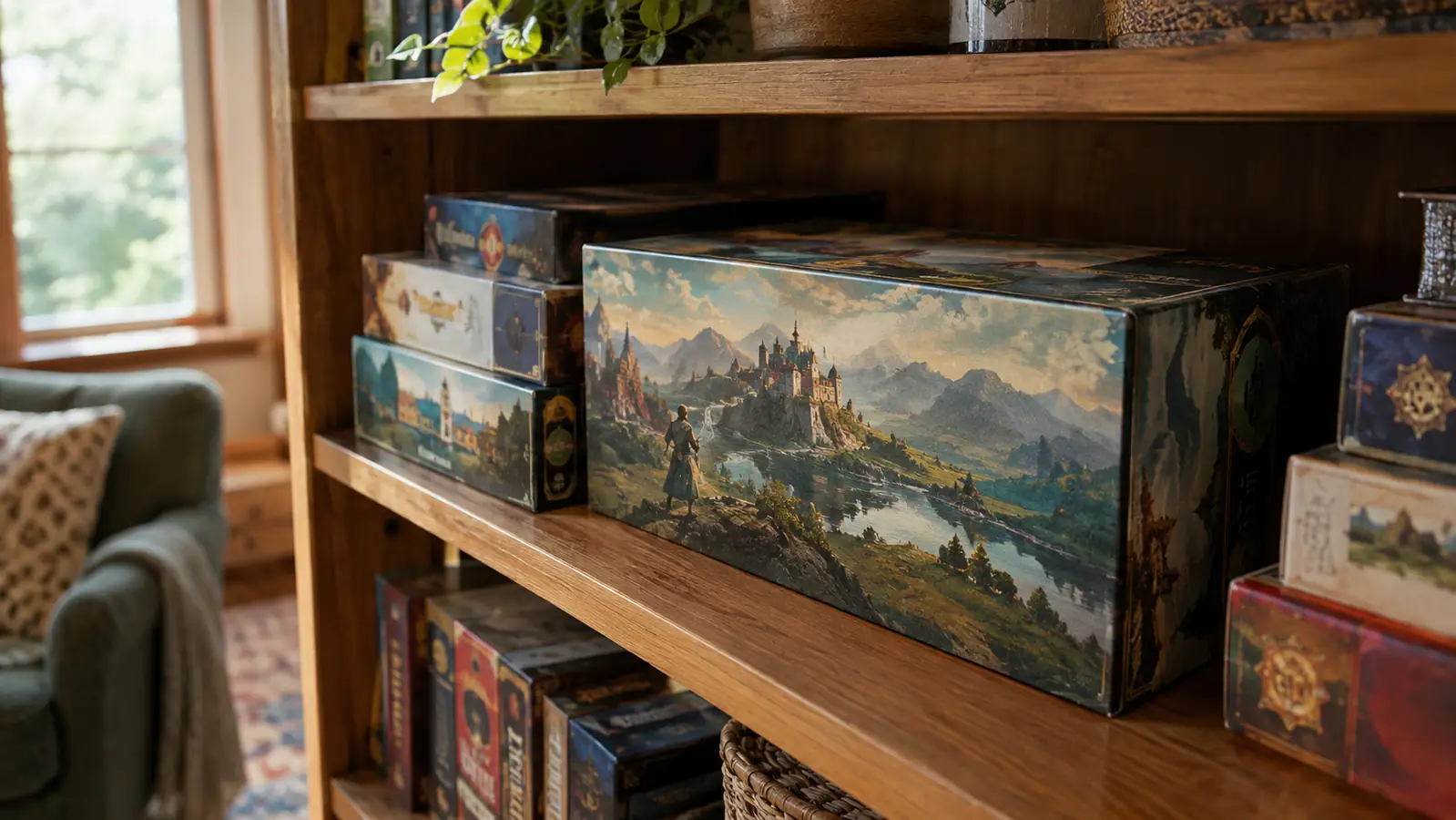
We have played this box at least twenty times since the fall, and the wear is honest. The board lies flat on the oak table. The cards have a little give at the corners but no splits. The little plastic trains still fit their routes and none have gone missing, which given Rosie's tendency to pocket shiny things is a small relief. I keep a spare train in my apron pocket anyway, because grandmothers plan for the worst.
The 2025 refresh is the edition I bought, and I want to be fair about what I can and cannot judge. I have not played an older edition side by side, so I will not pretend to compare printings. What I can tell you is that the box I own has held up, the rules are clear, and nobody at the table has complained about the pieces. That is the standard I use for every game on our shelf.
The box has earned a permanent spot on the den bookshelf, which is the only retirement plan a board game gets in this house. We have a whole shelf of games that sounded good at the store and now collect dust. Ticket to Ride is the one the kids reach for when they cannot agree on anything else. For a grandmother who hosts Sunday game night, that is worth more than any review score.
The biggest surprise of the season was Rosie. At six, she could not read the destination tickets on her own, so she played on my team and pointed while I moved the trains. By December she was reading the city names herself and counting out her own routes. She still cannot win on her own, but she can play her own game with help on the math. Watching her go from lap player to real player in one season is the honest reason this review is as warm as it is.
Who This Is For
Buy this for the family that has one patient adult, at least one kid age eight or up, and a table that can handle a game that runs an hour. It shines with three to five players, so it fits a Sunday night crowd. If you have a twelve-year-old who likes planning, like Maya, or a nine-year-old who likes big scoring, like Eli, you will see them both light up.
It also works for two. That surprised me, because plenty of games say two to five players and really mean three to five. Maya and I have played dozens of two-player games and they are just as tense. The blocking gets meaner with two, and that is a good thing for a pair of competitive people.
The sweet spot is three to four players. Five works, but the board gets crowded and the blocking gets personal. Three gives everyone room to build without tripping over each other. If you can, start with three for the first game and add players once the rules are familiar.
If you are a grandparent reading this, let me be direct. This is one of the few games that works when the ages in the room are wildly different. A twelve-year-old can play it straight. A nine-year-old can play it with a little coaching. A six-year-old can be on your team. You do not need three different games for three different ages. You need one table and one box.
Who Should Skip It
Skip it if your youngest player is under six and you do not have a patient adult willing to quarterback. Rosie needed me to read every destination ticket and point at the board for the first several games. She had fun, but she was really playing on a team. If that sounds exhausting rather than charming, this is not the game for your table yet.
Skip it if your group does not like hidden scoring or any game where you can be blocked. Some families prefer cooperative games where nobody gets cut off. I respect that. Ticket to Ride is competitive, and the competition is the point. It is also worth skipping if you only have thirty minutes, because thirty minutes is not enough for this game to breathe. You need a full hour, and ninety minutes is better.
One more honest note: if your family already plays Catan and loves it, Ticket to Ride is a different kind of game. Catan is about trading and negotiation. Ticket to Ride is about quietly building a plan and watching everyone else's. Some families will prefer one over the other. Ours plays both, but Ticket to Ride is the one that gets asked for on Tuesday afternoons.
The Verdict After a Season of Sunday Nights
If your family can give this game a full hour, it will earn its shelf space. Check today's price on Amazon and see whether Ticket to Ride is the right fit for your game night.
Amazon Check Today's Price on Amazon →