
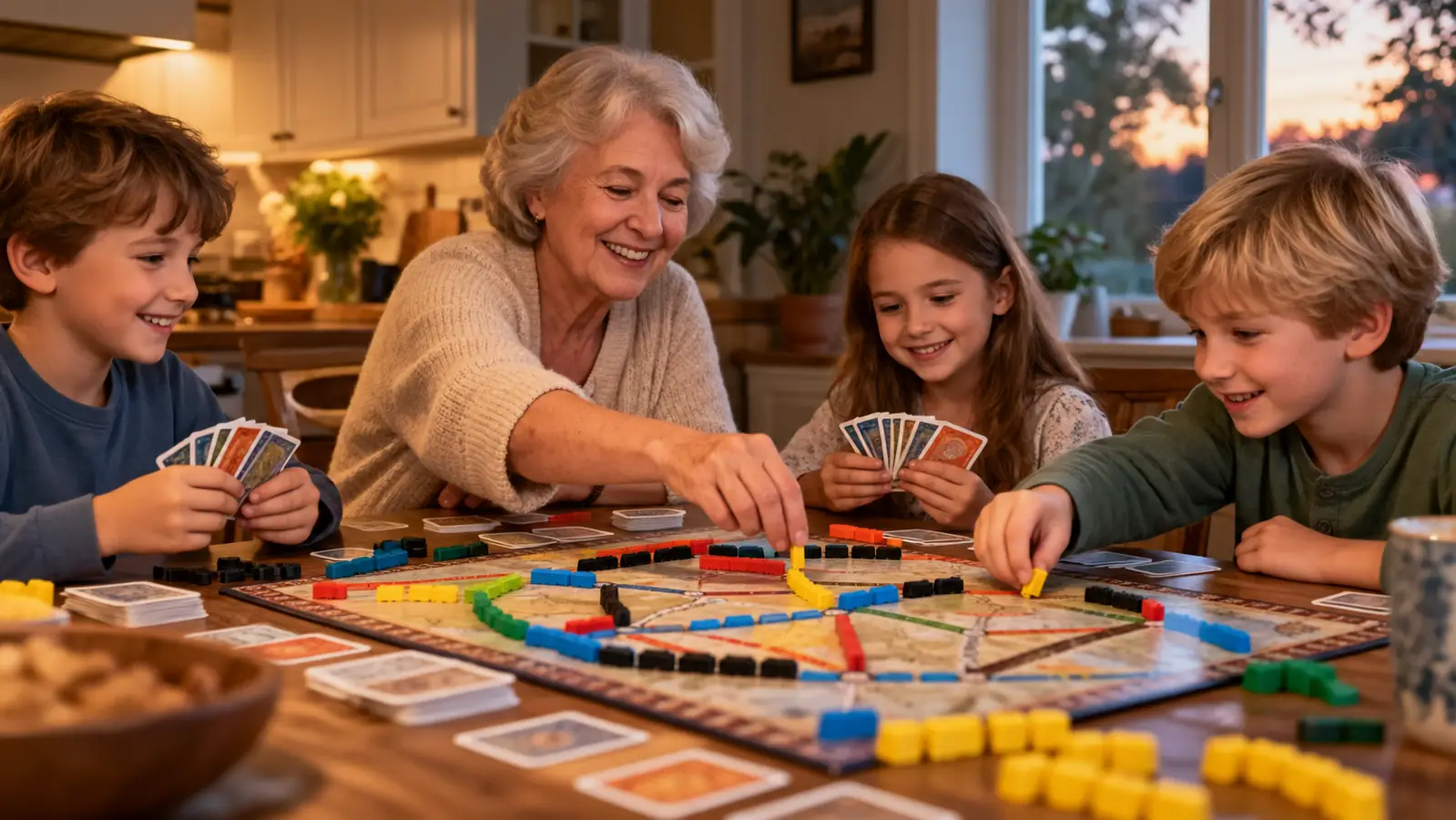
Every Sunday night, my oak kitchen table turns into a negotiation. Maya, who is twelve, wants a game with real strategy. Eli, who is nine, wants to win without anyone letting him win. Rosie, who is six, wants to be part of the big-kid game, not handed a little sister version. And Frank, my husband, wants to know why we cannot just watch a movie.
I have bought games that looked great in the store and then sat on the den bookshelf after a single play. I have watched a six-year-old lose interest in three minutes, and I have watched a twelve-year-old finish a kid's game so fast that everyone felt bad. Then my son brought over Ticket to Ride from Days of Wonder on a Sunday when the evening was about to fall apart. I read the rulebook cover to cover before the kids arrived, the way I always do. Nine months later, it is still on the table.
The train game a 6-year-old and a 12-year-old both beg for
Ticket to Ride from Days of Wonder has earned its spot on our kitchen table. See what it costs today before your next family game night.
Amazon Check Today's Price on Amazon →The rules fit on one page, and a 6-year-old can hold them in her head
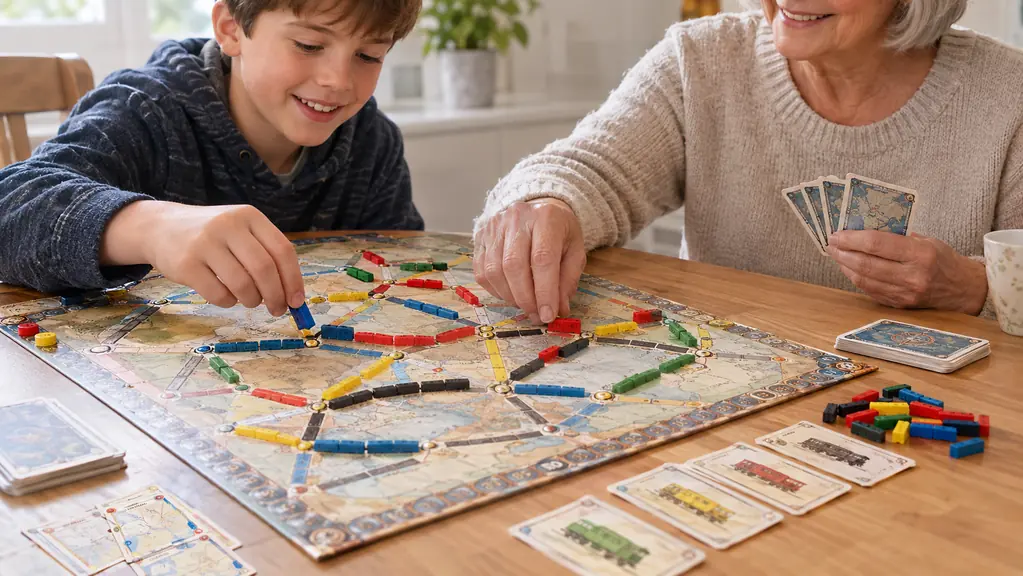
Ticket to Ride works because the whole game is two actions: draw train cards, or claim a route. There is no phase chart, no special powers to memorize, no rulebook that needs a second read. Rosie understood the core loop by her second turn. She still cannot read every destination card, but she does not need to, because the picture on each card shows her the route. That is rare for a game the adults also want to play.
Turns are short enough that nobody wanders off
A turn is draw two cards or place your trains. It takes about thirty seconds. Eli does not have time to get bored, and Rosie does not have time to climb under the table. The game keeps moving, which is the whole ballgame with three grandkids at one table. I have seen other games stall while one player studies the board, but Ticket to Ride never stalls because every choice is small and clear.
It ends when the last route is claimed, not when everyone is tired
Ticket to Ride has a natural finish line. The moment someone is down to two trains, the end is near, and the scoring is quick. No one is trapped in hour three of a game everyone quietly wants to stop. That matters when bedtime is a real deadline. On school nights we can start after dinner and still finish before the kids need to brush their teeth, and I have never once had to call a game early because someone had given up.
Colored train cards are a math lesson that does not feel like one
Eli learned to count his colored cards, estimate how many he needed for a long route, and adjust when someone took the route he wanted. Maya showed him how to read the destination tickets and add the points at the end. Nobody said the word 'math' once, and he still got the practice. Rosie practices matching colors and counting out loud as she draws. I watch it happen every Sunday and I never have to ask them to pay attention.
It lets a gentle player and a competitive player both have fun
Maya likes to block routes. Eli likes to build long runs across the map. Rosie likes to collect cards and announce every move with total confidence. The game is big enough for all three styles. You can play politely or play to win, and the score at the end does not decide whether the evening was good. I have seen Maya cheer for Eli's winning route as loudly as she cheers for her own, which tells me the game gives them room to compete and still be family.
The train pieces feel satisfying in your hand
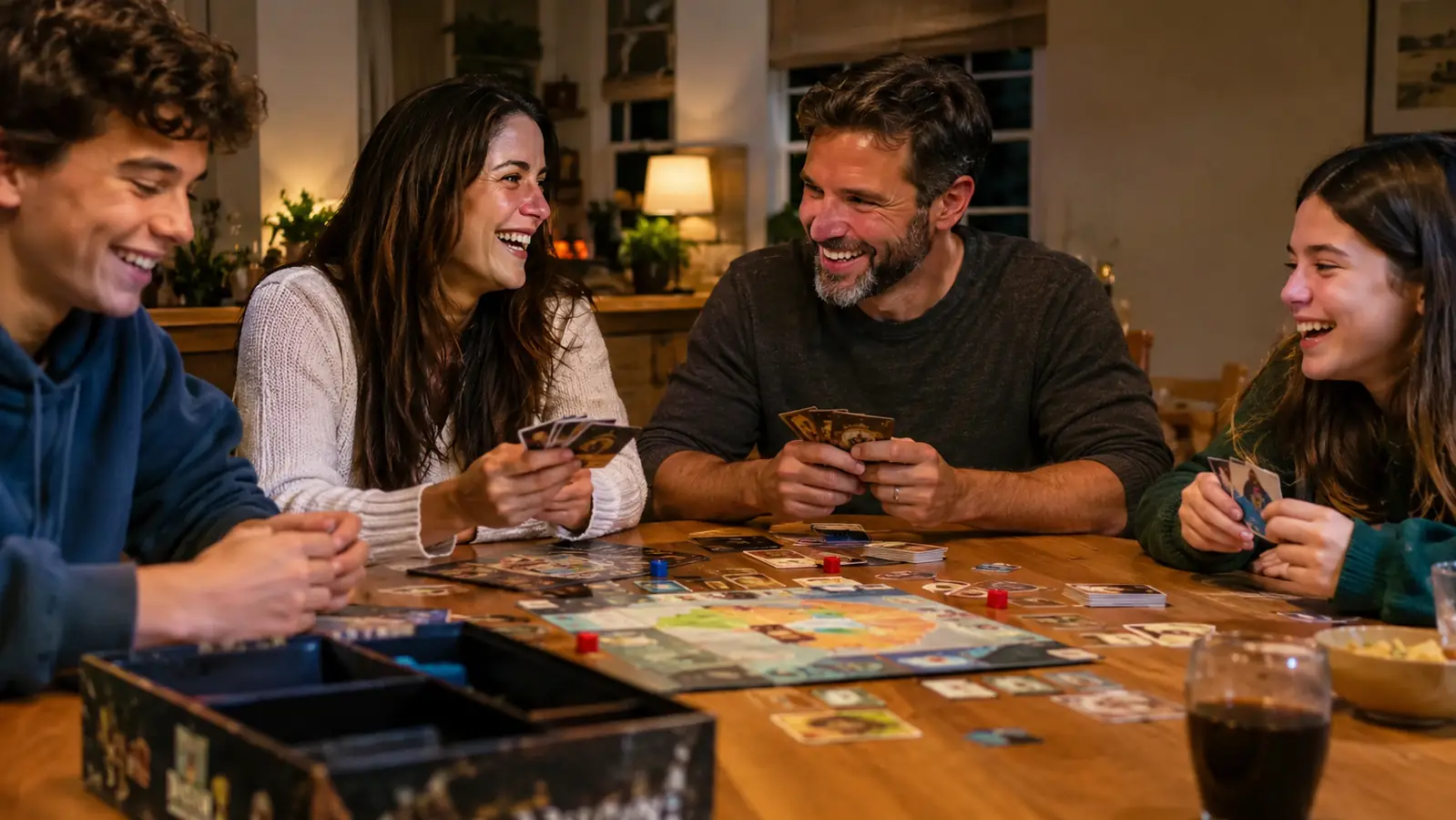
Component quality is the thing that kills a family game after a few plays. The train pieces click into place, the board lies flat, and the cards hold up to a six-year-old's shuffling. After nine months of Sunday nights, our copy of Ticket to Ride from Days of Wonder still looks new. I have thrown away games whose cards bent in a month and whose boxes split at the corners. This one has survived spilled milk, excited hands, and the way Frank drops things when he reaches for the pretzels.
One blocked route does not ruin your whole game
The first time someone stole Eli's route to Miami, he was furious for about ninety seconds. Then he found another way around, and the detour became the highlight of the game. Kids learn that a setback is recoverable, and that is a lesson worth more than the game itself. Rosie once had her whole plan blocked and simply built the same route a different way, without any help from me. I have seen grown adults quit a game over less.
It plays beautifully with two, three, four, or five
Some nights Frank joins, and some nights it is just me and Rosie. Ticket to Ride scales without losing its shape. The board adjusts, the strategy shifts, and nobody is stuck waiting for a turn that never comes. With two players it feels thoughtful. With five it feels lively. That flexibility is why it earns its place on the shelf instead of gathering dust like the games that only work with exactly four people.
Reading the destination tickets feels like a reward, not homework
The city names on the destination tickets gave Eli a reason to sound out words like Kansas City and Montreal. He wanted to know where his trains were going, so he asked me to read the tickets aloud and then tried them himself. Rosie learned to recognize Los Angeles by sight because it shows up so often. The reading practice happens because the game makes it matter, and nobody ever sits down to study spelling on a Sunday night.
Every game becomes a story the kids retell at dinner
The best part of a family game night is the story it leaves behind. We still talk about the time Rosie's train to Chicago got cut off and she rerouted through Denver. Days of Wonder built a game that creates those moments on its own, without anyone having to manufacture them. Last month Eli announced his 'great railway victory' at the dinner table and made us all laugh. You cannot buy that. You can only set up a game that lets it happen.
What I'd Skip
Ticket to Ride is not for every family, and I would not pretend otherwise. If your youngest is under six, the reading and counting load is too heavy; give it a year. If your group cannot sit still for a game that runs forty-five minutes, this is not the fix. And if you want a cooperative game where everyone wins together, this one is competitive at heart, even when everyone plays nice. The base game from Days of Wonder has no built-in expansion content, so if your family burns through a game in a month, you will be shopping for add-ons. None of those are reasons to skip it for us, but they are honest reasons some families should.
After nine months of Sunday nights, Ticket to Ride is the one game that has never gone back to the den bookshelf.
Give your next game night the game that actually stays on the table
If your family has the same mixed ages and mixed attention spans mine does, Ticket to Ride from Days of Wonder is worth a look. Check today's price and see if it earns a spot on your table.
Amazon Check Today's Price on Amazon →