
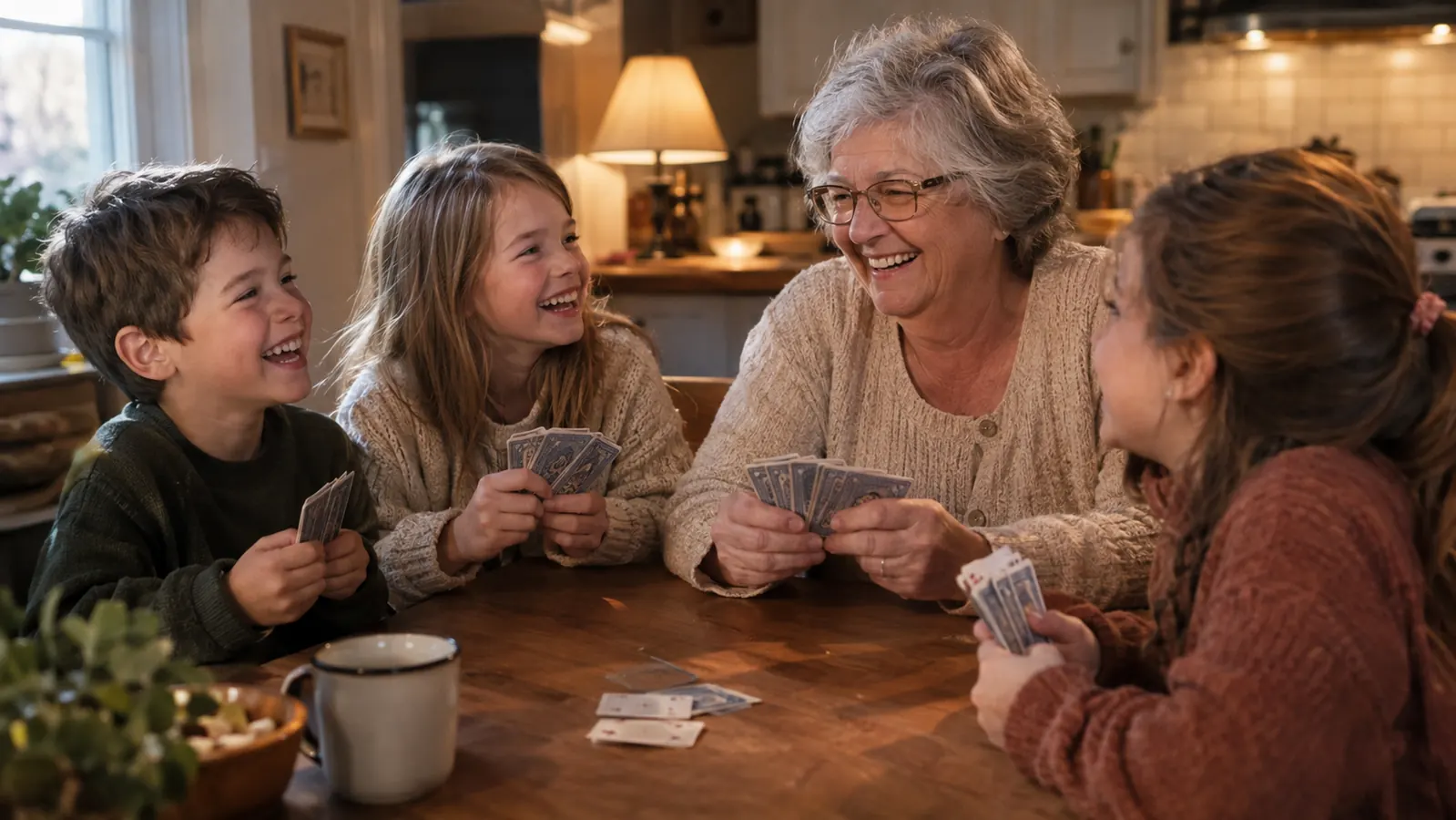
Sunday game night at my house starts the same way every week. Maya, who is twelve, wants something with real strategy. Eli, who is nine, wants to win. And Rosie, who is six, wants to be included in whatever the big kids are doing. For years I tried to find one game that could hold all three of them at the same table, and I watched plenty of boxes go back on the shelf after a single round. Then my daughter brought over Exploding Kittens, and for the first time in a long time, nobody wanted to leave the table.
The trick is that Exploding Kittens is not a game you just hand to a six-year-old and hope for the best. It is a game you set up the right way, with the right house rules, and with a little patience in the first round. I have run this game at my kitchen table for months now, with kids from six to twelve and adults who claim they do not like card games. Here is exactly how I do it.
The one card game that finally works for every age at my table
Exploding Kittens is the game that got my six-year-old, my nine-year-old, and my twelve-year-old all laughing at the same table. If you want the same Sunday night energy, this is the deck to start with.
Amazon Check Today's Price on Amazon →Step 1: Read the rules yourself before the kids ever see the box
I am a retired school librarian, which means I read rulebooks the way other people read novels. That habit has saved more game nights than any other trick I know. Exploding Kittens has a simple core loop: draw a card, and if you draw an exploding kitten, you are out unless you have a defuse card. The other cards let you peek, skip, shuffle, or force another player to draw. That is the whole game, and you can explain it in about two minutes.
But the rulebook also covers a few situations that will come up the first time you play. What happens when someone plays a See the Future and then a Shuffle? What counts as a valid Nope? If you already know the answers before the kids ask, you keep the momentum going. Nothing kills a game night faster than a parent squinting at a rulebook while three kids wait.
The other reason to read ahead is that you will know which cards to pull out for the youngest player. I will get to that in Step 2, but the short version is that a quick read of the deck list tells you exactly what you are dealing with before you deal a single hand.
Step 2: Set up a starter deck for the youngest player
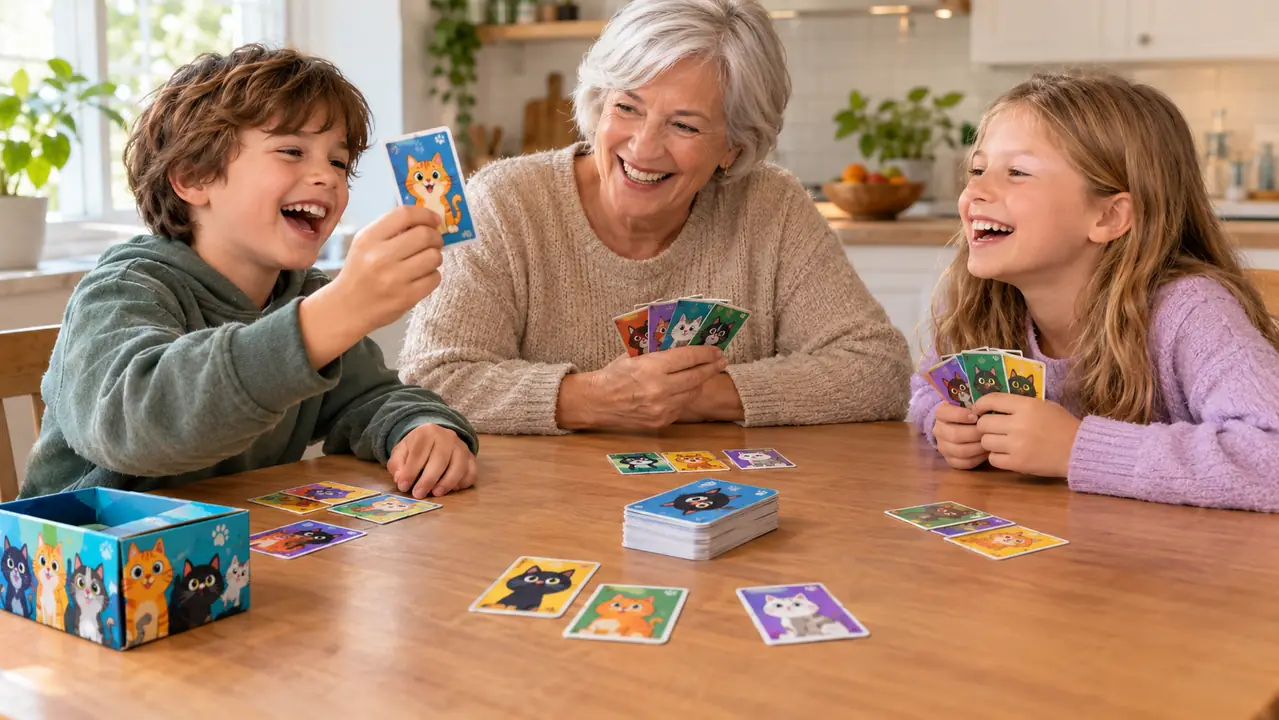
Exploding Kittens is officially recommended for ages seven and up, and that is about right for playing the full game with no help. My six-year-old Rosie can play the full game, but only after I trim the deck a little for the first few rounds. I pull out most of the attack cards and the cards that force other players to draw extra cards. That leaves a deck full of See the Future, Skip, Shuffle, and the occasional Nope, which is plenty for a first game.
The exploding kittens stay in, obviously. That is the whole point. But with fewer attack cards, the game moves faster and Rosie does not get stuck in a loop of being targeted by her older siblings. She gets to make real choices, she gets to blow up dramatically, and she gets to win sometimes. That last part matters more than any rule in the book.
As she got comfortable, I added the attack cards back in one at a time. Now she plays the full deck and holds her own. The beauty of Exploding Kittens is that the game scales with the player. A six-year-old can play a simplified version, and the same deck still has plenty of strategy for a twelve-year-old who is already planning two moves ahead.
Step 3: Teach the game in one round, not one lecture
The fastest way to lose a six-year-old is to explain the rules for ten minutes before anyone gets to touch a card. Instead, I deal everyone a hand, put the deck in the middle, and explain the rules as we play the first round. Everyone draws a card, someone explodes, and suddenly the whole table understands the stakes. Nothing teaches a game like watching your brother blow up on turn three.
I also let the kids make the first mistakes. If Eli plays a card that does nothing because he misread it, we laugh and move on. If Rosie forgets that she has a defuse card and panics, we remind her and she saves herself. The first round is a practice round, and I tell them so out loud. That takes the pressure off and lets the laughter start early.
One thing I insist on from the very first round: everyone says what their card does out loud when they play it. That sounds slow, but it is actually the fastest way to teach the whole table. The kids learn the cards by hearing them named over and over, and the adults learn them without having to ask. By round two, nobody needs the rulebook.
Step 4: Use the Nope card to keep the adults interested
Here is the part that surprised me. I expected Exploding Kittens to be a kids' game that adults tolerate. Instead, the adults at my table are often the loudest players. The reason is the Nope card, which lets you cancel any other card the moment it is played. It is the most chaotic, most delightful card in the deck, and it turns the whole game into a running argument that everyone enjoys.
My husband Frank will sit quietly for three rounds and then Nope a card at the exact worst moment for whoever played it. My daughter has learned to bait him into wasting his Nope on a small card so she can play a big one. That is real strategy, the kind I used to love in video games, and it is happening in a card game with cartoon kittens on it.
If you are the adult at the table, do not play to win. Play to make the game fun. Save your Nope for the moments that will make the whole table gasp. Let the six-year-old win the first game. The kids will remember the laughter long after they forget who won, and they will ask to play again next Sunday.
Step 5: Keep the game moving and end on a high note
Exploding Kittens is a quick game, usually ten to fifteen minutes with a full table, and that is exactly why it works for mixed ages. A six-year-old can stay focused for fifteen minutes. A twelve-year-old can play five rounds in a row without getting bored. When the game is short, nobody has time to get frustrated, and everybody wants one more round.
I keep a few house rules that keep the pace up. No agonizing over a card for more than a few seconds. If you do not know what to play, play something and see what happens. And when the game gets down to two players, we play best of three so the ending feels like a real finish instead of a random draw. Those small rules keep the energy high and the game moving.
The other thing I do is quit while we are ahead. We play until the kids are still laughing, and then we stop and put the cards away. That usually means three or four rounds. I have learned the hard way that one round too many turns a great game night into a grumpy one. End on the high note and the kids will be asking for Exploding Kittens again before the dishes are done.
What Else Helps
A few small things make the whole night run smoother. I keep the cards in the original box, which has a sturdy little tray that holds the deck neatly, and I put the box on the bookshelf in the den where the kids can reach it. I also keep a couple of spare decks around because the cards get worn fast when a six-year-old is shuffling. The card stock is decent for the price, but it is not casino quality, and after fifty plays the corners will show it.
Snacks help too, but keep them dry. Greasy fingers and card games do not mix, and I learned that lesson exactly once. I put out popcorn in bowls and make the kids wipe their hands before they touch the deck. It sounds fussy, but it keeps the cards playable and keeps the game night from ending in a stained mess.
If you have a child younger than six, you can still make it work. I have had Rosie's friends over who are five, and they play with a partner, usually an adult who quietly makes the choices with them. The five-year-old gets to hold the cards and announce the explosions, and the adult handles the reading. It is not a perfect solution, but it gets a little one through a full game night without tears.
The first time Rosie played, she laughed so hard at her own explosion that she fell out of her chair. That is the moment I knew this game was staying on our shelf.
What I'd Tell You If We Were Sitting at My Kitchen Table
If you are on the fence about whether Exploding Kittens can work for your family, here is my honest answer. It works if you are willing to be the adult who sets the tone. Read the rules ahead of time, trim the deck for the youngest player, play a practice round, and let the kids win sometimes. Do those four things and you will have a game that a six-year-old and a twelve-year-old can both love at the same table.
It is not a deep strategy game, and it is not trying to be. It is a game about laughing at your family when they blow up, and about the pure joy of a well-timed Nope. In a house where game night has to work for three different ages, that is worth more than any amount of clever mechanics.
My grandkids have asked for Exploding Kittens every single Sunday since we started playing it. That is the highest compliment a game can get at my table. If you want that kind of energy at yours, this is the deck I would start with.
Bring the laughter to your own kitchen table
Exploding Kittens is the game that finally got my six-year-old, my nine-year-old, and my twelve-year-old all laughing together. Grab a deck and see what happens at your next game night.
Amazon Check Today's Price on Amazon →