
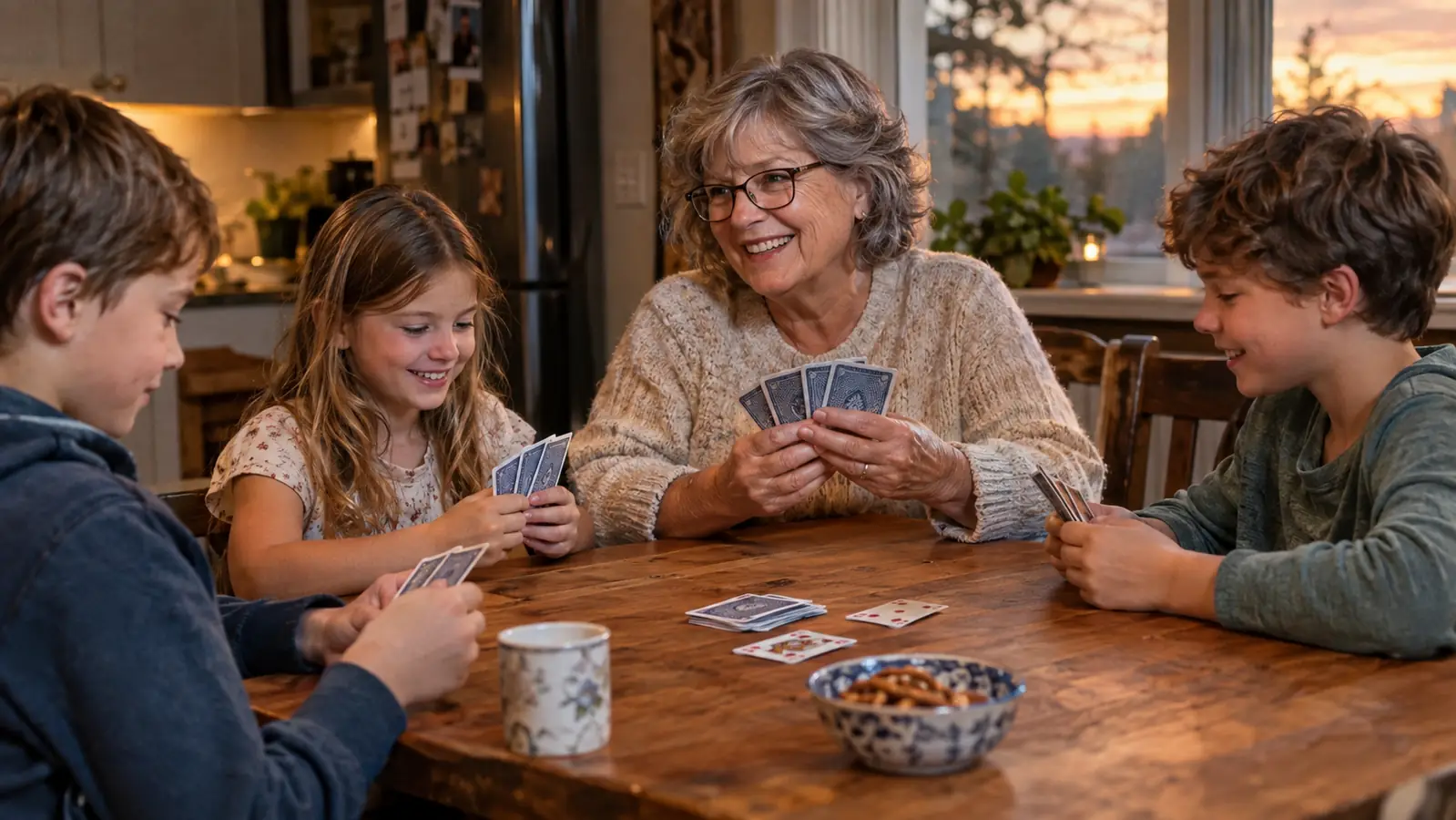
Every Sunday, six chairs come out around our oak kitchen table. Maya, who is twelve, sits across from Eli, nine, and Rosie, six, and by the time the popcorn bowl is empty someone has usually asked the same question: can we play a card game? For months the answer was Uno, because it was the only deck we trusted everyone to handle. Then my daughter handed me a box of Exploding Kittens, and the debate about which card game wins family night started for real.
Here is the honest version after a summer of testing both at our table: they are not really competing for the same job. Uno is the game you pull out when you need everyone at the table, including a six-year-old who cannot read the cards yet, to be playing in ninety seconds. Exploding Kittens is the game you pull out when you want the kids to stop looking at screens and start laughing at each other. If I had to pick one deck for the bookshelf in the den, I would pick Exploding Kittens, and this article will tell you why, along with the places where Uno still beats it.
| Exploding Kittens | Uno | |
|---|---|---|
| Price | One-time purchase. Check today's price for the current deal. | Usually costs less at retail and shows up in every big-box store. |
| Setup time | Shuffle and deal in under two minutes. | Shuffle and deal in under two minutes. |
| Rules to explain | Draw a card and hope it is not the kitten. Action cards say what they do right on them. | Match the color or number, then learn eight action cards. |
| Player count | 2 to 5 players with the base deck. | 2 to 10 players with one deck. |
| Keeps everyone in | Draw the kitten without a defuse and you sit out until the next round. | No one is out until the very last card is played. |
| Replay value | Cards like See the Future and Shuffle change every hand, so no two rounds feel the same. | A familiar deck where the same patterns come up again and again. |
| Component quality | Thick, sturdy cards in a solid box that has survived a summer of Sunday nights. | Thin cards that show creases and wear quickly with weekly play. |
| Best for | Families who like a little bluffing and table talk with their card games. | Big groups and the youngest players who just want to match and play. |
How I Put Both Games Through a Real Sunday
I did not test these in a vacuum. I put both decks on the oak table with the same three judges every week: Maya, who reads ahead in the rules and plans three moves out; Eli, who tries to win by talking everyone into bad trades; and Rosie, who is six and mostly wants to hold the cards and feel included. Frank got talked into a few rounds too, usually after the dishes were done.
I kept a mental scorecard of the things that actually matter to a family, not a board game critic: how long the rules took to explain, whether the youngest could play without help, how often somebody sulked, and whether the game was still fun on the tenth play. That last one is the one that separates a good deck from a shelf ornament. A game can be brilliant for one night and dead by the third, and neither kid will tell you why.
Where Exploding Kittens Wins
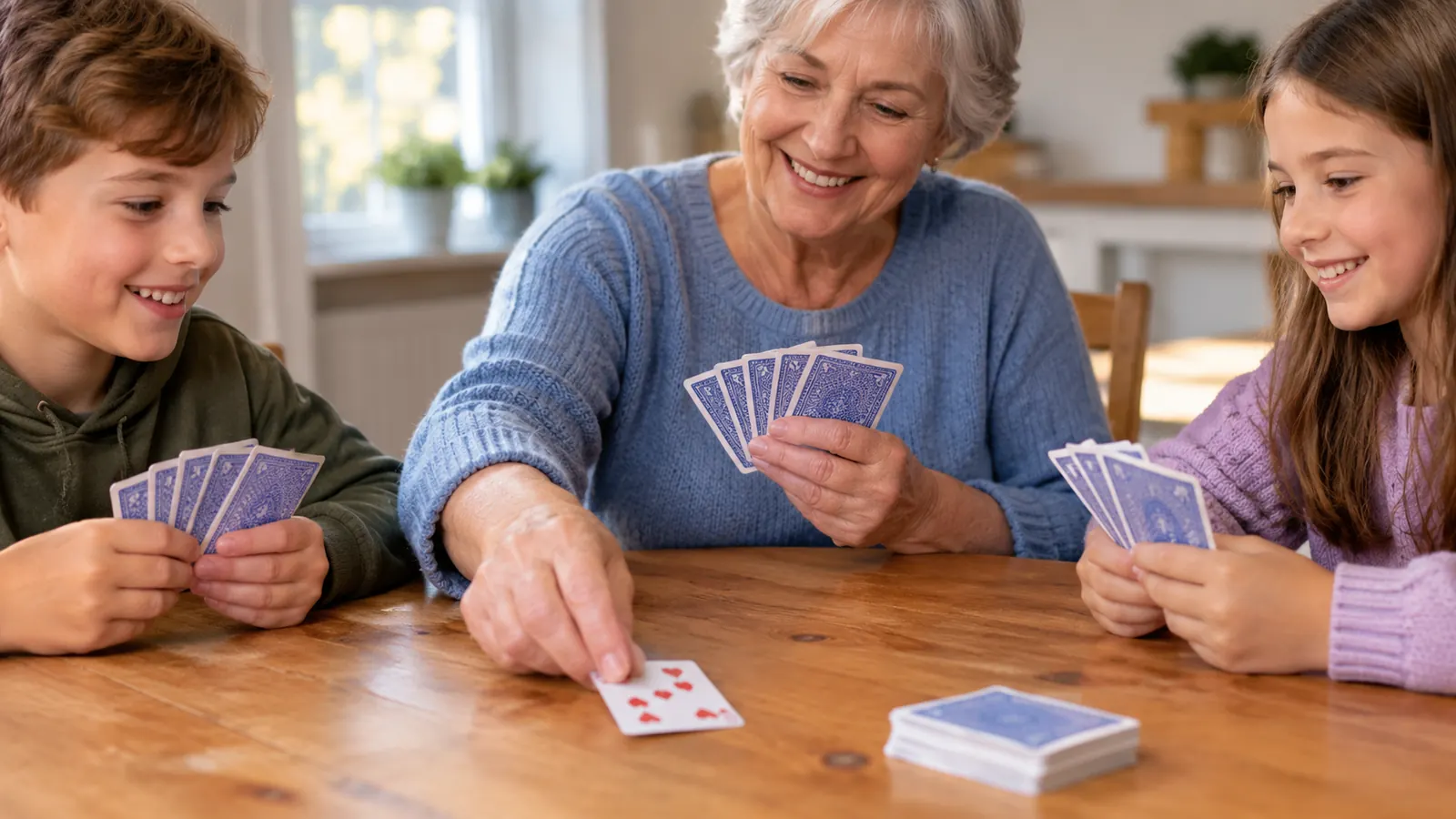
The biggest win is replay value. With Uno, once everyone knows the pattern, the game settles into the same rhythm every time: match a color, hope for a Skip, groan when someone drops a Draw Two. Exploding Kittens keeps the table guessing because the deck changes shape as you play. See the Future lets you peek at the top three cards and lie about what is coming. Shuffle scrambles the deck and changes everything. Favor cards force a player to give away a card, which at our table means Eli immediately tries to trade with Rosie.
It also wins on pure laughter. The art is absurd, the card names are silly, and the core moment, drawing a card and slowly turning it over to see if you just ended your turn, is the same suspense every single time. Maya, who usually acts too old for everything, was the one who asked to play it again the next Sunday. That is the highest compliment a game can get from a twelve-year-old.
There is also more strategy hiding under the silliness than people expect. Maya figured out that using See the Future early tells you whether to burn a defuse now or save it for later. Eli learned to hold his Favor cards until someone else has something worth taking. The game rewards attention, which is why it holds a twelve-year-old's interest without losing a six-year-old, and that sweet spot is exactly what I look for in a family deck.
Where Uno Wins
Uno has two advantages that I do not want to wave away. First, it scales. A single deck handles up to ten players, which matters the night the cousins show up and we need the extra chairs. Exploding Kittens, in the base edition, is built for two to five, so a bigger crowd means either a second deck or a different game. Second, nobody sits out. In Exploding Kittens, the unlucky player who draws the kitten is out of the round and has to watch. With Uno, even Rosie stays in until the very end, and for a six-year-old, being out of the game is the worst part of any game.
Uno is also the easier sell for the youngest players. Rosie can match a red nine without reading a word. Exploding Kittens asks a little more, since several cards are text-based and the strategy rewards players who can read the table. And on price, Uno is almost always the cheaper deck at the register, which is a real consideration if you are buying for a classroom or a vacation house where cards will get lost. None of that makes it the better game for our Sunday nights. It makes it the better game for certain nights, and it earns a spot on the shelf right next to Exploding Kittens.
Uno also wins on availability. You can find a deck at the register of almost any store, which makes it the game you grab on the way to a campsite or a hotel. Exploding Kittens usually means a planned purchase. That convenience is worth something, even if it does not show up in a rules comparison.
For the Sundays when you want the table laughing, Exploding Kittens is the deck to beat.
One deck, five players, and a rules sheet that takes two minutes to explain. See what it costs today and read what other families say before you add it to your cart.
Amazon Check Today's Price on Amazon →The Rules, Minus the Confusion
I read rulebooks cover to cover before the kids arrive, so here is the honest summary. Every player gets a hand and a defuse card. You take turns drawing from the deck. Most cards are harmless action cards that let you skip, peek, or shuffle. Somewhere in the deck are a few kitten cards. If you draw one and you do not have a defuse card, you are out of the round. If you do have a defuse, you play it, the kitten goes back into the deck, and the game keeps going. Last player still in the round wins.
That is the whole game, and it is exactly as simple as it sounds once you have played one round. The first game took us maybe ten minutes to explain, including the action cards. The second game took two minutes of reminders. By the third Sunday, Rosie was explaining the rules to Frank, which is my personal test for whether a game is actually learnable.
How the Box Holds Up After a Summer of Sundays
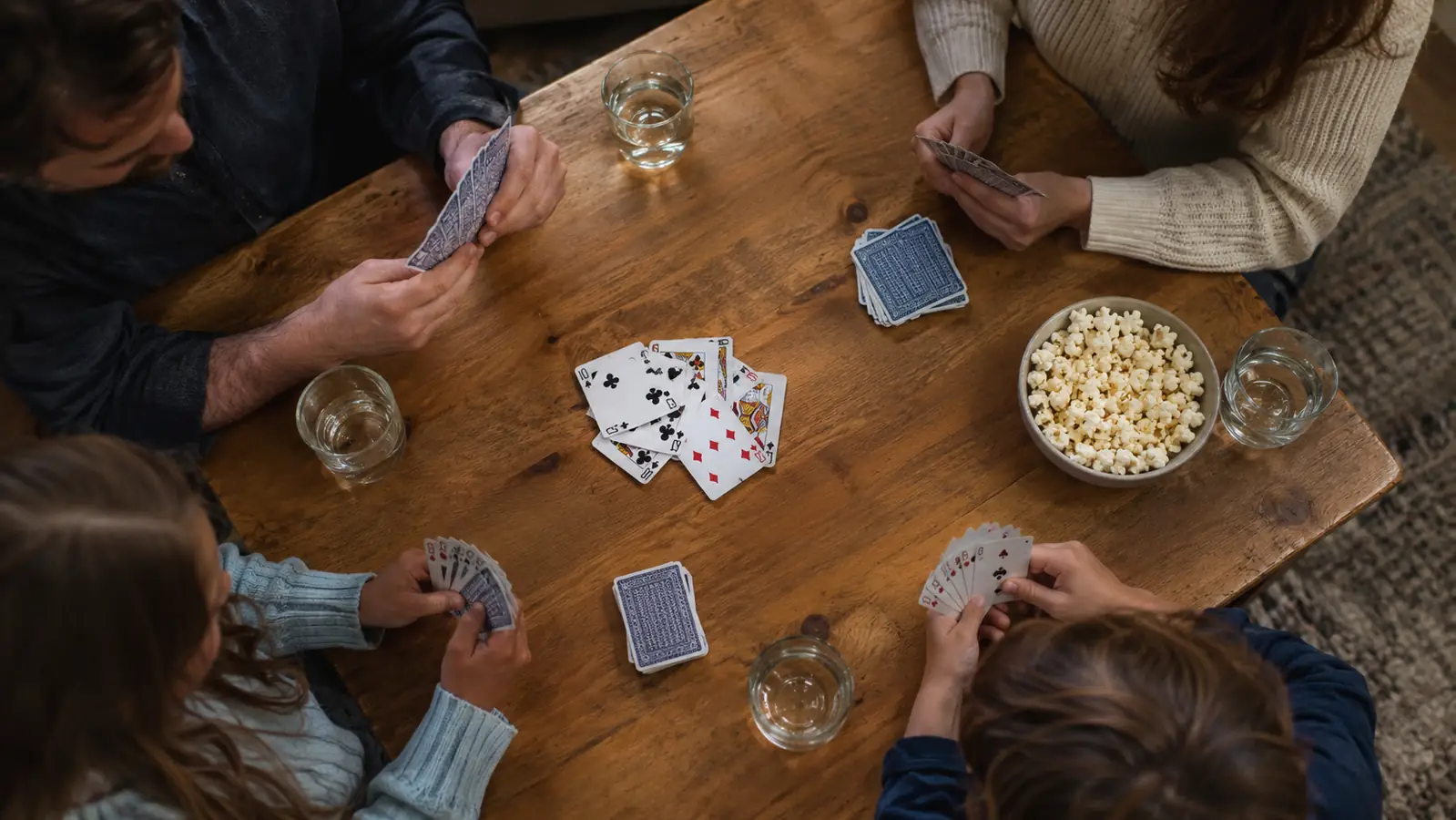
Component quality is the kind of thing you do not notice until it goes wrong. The Uno deck we had before this experiment developed a bend in the middle after a few months, and every shuffler in the house learned to work around it. The Exploding Kittens cards are noticeably thicker, with a smooth finish that makes them easy to pick up off the oak table, and the box closes properly even with the cards loose inside. After a summer of Sunday nights, a few road trips, and one incident involving grape juice, the deck still looks like it came out of the box yesterday.
That matters more than it sounds. A game that feels cheap makes you treat it like a disposable thing. A game that feels solid becomes part of the routine, the way a favorite cookbook gets the same spot on the counter every time. You do not think about the cards when they shuffle well. You only notice when they do not.
The One Thing That Almost Made Me Pick Uno
I will be honest about the one argument for Uno that gave me pause: the elimination problem. Watching Rosie draw the kitten and then sit out of the rest of the round is genuinely hard. A six-year-old does not care about the strategy or the suspense. She cares that she is out of the game. We solved it with a house rule: the first player out becomes the official shuffler for the next round, and she gets to pick the music. That small fix turned the worst moment of the game into a job Rosie now asks for. If you are not willing to add a house rule, Uno keeps everyone in, and that is a real point in its favor.
The moment a six-year-old draws the kitten card and announces it like she just won the lottery, you will know which game your family actually wants.
What the Grandkids Actually Said
I asked the three of them straight out, which one do you want on the shelf? Maya said Exploding Kittens, because there is a way to plan and the jokes do not get old. Eli said Exploding Kittens, because he likes the moment of suspense before someone draws the kitten. Rosie said Uno, because she can win it without asking for help. That answer from Rosie is the whole article in miniature: both games belong in a house with kids this age, and the right pick depends on the night.
Frank's answer was the most practical one. He said he did not care which game we played as long as it did not require him to read a paragraph of rules at nine o'clock on a Sunday. Both decks passed that test, and he has now voluntarily lost three rounds of Exploding Kittens without once checking the time.
Who Should Buy Which
Buy Exploding Kittens if your family likes a little strategy with their silliness, if you have kids old enough to read cards, and if you want a game that still feels fresh on the twentieth play. It is the deck I reach for on an ordinary Sunday with Maya, Eli, and Rosie, and it is the one I would replace first if the box ever wore out.
Buy Uno if you regularly host big groups, if your youngest player is not reading yet, or if you want a game that absolutely everyone at the table can join within a minute. And honestly, at the price Uno usually carries, you can own both. The bookshelf in the den has room, and our Sunday nights are better for having each game in its proper place.
If you are shopping for a gift and you do not know the family yet, Exploding Kittens is the safer bet for a household with kids over seven. It reads as a treat, it survives travel, and it gives the parents something to laugh about after the kids go to bed. Uno is the safer bet for a household where the ages range wide and the table is always full. If the family already owns Uno, do not buy them a second copy. Buy them Exploding Kittens and let them discover which night calls for which deck.
Give your family night a deck that keeps the table laughing round after round.
Exploding Kittens is quick to learn, built to last, and ready for your next Sunday. Check the current price and see why thousands of families keep it in rotation.
Amazon Check Today's Price on Amazon →